The Victorian Commons blog provides news and highlights from the History of Parliament’s research project on the House of Commons, 1832-68. For details about the project and how to access our work see ourAboutpage. The main History of Parliament website can be accessed herewith regular blogshere.You can also follow us on Twitter@TheVictCommonsand our colleagues @HistParl &@GeorgianLords
In this guest blog, Henrietta Lockhart, Curator of Museum Collections at Winterbourne House and Garden, at the University of Birmingham, tells the story of a unique piece of costume once owned and worn by the 19th century MP, Edward Strutt (1801-80).
The Strutt suit (presented by the heirs of Sam Kenrick); all images of the suit are courtesy of Winterbourne House and Garden
At Winterbourne House and Garden in Edgbaston, Birmingham, visitors can now enjoy a striking exhibit: the court dress of Edward Strutt MP (later 1st Baron Belper), who served as Chancellor of the Duchy of Lancaster from January 1853 to June 1854. This magnificent costume went on display in March 2024, following a major conservation project.
Winterbourne House and Garden (photo Joe Wainwright)
At face value, this extraordinary set of garments has little connection with Winterbourne’s story. Designed by J. L. Ball in Arts & Crafts style, the house was built for the Nettlefold family in 1904. John Sutton Nettlefold was born into the Nettlefold screw-making dynasty, which in 1900 became part of GKN (Guest, Keen & Nettlefolds). His passion was social reform, particularly housing and town planning, and he served on Birmingham City Council for many years. His wife Margaret Chamberlain was a talented amateur artist and engaged in philanthropic work. Her uncle was Joseph Chamberlain, Mayor of Birmingham, a Birmingham MP (1876-1914) and later Secretary of State for the Colonies. John and Margaret were second cousins.
John Sutton Nettlefold, around 1890; Margaret Nettlefold (née Chamberlain), 1888
A few years ago David Kenrick, a great-nephew of John Sutton Nettlefold, offered Winterbourne a piece of costume which had been in the family since the 19th century. David had no idea why the suit was in the family’s possession, or indeed what it was; it had generally been assumed to be French and from the 18th century. The Nettlefolds had certainly owned it since around 1890, as there were photographs of Hugh Nettlefold (John Nettlefold’s brother) wearing it to a fancy dress ball. Hearing David describing this set of objects on the phone, I very quickly made the decision to accept the donation.
Embroidery on the coat
When it arrived, my colleagues and I could hardly believe our eyes. The costume comprises a hand-embroidered woollen coat and silk waistcoat, breeches, stockings, shoes, cravat, wig, hat, hat box and sword. It was in remarkable condition, and the embroidery was exquisite. It was clearly in the style of 1750, but I wasn’t convinced that it was as old as that. How could a suit of that age have survived in its entirety, and what was the family connection? I knew there was an interesting story to uncover, but I wasn’t sure where to start.
Paper label on the hat box
With any new acquisition to the collection, meticulous examination of the object itself can often reveal a surprising amount of information. The crucial piece of evidence turned out to be a tattered paper label attached to the hat box. Although the label is not complete, one can just make out a hand-written text: ‘(Flat hat) No. 2, The Rt. Hon. E. Strutt, 25.6.53’. I suspected that this label was the key that would unlock the history of this enigmatic suit.
An internet search soon revealed that this man was Edward Strutt, MP for Derby from 1830 to 1848, Arundel, 1851-2, and Nottingham, 1852-6. He was Chief Commissioner of Railways, 1846-8, and Chancellor of the Duchy of Lancaster, 1853-4. As an MP with these additional responsibilities, Strutt would have needed a ceremonial suit for royal occasions. Up until 1869, ceremonial court dress was in the style of 1750, and the regulations required a coat with embroidery, an embroidered waistcoat, breeches, stockings, buckle shoes, a tricorn hat and a sword. This fits perfectly with the items that we have. It became clear that this was indeed Strutt’s court dress. The date on the hat box label is 1853, the very year when Strutt was elevated to the position of Chancellor of the Duchy of Lancaster. Further corroboration can be gleaned from the sword, which carries the arms of the Duchy of Lancaster on the pommel.
The sword pommel
More information came to light as I examined the objects. The maker’s label inside the hat is L. & H. Nathan, of Piccadilly, who were naval and military outfitters and would certainly have been supplying court dress. They were also famous for theatre costumes later on. We can’t be sure whether they supplied the rest of the suit, but it seems likely. The shoes have a maker’s mark stamped on the sole: SKINNER. I haven’t been able to find out much about the maker, but there was a shoemaker called Skinner who, later in the century, joined forces with Lilley to form Lilley & Skinner. I suspect this was he, or an ancestor of his. There is a small maker’s mark on the buckles as well, but I have not been able to decipher it. Given the thriving buckle-making industry in Birmingham, it is quite likely that they were made in Birmingham.
The shoes
Excited by identifying the objects and their original owner, I then wondered why there was a connection to the Nettlefolds. How did this Birmingham-based family acquire the court dress of a Derbyshire MP? A quick glance at the Nettlefold family tree revealed that the name ‘Strutt’ cropped up more than once in an earlier generation.
Edward Strutt was the grandson of Jedediah Strutt, a well-known Derbyshire textile manufacturer. In the 1790s Jedediah’s niece Elizabeth Strutt married a man called Joseph Chamberlain (grandfather and namesake of the Birmingham MP). When Elizabeth died childless, Chamberlain promptly married her sister Martha Strutt. Children resulted from this second marriage, and Martha and Joseph were the great-grandparents of both John Nettlefold and Margaret Nettlefold (née Chamberlain). Edward Strutt was therefore their second cousin twice removed.
The families were linked not only by marriage but also by faith. Jedediah Strutt was a committed Unitarian, and founded a Unitarian chapel in Belper which still stands today. The Nettlefolds and Chamberlains were Unitarians too, and faith played a major part in the drive for social reform that ran through both families. While we have no evidence in our archive that the Strutts and the Nettlefolds remained in contact through the 19th century, we have found a tangential connection. The Unitarian minister Henry William Crosskey, who officiated at the marriage of John and Margaret Nettlefold in 1891 and whose son later married their daughter Evelyn, often preached at the Unitarian chapel in Belper founded by the Strutts. He also served a four-year ministry in Derby from 1848, when he would surely have had dealings with the Strutt family. The Crosskeys were good friends with the Nettlefolds, so the Strutts may have been part of a shared social circle. Manufacturing and trade would have provided a further area of common interest.
Hugh Nettlefold dressed as ‘Louis XVI’
Edward Strutt died in 1880. It was a few years after this in 1891 that Hugh Nettlefold, the brother of John Nettlefold, was photographed wearing the suit to a fancy dress ball in Birmingham. We can only guess that Strutt left the suit to his Nettlefold relatives in his will. However, there is the possibility that the suit had remained in the possession of one of Strutt’s children after his death, and that Hugh Nettlefold borrowed it for the fancy dress ball. If so, he never gave it back! Sadly, Hugh died in 1893 aged 35. Perhaps with Hugh’s death knowledge of the suit’s true origin was already beginning to fade. The fact that Hugh styled himself as ‘Louis XVI’ at the ball may even explain the family’s later assumption that the suit was French.
Clues in the objects themselves suggest that Hugh had the suit altered to fit him. The breeches, coat and waistcoat have been altered, and the buttons on the breeches waistband are stamped WM. GENT 23 BENNETTS HILL. William Gent was a glover and hatter, trading in Bennetts Hill, Birmingham from 1846 onwards. Birmingham buttons were traded far and wide, so this does not prove that the alterations were made in Birmingham, but it does make it likely.
Birmingham button on the waistband
I have been unable to find much information about other court dress suits of this nature, except for general descriptions of the requirements of the time. However, I was excited to read, quite by chance, a quotation from the diary of Richard Owen of the Natural History Museum, who was summoned to his first levée at Buckingham Palace in 1850. He commissioned a court tailor to create
a very handsome and elegant attire, I think quite as good as any Court dress I saw. A rich sort of dahlia-brown cloth, with bright steel buttons, buckles, sword etc and white satin waistcoat with rich flowers embroidered. Lace cravat full and long, and the same for the cuffs. Cut steel loop in the cocked hat
[quoted in D. Cadbury, The Dinosaur Hunters (2001), pg. 279].
This raises tantalising questions as to whether the same tailor was employed three years later by Strutt.
Report of presentation of addresses to Queen Victoria, Weekly Chronicle, 8 Apr. 1854 CC BNA
One final piece of evidence, found by Kathryn Rix, provides details of an occasion on which Strutt wore this suit. Court dress would not usually have been worn in the Commons chamber, except by the mover and seconder of the address in response to the queen’s speech. However, on 3 April 1854, when around 250 MPs assembled there before going to Buckingham Palace to present an address to Queen Victoria following Britain’s entry into the Crimean War, press reports recorded that many of them wore ‘naval and military uniforms and Court dresses’. Listed among those in ‘ministerial uniform’ was Edward Strutt, wearing the court dress now conserved and on display at Winterbourne.
Previous blogs have highlighted our research on the electoral dynamics of many different types of constituency, from agricultural county seats such as Northamptonshire South to newly created boroughs such as Whitby, where the shipping and railway interests dominated. In our latest blog, Dr Philip Salmon looks at the Buckinghamshire ‘pocket borough’ of Great Marlow, where, contrary to what might have been expected, the influence of its electoral patron became even more firmly entrenched after the 1832 Reform Act.
Constituencies where electoral outcomes were almost completely controlled by local patrons or wealthy ‘boroughmongers’ were a key feature of the UK’s representative system before 1832. From Thomas Peacock’s ‘Borough of One Vote’ electing an orangutan to Blackadder’s antics at ‘Dunny-on-the-Wold’, they have also attracted plenty of parody and satire. The 1832 Reform Act famously removed 56 of the very worst ‘rotten’ boroughs. Constituencies like Dunwich, a town that had fallen into the sea, or Old Sarum, an uninhabited mound of earth, were no longer able to return MPs. Many boroughs remained though where elections were far from free and fair after 1832, as some of our blogs about corruption and electioneering have illustrated. Few, however, became even more of a ‘pocket borough’ in quite the way that Great Marlow did.
Before 1832 the wealthy Williams family, heirs to the banking and industrial fortune of the ‘copper king’ Thomas Williams MP, had assumed almost complete control of Great Marlow’s elections, mainly by buying up local property. The 1832 Reform Act’s enfranchisement of new £10 householder voters, combined with the dramatic expansion of Marlow’s boundaries from 0.1 to 5.6 square miles, however, initially seemed to have seriously dented the family’s influence. At the 1832, 1835 and 1837 general elections, they reluctantly conceded one of the borough’s two seats to a Liberal, as part of a behind-the-scenes compromise reflecting the new political realities.
T. P. Williams MP. Image credit: Llyfrgell Genedlaethol Cymru / The National Library of Wales
This ‘sharing’ of Marlow’s representation, with Thomas Peers Williams sitting as a Tory MP alongside a Liberal opponent, was not popular with some locals. As was often the case in double-member constituencies with shared or mixed representation, it led to complaints about the borough being ‘misrepresented’ in the Commons, with one MP effectively cancelling out the voice and opinions of the other. However, in this case it was not local pressure that triggered a break-down in the sharing arrangement. Instead, at the 1841 election the Conservative central managers and the Carlton Club persuaded the Williams family to challenge the Liberal MP and get a second Tory elected, even though the Williamses ‘scarcely wanted a contest’ any more than their Liberal rivals. The Carlton even supplied a candidate, Renn Hampden of Little Marlow.
The ’most severe’ contest ever to have taken place in Marlow then ensued, in which voters were alleged to have been kidnapped and bribed and ‘every description of intimidation was used’. Although the Liberals won the second seat, it was only by a single vote, cast by the returning officer, leaving the way open for the result to be challenged on petition.
The ensuing election inquiry attracted national attention. The significant role of women in the electoral process, despite being excluded from the vote themselves, was amply illustrated by the dozen female witnesses summoned and questioned at inordinate length. Mostly wives and daughters of electors, they gave detailed evidence about domestic living arrangements in properties used to claim the franchise, or the money and ‘gifts’ they had been able to negotiate for their husband’s votes. One local butcher Jason Povey, for instance, had his vote ‘expunged’ after it emerged that the bailiff of the Liberal candidate had given him ‘six fat sheep’ and ‘a sum of money’ as part of a deal ‘carried on by the voter’s wife’. Two daughters of the Liberal candidate were also found to have ‘strenuously canvassed’ on their father’s behalf, with promises of money and employment.
What ultimately swung this election inquiry in the Tories’ favour, however, was not bribery and corrupt practices, which were clearly extensive on both sides, but the discovery that some of the Liberal candidate’s voters had received poor relief and as such were disqualified from voting. The Liberal MP was duly unseated and the Carlton’s nominee declared elected in his place.
Spurred on by this victory, the Williams family now set about turning Marlow into a far more permanent and pliable ‘pocket borough’. Aided by an ‘opulent’ local Tory brewer, Thomas Wethered, they began to let a selection of their larger properties to ‘loyal’ and trusted tenants at highly favourable rents. Meanwhile other buildings began to be either deliberately left empty or were rebuilt and extended to incorporate adjoining properties, which would enable their carefully chosen occupant to meet the £10 threshold for the vote. As one report put it, ‘two small cottages are knocked into one, and let to the sure man’.
Since the Williamses and Wethereds owned almost half the borough’s property, these policies had a considerable impact on the town’s housing stock and appearance. Local press reports complained that Marlow was becoming ‘one of the most depraved towns in Buckinghamshire’, with ‘bad paving’, ‘bad drainage’ and ‘premises in the most squalid and dreadful condition’, including some going to ‘wreck and ruin’ (Bucks Advertiser, 9 Dec. 1848). The reason for this was said to be the belief that ‘we don’t want too many voters here, the more you multiply them, the more costly the elections’. The effect on the number of voters was striking. Unlike the experience in most boroughs in this period, Great Marlow’s electorate declined significantly, from 457 in 1832 to just 360 by 1848.
The electoral control created by the Williams family ultimately enabled Thomas Peers Williams to sit until 1868, clocking up 48 years of continuous service as an MP. In true ‘boroughmonger’ style he was also able to return his first cousin Brownlow Knox as a second Tory MP from 1847-68, easily seeing off token challenges in 1852 and 1859. The ‘farce’ of canvassing electors at Marlow, where ‘thought was trammelled and speech fettered’ and elections were ‘very dull work’, became a regular refrain in the local press. Both men gave loyal support to the Tories when present at Westminster, but were hardly active MPs. Knox was far better known for his operatic endeavours (and financial losses), while Williams spent the bulk of his time on his estates in Wales, overlooking the Menai Strait. In 1867, having barely uttered a single word during his entire parliamentary career, he became Father of the House.
Continuing our series on parliamentary architecture, and marking Women’s History Month, this blog from our assistant editor Dr Kathryn Rix looks at the provision made for women to witness debates in the temporary chamber used by the Commons between 1835 and 1852.
In the chamber used by the House of Commons before the catastrophic fire of October 1834, women – officially barred from the chamber itself since February 1778 – had been able to listen to debates through the ‘ventilator’ in the attic above St Stephen’s Chapel. In this cramped and uncomfortable space, a small number of women could look down into the chamber and listen to debates. An account in 1832 described
a circular shed of sixteen sides or panels … a small oblong square aperture in every panel serves to admit the heads of sixteen anxious females who creep, unseen and unheard, to see and hear. … Green baize benches surround the shed, and afford repose to the wearied forms of dowagers and damsels.
Sketch of the ventilator by Lady Georgiana Chatterton (c) Shakespeare Birthplace Trust/ Baddesley Clinton NT
After the fire, many of the old chamber’s features were reproduced when MPs moved into their temporary home in the former House of Lords at the beginning of 1835. It was obvious, though, that the unusual means by which women had accessed debates would not be directly replicated in the temporary Commons, and initially, no provision was made for female spectators. However, MPs realised that their temporary relocation offered an opportunity for experimenting with new features, which resulted in changes such as a dedicated reporters’ gallery and the construction of a second division lobby.
George Grantley Berkeley
In keeping with this, on 16 July 1835, George Grantley Berkeley, Whig MP for Gloucestershire West, successfully moved for a select committee to consider adapting part of the strangers’ gallery in the temporary Commons for the use of ladies and making similar provision in the new House of Commons. He dismissed the ‘erroneous opinion’ that there was ‘too great interference of ladies already in the political world’ and asked whether anyone would ‘assert that the female portion of the population does not contain a vast share of the better intellect of the country’. He noted women’s access to debates in the pre-fire Commons and urged that they be given ‘a less lofty but more comfortable accommodation’ in the temporary chamber. He also suggested that it would be beneficial if, as some predicted, women’s presence prompted ‘the language of the House’ to ‘assume a softer, a more poetical, and a more civil style’.
The committee’s report less than two weeks later recommended that not more than a quarter of the strangers’ gallery should be partitioned off before the start of the next session to accommodate 24 ladies. It also stipulated that future provision should be made for 40 ladies in the new House of Commons. Berkeley’s motion in early August 1835 that the Commons agree to the committee’s report was narrowly rejected, by 83 votes to 86. Undaunted, in May 1836 he moved that the plan for a ladies’ gallery drawn up by the architect Sir Robert Smirke should be carried out ‘as speedily as possible … at such hours as may not interfere with the business of the House’. MPs who supported Berkeley’s motion dismissed concerns that there was anything ‘improper’ about ladies listening to Commons debates. The Radical MP for Wigan, Richard Potter, noted that
during the Session of 1833 and 1834, he had repeatedly observed hon. Members take their wives and daughters into the ventilator, particularly when subjects of importance were under discussion, and he felt convinced they would not have done so had they supposed the least injurious consequences to have followed.
Among these wives and daughters was Harriet Grote, wife of the MP for London, who recorded that ‘one hears very well, but seeing is difficult, being distant from the members, and the apertures in the ventilator being small and grated’.
Less convinced about the need to provide for the ladies was the Wolverhampton MP Charles Villiers, who questioned whether there was any demand for it, as he was unaware of any petitions on the subject. He also queried how the limited number of places would be allocated. Berkeley’s motion passed by 132 votes to 90, but further progress was scuppered when the Commons voted in August 1836 against granting £400 to fund the work. Although only 70 MPs were present, 42 of whom opposed the grant, this occasion saw the fullest debate on the matter. Members of the Melbourne ministry spoke on either side of the question, with the future prime minister Viscount Palmerston among those backing Berkeley, on the grounds that ‘the ladies … took very considerable interest’ in Commons proceedings.
Sir John Hobhouse
His ministerial colleague Sir John Hobhouse was among the opponents of a ladies’ gallery, considering it ‘a very bad joke’. Not only might ‘the peace and comfort of men’s homes’ be disturbed by women wishing to discuss the issues debated in the Commons, but women’s presence in the House would be ‘most indecent’, as ‘in the course of a debate it was impossible to prevent allusions from being made which no man could wish his mother, sister, wife, or daughter to hear’. Such objections were ridiculed by the Sheffield MP James Silk Buckingham, for whom they confirmed the oft-repeated accusation that the Commons ‘was at least half a century behind the rest of the community’. He protested that after hearing Hobhouse’s speech,
one would think, first, that the women of England were at present wholly ignorant, and wholly indifferent to, the public affairs of their country; and next, that by the simple act of admitting some twenty or thirty ladies, chiefly, perhaps, the relatives of Members of that House, occasionally to hear the debates – the whole of the females would be converted into mere politicians – would cease to become good wives and good mothers – and be so many firebrands casting nothing but discord into every circle of society.
Berkeley tried a different approach the following year, moving for an address asking the king to give directions to carry out the select committee’s recommendations. His motion was seconded by William Chetwynd, who rebuffed the idea that ‘the presence of the ladies would lengthen the debate, and induce Members to enlarge on subjects, and cause considerable delay’, arguing that ‘hon. Members would be less likely to talk nonsense in the presence of ladies’. However, they were defeated by 92 votes to 116.
The temporary House of Commons
No further debates on the ladies’ gallery have been traced in Hansard, but there were evidently behind the scenes negotiations to enable its construction, and in March 1842, Berkeley was rewarded for his perseverance in securing their gallery with the presentation ‘by ladies’ of a piece of silver. The gallery appears to have been built during the parliamentary recess of October 1841 to February 1842. In late February 1842, the Court Journal recorded the ‘little known’ fact that ‘a small enclosure behind the strangers’ gallery has been erected … for the accommodation of political ladies desirous of hearing the debates’. Rather than the 24 spaces for women recommended by the 1835 committee, it had ‘not room for more than 12 or 13 of the fairer sex’, who could ‘peep totally unobserved’ through ‘a space about the breadth of a hand’. Access was controlled by written ‘orders’ signed by the serjeant-at-arms. After a seven year absence, women again had a space from which they could witness the proceedings of the Commons.
Catherine Gladstone (L) and Lady Frances Russell (R), CC via NPG
Among this gallery’s earliest occupants were the wives of three future Liberal prime ministers: Catherine Gladstone, Viscountess Palmerston and Lady Frances Russell. They attended to hear the debate on the corn laws on 14 February 1842, in which Russell and Gladstone spoke. Catherine’s account suggested that conditions were as confined and awkward as those in the ventilator had been, recording that ‘I found myself nearly upon Lady John Russell’s lap, with Lady Palmerston and other wives near’. Frances Russell told her that ‘her heart was beating’ in anticipation of Russell’s speech, ‘and she was all attention when Lord John began’. The ladies’ gallery does, however, appear to have had satisfactory acoustics, as Catherine recorded that when Gladstone spoke, ‘we heard him very well – he was rapid and without the smallest hesitation throughout’. Some facilities were evidently provided for ladies alongside the gallery, as she noted that ‘we had coffee in our room afterwards – how snug I need hardly describe’.
A later visitor to the ladies’ gallery in the temporary chamber was Charlotte Brontë, whose publisher George Smith took her there in June 1850. He recollected in his autobiography that ‘the Ladies’ Gallery of those days was behind the Strangers’ Gallery, and from it one could see the eyes of the ladies above, nothing more’. Brontë evidently found her visit to the Commons interesting, as when Smith went to find her, thinking she had indicated that she wanted to leave, she told him that ‘I made no signal. I did not wish to come away’.
Just as they had been in the ventilator, women were permitted to access debates, but kept out of sight of Members of Parliament. The grudging and uncomfortable way in which they were accommodated was encapsulated by the Birmingham Journal’s description of the ladies’ gallery of the temporary chamber as ‘the sweltering little stewpan assigned females by the gallantry of the British House of Commons’, not what Berkeley had anticipated when he lobbied for their inclusion. The nickname given to the ladies’ gallery in the new House of Commons – ‘the cage’ – showed that matters improved little after 1852.
Further reading
Sarah Richardson, ‘Parliament as Viewed Through a Woman’s Eyes: Gender and Space in the 19th-Century Commons’, Parliamentary History 38:1 (2019), 119-34
Sarah Richardson, The Political Worlds of Women: Gender and Politics in Nineteenth Century Britain (2013)
In this week’s blog our senior research fellow, Dr Martin Spychal, discusses the‘whipping’ activities of the Conservative MP for Bridgnorth, Henry Whitmore (1813-76). Despite the disdain for his competence among the party leadership, he acted as Conservative deputy whip for much of the 1850s and 1860s.
Party whips played an increasingly important role at Westminster following the 1832 Reform Act. In a new era of ‘parliamentary government’, the need to organise MPs’ behaviour became essential to both the Whig-Liberal and Conservative leaderships. Through their prototypical chief and deputy whips, both parties developed elaborate correspondence systems to ensure MPs’ attendance at Westminster. They were also increasingly systematic in using ‘party’ tellers in parliamentary divisions – a practice that was aided by the creation of a second division lobby in 1836. As well as organising party activity at Westminster, party whips also assumed responsibility for election management and party patronage.
The job of the party whip was complicated by the still fluid (and often fractured) nature of party at Westminster between 1832 and 1868. MPs were not ‘members’ of a parliamentary party in a modern sense. Furthermore, independence from party remained an important aspect of MP identity. That said, for a government, or an opposition, to function effectively, organisation was required. And it was down to the chief whip and his deputies to corral parliamentary colleagues, no matter how unwilling MPs were to operate collectively.
‘The Division Lobby, House of Commons’, Illustrated London News, 5 Dec. 1857
One mainstay of the Conservative whipping operation of the 1850s and 1860s was the MP for Bridgnorth, Henry Whitmore. His ancestors had represented the Shropshire constituency since the seventeenth century, including his father, Thomas (1782-1846) and brother, Thomas Charlton (1807-65).
Whitmore replaced his brother as MP for Bridgnorth in 1852. Sitting on the right wing of the mid-Victorian Conservative party, in public he described himself as a ‘Protestant Conservative’. Viewing the Commons as a primarily ‘Christian assembly’, he opposed the admission of Jews to Parliament and voted against constitutional concessions to Catholics. As a whip, the stridency of Whitmore’s views proved a source of tension with the more moderate Conservative leadership of Lord Derby and Benjamin Disraeli. However, both Derby and Disraeli also understood Whitmore’s alliances with the right of the party as a potential asset in convincing recalcitrant MPs to unite under a Conservative banner.
In August 1855 Whitmore formally assumed the position of ‘third whip’ for the Conservative opposition, justifying his decision to sacrifice his independence on the basis that a disciplined opposition at Westminster was ‘absolutely necessary for carrying on the affairs of a nation’.
Whitmore’s 1857 election address, Eddowes’s Shrewsbury Journal, 25 March 1857 CC BNA
Whitmore was subsequently appointed a junior lord of the treasury (the formal job title associated with a deputy whip) in the Conservative Derby government of 1858-9. He attended 90% of recorded votes during the government, when he appears to have been a constant presence at Westminster.
At the 1859 election he claimed to be ‘a willing slave’ to the Conservative leadership, stating that his work for the party was a ‘labour of love’. The language he used to describe his official responsibilities was mocked on the hustings, particularly when he claimed that acting as a whip qualified him as ‘working class’ on the basis that the role required him to be ‘up in the morning labouring hard at work’.
When the Conservatives entered opposition later that year, the retirement of the previous chief whip meant that Whitmore was elevated to second whip. In private, the new chief whip, Thomas Edward Taylor, advised Disraeli that Whitmore was not suitable for further promotion. As a result Disraeli restricted Whitmore to a predominantly secretarial role, recording that the latter was ‘in the habit of assisting me in my correspondence from the Ho[use] of Commons’. Following this, Whitmore’s attendance of recorded votes in the Commons declined from 90% to 30%.
When he was called to whip votes, he became increasingly obstinate. On one occasion he was reluctantly roped into a cross-party whipping operation to aid Palmerston against an ‘embarrassing radical motion’. In April 1863, a ‘much out of sorts’ Whitmore obeyed orders for a ‘strong whip’ of Conservatives over a proposed minor electoral reform. He then personally abstained from the vote on the basis that it would ‘be injurious’ to his electoral interests at Bridgnorth.
On the appointment of the Conservative administration in July 1866, Disraeli advised the prime minister Derby that the latter was obliged by convention to re-appoint Whitmore as a government whip. Disraeli advised Derby that:
the case of a whip is not like that of a follower, who formerly, for a brief space, held parliamentary office. It is continuous service. Here are 14 years of continuous service – & if not very effective, at least honorable, loyal, & sincere. We put him [Whitmore] in the place, or at least our representative, [William] Jolliffe, did, & we are bound to guard him from unnecessary mortification.
Disraeli confirmed that the chief whip, Taylor, was still ‘prejudiced against’ Whitmore and looked looked forward to proposed reforms to the Treasury that would ‘require his resignation, & the presence of a lord [of the treasury] of financial aptitude & attainments’.
The Sabrina Fountain, erected in Whitmore’s memory in 1881. It was originally located in West Castle Street, Bridgnorth, but later relocated to Castle Grounds, Bridgnorth CC Wikipedia
Much to Whitmore’s dismay, Taylor also secured the appointment of the MP for Rutland, Gerard Noel, as a joint second whip. Despite Noel’s lack of experience, Taylor groomed him to be his successor. This initiated an unconventional practice where Noel and Whitmore alternated as government tellers during the 1867 and 1868 sessions. As the 1868 session dragged on, an increasingly alienated Whitmore was rumoured to be under consideration for a colonial governorship in Tasmania, a proposal that was probably mooted by Disraeli to remove Whitmore from the whips’ office.
Whitmore remained at Westminster but was further ‘disheartened’ following the 1868 election when he received the news that Noel was going to be appointed chief whip. He complained to Disraeli:
after a term of 16 years to my party, during 13 of which I have acted as ‘whip’, I am suddenly superseded by the promotion of a junior [Noel] to the post to which I had so long naturally aspired, and which I was led to believe would have been offered me.
Whitmore informed Disraeli that ‘it would be impossible’ to continue as deputy whip unless the government compensated him for his embarrassment by granting him a baronetcy. Disraeli, now back in opposition, refused to be blackmailed and waited for Whitmore to resign. In December 1869 Disraeli got his way. In his letter of resignation Whitmore stated:
the appointment over my head of Noel my junior in office . . . was so keenly felt by me as a marked slight: and an act of injustice that I lost heart in my work and ceased to have any confidence in those whom I had trusted but by whom I had been betrayed.
Whitmore accepted the Chiltern Hundreds in February 1870, retiring from Parliament. He died six years later at his London residence. For those interested in finding out more about Whitmore, his correspondence with his first chief whip, Sir William Jolliffe, is held by Somerset Heritage Centre.
MS
Further Reading:
J. Sainty & G. Cox, ‘The Identification of Government Whips in the House of Commons 1830–1905’, Parliamentary History (1997), 339-58
T. A. Jenkins, ‘The Whips in the Early-Victorian House of Commons’, Parliamentary History (2000), 259-86
Angus Hawkins, ‘Parliamentary Government’ and Victorian Political Parties, c. 1830–c1880′, EHR (1989), 638-69
Following on from Dr Helen Dampier’s blog on the human side of Richard Cobden, we are delighted to host another guest blog from the Letters of Richard Cobden Onlineresource. Professor Simon Morgan of Leeds Beckett University, the principal investigator on the project, shows how Cobden’s letters can shed light on his role as a constituency MP.
The recent publication of the Letters of Richard Cobden Online, an open access database funded by the Arts and Humanities Research Council and containing previously unpublished transcripts of over 5,500 of Cobden’s letters, presents myriad possibilities for exploring the public and private life of arguably the most influential backbencher of the nineteenth century. One of the many aspects of Cobden’s life it enables us to examine in more detail is his relationship with the three constituencies he represented during a parliamentary career of nearly twenty-five years: Stockport; the West Riding of Yorkshire; and Rochdale.
Cobden was elected to Parliament for Stockport in 1841, during the early phases of his campaign against the corn laws. He had previously stood unsuccessfully for one of the borough’s two seats in 1837 alongside another successful Liberal candidate, Henry Marsland. His election gave him a hugely important platform in Parliament to pursue corn law repeal. Once this was achieved in 1846, Cobden was touring the Continent preaching the gospel of free trade to foreign governments when he was returned in absentia and unopposed in 1847 for the West Riding of Yorkshire, physically the largest county constituency in the country and second in population only to Middlesex.
Richard Cobden, by F. C. Lewis, published 1843, CC via NPG
Cobden was less than happy at this turn of events, having left instructions that he preferred to remain in the more manageable Stockport seat. Nonetheless, the size and importance of the West Riding meant that he felt duty bound to accept the honour. Ironically, although he declared that he was only a temporary sojourner east of the Pennines, Cobden’s tenure there was the longest in any of his three seats. In 1852 he reluctantly defended it rather than risk it falling to a protectionist. Having fallen out with the West Riding Liberals, he stood for Huddersfield at the 1857 election, where he was beaten by the former Anti-Corn Law Leaguer Edward Akroyd. Believing his parliamentary career to be over, in 1859 Cobden arrived back in England from a lengthy tour of the United States to be met at Liverpool by cheering crowds and the news that he had been returned for the Lancashire borough of Rochdale, which he represented until his death in April 1865.
Rochdale’s parliamentary boundary
Stockport and Rochdale were relatively manageable borough constituencies. In Stockport the town clerk, Henry Coppock, effectively became his constituency manager. Cobden relied on Coppock for information about the economic and social state of the town, which he then used in debate to criticise the government’s handling of the economy. One of his requests for information dates from 17 February 1843, written shortly before the infamous row with Sir Robert Peel in the House of Commons in which the prime minister accused Cobden of inciting violence against him for declaring him ‘personally responsible’ for the distress in the manufacturing districts. Eleven days later, Cobden wrote to Coppock about arrangements for publicising his reply to an address of support from his constituents, telling him: ‘I am fairly deluged with letters from all parts about this foolish affair of Peels, & can hardly find time to read far less to answer them. For all this Sir Robert is “responsible”’.
In Rochdale, Coppock’s role was filled by the Liberal Reform Association, which had sponsored Cobden’s election. One of the letters in our ‘virtual exhibition’, dated 17 July 1862 and housed at the Local Studies Library in Rochdale, is taken from the minute book of that organisation. This too was in response to an address of support following criticism by the Prime Minister of the day. In this case it followed Cobden’s attack on Lord Palmerston’s huge expenditure on coastal fortifications to counter a French invasion threat that Cobden believed was illusory.
The House of Commons, 1860, by Thomas Barlow, after John Philip (1863 or after), CC via NPG; featuring Lord Palmerston (at despatch box) and Cobden (left-hand side, second figure down)
However, managing the sprawling West Riding constituency was another matter entirely. Comprising most of modern West and South Yorkshire with a good slice of North Yorkshire thrown in, the Riding was highly urbanised and industrialised in parts, but retained a substantial rural hinterland. To compound the geographical challenges, Cobden inherited a seat where the local party was divided between the aristocratic rural Whigs, led by Earl Fitzwilliam, and the urban Liberals, led by Edward Baines, editor of the Leeds Mercury. The latter sponsored Cobden’s candidacy in 1847, but found himself increasingly at odds with Cobden over educational reform, with Cobden favouring a national system over voluntary effort, and the Crimean War, which Cobden opposed.
Given the length of his tenure and lack of reliable proxies to manage constituency business, it is probably no coincidence that we have more surviving examples of Cobden’s correspondence with ordinary constituents from West Yorkshire than from anywhere else. These letters give an insight into the everyday activities of constituency MPs in the mid-nineteenth century. They were expected to look out for the interests of their constituents through the promotion or management of local bills, which at this date took up a substantial amount of parliamentary time. On one occasion we find Cobden responding to a local clergyman, the aptly named Reverend Drought, who seems to have objected to the Ilkley water bill on the grounds that he would receive no remuneration for the water which fell onto his land only to drain away into the proposed reservoir on the edge of Ilkley Moor.
As Henry Miller has shown in his recent book, another important duty of MPs was to present petitions submitted by their constituents to the House of Commons. As leader of the Anti-Corn Law League, Cobden had promoted the organisation of large numbers of petitions against the hated ‘bread tax’, and continued to see them as an important tool of extra-parliamentary pressure. One example is mentioned in his letter to Joseph Firth of Bradford regarding a petition against the paper duties. Another letter, published in the Oxford University Press edition and represented in our virtual exhibition, is to a constituent in the out-township of Burley near Leeds who had sent a petition objecting to government expenditure on armaments.
Richard Cobden with a small child at Dunford House, CC via NPG
As well as seeing to local affairs in parliament, MPs were expected to be active, visible and generous in supporting local institutions and causes. It is here perhaps that Cobden found the role of representative most onerous. As early as 1843 he was complaining to Coppock of the expense of supporting Stockport institutions given his existing commitments in Manchester and Chorley. The sheer scale of the West Riding added a further complication. In 1851 he told his friend Charles Lattimore that as ‘My constituency . . . embraces a large number of towns to which I am constantly receiving pressing invitations, . . . if I go to other parts of the kingdom it causes discontent in those quarters where the people think they have the first claim upon me.’ His move to West Sussex in the early 1850s, where he repurchased and remodelled his family’s ancestral farmhouse of Dunford near Midhurst, added further complications. Soon after his election for Rochdale, the deterioration of his health made him even more reluctant to travel to the damp and smoky north.
It would be unfair, however, to characterise Cobden as an absentee MP or ‘carpet bagger’. He made a point of addressing his constituents in person at least once a year, which by contemporary standards made him the model of the assiduous Member. He often used such constituency visits to make major speeches, such as his address on educational reform at the Barnsley Mechanics’ Institute in October 1853. Moreover, during the notorious ‘Cotton Famine’ of the 1860s, his visits to Rochdale expanded to allow him time to mobilise relief efforts for those left unemployed by the impact of the American Civil War on the cotton supply from the southern United States. Such commitment eventually cost him dear. In the autumn of 1864 Cobden tarried too long in Lancashire, forcing him to spend a miserable winter at Dunford being nursed back to health. In the spring he rallied sufficiently to travel to London for a debate on Canadian defences. By the time he arrived at his lodgings on Suffolk Street, he had suffered a relapse from which he did not recover. He died there on 2 April 1865.
SJM
Further Reading:
Anthony Howe and Simon Morgan (eds.), The Letters of Richard Cobden, 4 vols. (Oxford: Oxford University Press, 2006-2015).
Derek Fraser, ‘Voluntaryism and West Riding Politics in the Mid-Nineteenth Century’, Northern History (1977), 13:1.
Henry J. Miller, A Nation of Petitioners: Petitions and Petitioning in the United Kingdom, 1780-1918 (Cambridge: Cambridge University Press, 2023).
F. M. L. Thompson, ‘Whigs and Liberals in the West Riding, 1830-1860’, English Historical Review (1959), lxxiv:291.
Here’s wishing all our readers a very happy 2024. In case you missed any of our blogs in what was a busy year, here’s a quick look back at our 2023 posts. These included many guest contributions alongside blogs drawing on our discoveries researching the 1832-68 House of Commons.
As always the impact of the 1832 Reform Act on the structure of politics and culture of elections remained a key theme. In a blog based on her conference paper at UEA, Kathryn Rix updated us on the changing backgrounds of MPs and influx of non-elites post-1832. She also took a closer look at the difficulties with oaths encountered by the very first Quaker MP Joseph Pease. Martin Spychal summarised his recent research on England’s reformed electoral map and constituency boundaries (also the subject of his forthcoming book.) Election rituals and organisation were covered in posts by Kathryn about the chairing ceremony and by Stephen Ball on the ‘genius’ Conservative agent John Frail.
Not everything, of course, was reconfigured by reform. Some of the limits to change were explored by Philip Salmon in his UEA paper about the survival of older, non-partisan traditions and cross-party voting after 1832. He also reminded us about the unreformed custom of ‘marrying for the vote’, an electoral anachronism that gave women the power to ‘enfranchise’ their husbands, which survived briefly beyond 1832. The use of the horse and equestrian terminology to conceptualise and popularise politics in the Victorian era provided another element of continuity with pre-reform political culture.
Political cartoon depicting a Northumberland Election
Mary Pearson
This year’s conference collaborations between the History of Parliament and the University of East Anglia (April) and Durham University (July) produced a bumper crop of papers on 18th and 19th century politics. Many of these revealed the similarity of some practices across different eras. Papers by our Georgian Lords colleague Robin Eagles and the ECPPEC project team, in particular, highlighted the activities of non-electors, women and non-elites in ways that correlate closely with our work on the later Victorian period. Sarah Richardson, in the first of our guest blogs, focussed on the role of widows in local polls and in early debates about women’s suffrage. Another form of female involvement in politics was explored by Jeremy Crump in his post about Mary Pearson, the ‘political portraitist’ wife of a Lambeth MP. Guest blogs surveying the many papers delivered at the Durham conference were kindly contributed by George Palmer (University of Cambridge), Erin Geraghty (University of Nottingham), Helen Sunderland (University of Oxford) and Patrick Duffy (Trinity College, Dublin).
Research on the 2,591 MPs elected between 1832 and 1868 remains a core component of our work on the Victorian Commons, with fresh political and personal insights always emerging. Possibly the most violent MP of the period was profiled by Martin Spychal in his post about John Patrick Somers. Martin also explored Victorian attitudes to mental illness with his assessment of Sir Henry Meux. A guest blog by an MP’s descendant told the ‘rags-to-riches’ story of William Schaw Lindsay, who rose from being a destitute orphan to owning one of the world’s largest shipping companies. Meanwhile Richard Cobden, arguably the Victorian era’s greatest campaigner, provided the inspiration for a school’s essay competition co-hosted by the History of Parliament and the Letters of Richard Cobden Online project at Leeds Beckett University. Helen Dampier, one of the project’s co-investigators, revealed how these recently digitised letters help to shed new light on Cobden’s ‘human side’.
No summary of 2023 would be complete without paying tribute to Paul Seaward, who retired as the History of Parliament’s director after 22 years in December 2023. Paul was instrumental in planning and developing the 1832-68 House of Commons project in its formative stages and has been a massive source of inspiration and detailed knowledge about the workings of Parliament ever since. We’re delighted that a Victorian specialist and biographer of Lady Derby, Jennie Davey, has recently taken up his reins and will be helping to spur us on towards our final straight!
Of all the bizarre voting qualifications in operation before 1832 – from potwallopers to burgage holders – one of the most striking was the freedom-by-marriage franchise. Drawing on his paper from this summer’s Durham University conference on the organisation of politics, Philip Salmon explains how this system worked and even survived briefly after 1832, contrary to what has been widely assumed.
The freeman-by-marriage franchise remains one of the most paradoxical elements of the UK’s pre-democratic voting system. Women may not have been able to vote in parliamentary elections (although there were rare cases where this did happen) but in certain boroughs the daughters and widows of freemen were able to transfer the privilege of voting to their husband. This female ability to ‘enfranchise’ has long been recognised. But it has yet to receive the sort of analysis, backed by archival evidence, that in recent years has begun to reveal so much about the ‘forgotten’ presence of single women as voters in parish polls.
Alongside the vote, with its huge potential for financial gain, freemen enjoyed many other privileges, such as exemptions from local tolls, exclusive trading and grazing rights, plus access to free or subsidised schooling. Marrying a freeman’s daughter (or widow) and becoming a freeman could therefore be transformative. Satirical jibes about it being the only way some females could marry, because they lacked ‘sufficient personal charms to get them husbands’, as one MP put it, were a cruel but standard feature of much contemporary debate about this ancient system. Bristol’s ‘maidens’, in particular, seem to have been considered incapable of making any match without such incentives.
My research suggests that this system was more widespread than previously thought. Of the 90 English and Welsh boroughs that continued to operate a freeman franchise before 1832, fifteen maintained some sort of freedom-by-marriage qualification. In roughly one-sixth of the old freeman boroughs, women could therefore inherit and possess a vested right in a similar way to their male siblings, enabling them to act as ‘enfranchisers’, though not as electors themselves. At a time of ever-increasing male dominance in many formal political processes, this level of female agency in the representative system is perhaps surprising and has yet to receive much historical attention.
The way this franchise functioned was far from uniform. Like virtually everything else in local government around this time, it was subject to all sorts of local customs. In Maldon, daughters passing on their father’s freedom to husbands had to have been born after their father had become a freeman. They could also only enfranchise once – second or subsequent husbands could not take up the freedom, a rule also enforced in Hythe, Malmesbury and Sandwich.
In Bristol, however, widows could enfranchise a second husband, ‘but on the 3rd or any subsequent marriage’ were then ‘subjected to a fine of 40s.’ before their new husband could be admitted. Given the range of local benefits beyond voting also associated with being a freeman, this hefty fine may still have been worth paying, although it does suggest an institutional disapproval for getting through too many husbands.
Municipal Corporations Report (Canterbury): PP 1835, xxiv. 693
In Dover meanwhile, the role of the daughter in the enfranchisement process did not end with her marriage, but remained in force even after her husband’s admission. In an extraordinary example of female instrumentality in the electoral process, a husband’s freedom (and right to vote) was ‘determined by the death of his wife’, with freemen admitted by marriage losing their voting rights when their wives died.
The number of freemen voters admitted via marriage (as opposed to other methods) could be significant. In Canterbury marriage freedoms accounted for 150 (or one sixth) of all the city’s 900 admissions in the decade before 1832. In Sandwich the proportion was almost double that, at around a third of all enrolments, while in Ludlow marriage accounted for 29% of all the freeman admissions made between 1800 and 1831.
A rare collection of original admission registers from Maldon offers an intriguing insight into how this system operated. Between 1810 and 1825, some 691 freemen were admitted to the freeman franchise, 259 (37%) of them claiming as the husband of an entitled daughter. Crucially, the surviving registers for these admissions reveal that the consent of a wife was required before the husband could make any use of her birth right. All wives had to be ‘first privately examined by the mayor’ to secure their agreement. These interviews took place regardless of the rank of the male applicant, with professionals and local elites having to obtain female consent in the same way as working men.
The system used to secure a wife’s permission seems to have become more rigorous over time. In 1826, the year of a notorious election campaign, a vast number of ‘bridegrooms’ were ‘presented by their brides for admission’. Maldon’s registers now started to record wives being examined by the mayor not just ‘privately’, but also ‘apart from her said husband’. This process of a wife having to provide her independent consent suggests a degree of genuine agency by women in the enfranchisement process. In total, the number of voters enfranchised by marriage claims accounted for over 1,100, or 36%, of the 3,120 electors who polled in Maldon’s 1826 election.
Maldon Freeman Admission Register (May 1826): reproduced courtesy of Essex Record Office, D/B 3/3A/8
During the debates on the reform bill various attempts were made to preserve the freedom-by-marriage franchise from abolition. John Wilks and T. B. Lennard, in particular, campaigned hard on behalf of the daughters of freemen, especially once the reform ministry agreed that sons could continue to inherit their father’s freedom and become freemen by ‘birth’.
The debate on Lennard’s motion to preserve the franchise, however, ended up being accompanied by ‘much laughter’. Complaining that these female ‘rights’ had become ‘a kind of dowry’, one MP insisted that they had only been granted to the ladies of Bristol ‘because they were supposed not to possess sufficient personal charms to get them husbands’. It was because ‘of their being remarkably plain’, agreed the next speaker. ‘I think the best mode to pursue’, another MP quipped, ‘would be to permit a lady to claim this privilege for her husband, provided she pleads ugliness as the ground’. After the leading Whig Lord Althorp alleged that in some places ‘ladies have been shut in a room waiting to be married to those men who would promise their votes’, Lennard’s amendment was defeated by 50 votes.
Under the terms of 1832 Reform Act, future freemen voters could only be admitted by birth and apprenticeship. It might be thought this was the end of the marriage system. But by an strange oversight in the drafting of the Irish Reform Act, freedom-by-marriage was inadvertently given a new lease of life. In Dublin, where marriage claims had previously been classified alongside ‘grace especial admissions’, a ‘new’ and ‘distinct right by marriage’ was created by the imprecise wording of the clauses restricting ‘honorary’ freemen. Daniel O’Connell reckoned that as a result over 100 new marriage admissions had been carried out by 1835. Questions about these admissions eventually prompted a series of investigations into ‘fictitious’ votes and the status of these gendered ‘rights’ in Ireland, where freemen voters were still being admitted by marriage and voting as late as the 1840s. But that, as they say, is another story.
In this week’s blog, Dr Helen Dampier, Leeds Beckett University, uses the groundbreakingLetters of Richard Cobden Online resource to explore the human side of Richard Cobden. Helen is a co-investigator for the project, which contains a searchable collection of digital transcripts of letters written by Cobden and a virtual exhibition of the original documents.
The digital publication of c. 5,700 previously unpublished transcripts of letters by the Victorian statesman Richard Cobden will be of immense interest to historians of nineteenth-century British politics. The letters are an invaluable resource, enriching our understanding of crucial historical events, from the 1840s Anti-Corn Law Campaign, to local politics in the constituencies Cobden represented as a Liberal MP (Stockport; West Riding of Yorkshire; Rochdale), to the Anglo-French trade agreement brokered by Cobden in 1860 and much, much more.
www.cobdenletters.org also uses Cobden’s letters to promote the theme of ‘active citizenship’, and to this end includes downloadable teaching materials for Key Stage 3 teachers on citizenship and history, and explanatory essays exploring Cobden’s key campaigns and significance.
While the value of Cobden’s letters might conventionally be seen to lie in their illumination of his political campaigns, they are also a rich resource for anyone interested in letters as a form of life-writing, and in the epistolary traces of human lives and relationships. Often entertaining and funny, at times poignant and moving, the letters mix lofty political discussions with captivating details of the quotidian, the domestic and the personal. They give us glimpses of a more human Cobden than the great statesmen more frequently under the historical spotlight.
Unlike many published writings – in Cobden’s case, political pamphlets and treatises – part of the appeal of letters is their blend of the high-minded and public with the personal and intimate. In letters to his political ally John Bright, for example, Cobden often intermingled political commentary with expressions of concern about Bright’s health (and appetite!), as in this 1856 letter in which Cobden commented on the peace negotiations to end the Crimean War before remarking, ‘I hope you are taking care of yourself. Your case is a clear one. You are too full of blood & fat, & your only remedy is to eat less meat & take more walking exercise.’ Bright’s health had broken down in 1856.
Carte-de-visite of John Bright (left) & Richard Cobden (right) by Maujean, c. 1860 CC NPG
That Cobden thought Bright was in fact rather greedy can be gleaned from an amusing letter to his wife Kate, ‘He [Bright] thinks himself a very small eater, & I am sometimes inclined to laugh at him when he talks about it. – We dined together at the Reform yesterday, & he ordered the dinner, in order that we might have something very “simple”. – We began with Cotelettes & piquante sauce – then a couple of jellies, & I had to check him whilst going to order an addition in the shape of an omelette aux fines herbes.’
During the nineteenth century, letters were a social glue and oiled the wheels of both personal relationships and professional networks. Cobden’s letters are peppered with warm sentiments, greetings to the families of his correspondents and expressions of concern about their health. These were all part of letter-writing conventions at the time, but also played a vital role in ‘cementing social bonds’ (Earle, 1999, p. 3). And, as Simon Morgan has argued, these bonds were integral not incidental to political campaigning.
Cobden’s letters to his wife Kate show, as Sarah Richardson has suggested, that she played a vital part in organising Cobden’s political life. His letters to her are scattered with instructions relating to the smooth running of his political life, asking her to forward on letters and pamphlets, or keep important newspaper clippings for him, for example.
Catherine ‘Kate’ Anne Cobden (1815-1977), The Graphic, 5 May 1977 CC BNA
The letters to Kate also reveal the important role that family networks played in his emotional sustenance. Cobden’s letters subvert the stereotype of the starchy, remote Victorian father. His letters to Kate frequently close with the enjoinder ‘kiss the little ones’ or even ‘kisses for the little cherub’. His fatherly affections are vividly evoked in this letter in which Cobden describes dandling his youngest daughter. They are also powerfully and movingly evident in this letter following the death of his fifteen-year-old son Dick in 1856.
It is also in his letters that we can discern something of the cost of Cobden’s political career to his family life and relationships, and the taxing effect of public life. In 1846 he wrote to George Combe, ‘I assure you that during the last 5 years so much have I been involved in the vortex of public agitation, that I have almost forgotten my own identity & completely lost sight of the comforts & interests of my wife & children.’
Prize winning Pigs at the Smithfield Club Cattle Show in 1856. Illustrated London News, 13 Dec. 1856.
But we should remember – as Rebecca Earle reminds us – that letters do not provide us with unmediated access to the writer’s emotions; letters are often artful and performative. We can see this in some of Cobden’s humorous letters, as in this 1858 letter about his enjoyment of pig-keeping: ‘I relax a good deal with pigs! Sheep look all the same, – but there is an individuality about pigs & we become quite acquainted. – There is a cunning expression in their eye, when they are speculating whether you are about to give them a slice of turnip or carrot, that looks dreadfully human.’
Other letters are unintentionally funny for present-day readers, but were not necessarily intended to be amusing – as in this 1834 letter to his brother Fred, written from Switzerland, where he was travelling at the time, ‘All the world smokes in Berne & I am bringing you a crack pipe, bag of bakky, flint & tinder all à la German.’ Of course, it was not that kind of crack pipe! His letter to a Reverend Drought, a constituent, about the 1852 Ilkley water bill probably also falls into the unintentionally funny category.
‘Weiss’s Improved Patent Cupping Apparatus’, An account of inventions and improvements in surgical instruments (1831), 146; CC Welcome Library
Several letters give us insights into Victorian health remedies, many of which sound bizarre and even gruesome to present-day readers. These include drinking ‘tar water’ (favoured for respiratory conditions), ‘hot oil & opium’ massaged into stiff muscles or taking ‘hot onions’ for a common cold.
Perhaps most alarming are Cobden’s entreaties to John Bright to be ‘cupped’, a form of blood-letting believed to restore the balance between the four humours. In one letter Cobden commented rather breezily, ‘I am aware that there is much prejudice against bloodletting in our day.– In this we have run into the opposite extreme of our fathers who used to open a vein in the spring as naturally as they took to their light clothing… Now, it could not possibly do you any harm to lose 12 oz of blood from your temples or the back of your neck.– I have been cupped in both places.’
www.cobdenletters.org makes accessible a resource which sheds fascinating light on Cobden’s political endeavours and active citizenship; through his letters we also catch sight of a flesh-and-blood Cobden, and learn something of the texture of everyday Victorian life.
HD
Further reading:
R. Earle (ed.), Epistolary Selves: Letters and Letter-Writers, 1600-1945 (1999)
S. Morgan, Celebrities, Heroes and Champions: Popular Politicians in the Age of Reform, 1810-67 (2021)
S. Richardson, ‘”You Know your Father’s Heart’. The Cobden Sisterhood and the Legacy of Richard Cobden’, in A. Howe and S. Morgan (eds.), Rethinking Nineteenth-Century Liberalism: Richard Cobden Bicentenary Essays (2006)
Continuing our series reflecting on the Organise! Organise! Organise! conference hosted by Durham University and supported by the History of Parliament, guest blogger, Patrick Duffy, PhD candidate at Trinity College, Dublin, discusses the new interdisciplinary approaches presented at this conference.
The Organise! Organise! Organise! Conference in Durham last July was a hugely enjoyable, beneficial and thought-provoking experience. As a historian interested in issues such as identity and territory, for me the two key fruits from the conference were new interdisciplinary approaches to spatial politics and the welcome continuing shift in the study of politics from the centre to the nations and regions.
The cover page for the Organise! Organise! Organise! conference.
One got a sense coming to the conference that the idea of space and the effects of the physical environment on practical politics was going to be a significant feature, considering that Katrina Navickas was giving the keynote paper. Navickas built on her excellent Protest and the politics of space and place, 1789-1848 (2015) by focusing on the negotiation and contest between political authorities and those excluded from the formal political decision-making over access to space. Navickas also gave a useful overview of historiographical developments, such as the new political history which overtook Marxist and class-focused approaches in the 1990s. To Navickas, the new political history does not do enough to demonstrate the very real restrictions on public meetings. Her open question on how the historiography in thirty years’ time will treat politics in the long nineteenth century was a thought-provoking question which was an excellent way to begin the conference.
Professor Katrina Navickas and Dr Naomi Lloyd-Jones
This focus on extra-parliamentary, public meetings was built on in many fine papers. Niall Whelehan showed how the Roman Catholic Church controlled the space of Land League meetings among the Irish diaspora in Great Britain, most of which were held in church halls and schools. Mary O’Connor contrasted the public meetings which focused on rhetoric emphasising the ‘national interest’ and the private meetings of interest groups. Dave Steele discussed the very important yet often overlooked practical aspects of large meetings, such as acoustics, distances travelled, food consumed and toilets.
One highlight of the conference for me was the paper given by Caitlin Kitchener. As a historical archaeologist, who aims to use archaeological and historical evidence together, Kitchener’s paper brought a welcome inter-disciplinary aspect to the conference. The paper focused on the role of memory and heritage in relation to landscape, and how, in the words of Paul Connerton, landscapes are ‘reshaped and rebuilt’ in ways which interfere with the ‘construction and continuation of memory’. For example, the ‘open space’ of St Peter’s Field in Manchester had been broken by the 1830s, which resulted in a different space in which to ‘perform and construct radicalism’. However, due to the martyrology surrounding Peterloo, shaping of the landscape means that memory is actively ‘remembering and remaking’ the event. A Free Trade Hall was built on the site and it was quite fitting that the last building constructed celebrated the repeal of the corn laws considering that there was a ‘No Corn Laws’ banner at the Peterloo meeting.
The concepts and literature presented in Kitchener’s paper were of particular interest to me considering my own research interests. In my paper, I discussed how Ulster Protestants mobilised to defend Ulster as a Protestant territory during a fundraising tour by Daniel O’Connell’s Catholic Association in 1828. Discussing the human geographer Robert Sack’s concept of territoriality in that an area must be classified, there must be an attempt to enforce access to it, and that the attempt to enforce access must be clearly communicated, I argued that 1828 was the first time Ulster Protestants mobilised to defend Ulster as a territory rather individual towns and villages. I also focused on how Ulster Protestants used historical memory to justify the territorial nature of their opposition to O’Connell. Some of the Protestant propaganda in the wake of the ‘invasion’ compared the Protestants who opposed the tour with the Protestants who defended Ulster from the Jacobite forces during the Williamite Wars in Ireland. As such, they were reinterpreting the past in light of contemporary politics to construct an Ulster Protestant identity based on geography as well as history and religion. Kitchener’s paper has provided a rich literature from historical archaeology on the role of landscape and memory that I will pursue.
The national and regional diversity of themes in the conference was the second major outcome of the two days. I shared a panel with Peter Gray, who likewise discussed opposition to Daniel O’Connell in Ulster, such as the Presbyterian minister Henry Cooke, and Belfast radicals such as William Sharman Crawford, with whom O’Connell had a difficult relationship over the former’s reluctance to support repeal of the union. Brian Casey brought an interesting multinational dimension to the historiography of the Irish land war by discussing Michael Davitt’s tour of the Scottish Highlands. Interestingly, demands for Scottish home rule in the 1880s by the Young Scots Society, as Kyle Thompson showed, were strongest not in the distressed agricultural highlands, but in the industrial centres of Glasgow and Edinburgh. Henry Miller, in his paper building on his newly published A nation of petitioners (2023), remarked how the inhabitants of Dwygyfylchi petitioned the earl of Derby to appoint a Welsh speaker as the bishop of Bangor.
Dr Naomi Lloyd-Jones and Dr Henry Miller
One significant outcome of the conference was the focus on Wales, which, for all the welcome developments in four nations history, I have been guilty of not considering. Marion Löffler explored the rich radical literature in Welsh following the French revolution. 40% of such material was translated from English, which shows that radicals were catering for a population of whom most spoke Welsh only. Martin Wright, on the other hand, gave a useful overview of the decline of Welsh as a political language and the attempts to create a Welsh socialist identity amidst tensions between national identity and socialist politics in the early twentieth century. One of the most beneficial papers for my research was Lowri Ann Rees’ paper on the Rebecca riots in south-west Wales in the 1830s and 1840s which raises important questions on the exchange of ideas across the Irish Sea in the period. The production of threatening letters signed by ‘Rebecca’ calling for lower rents and the abolition of tollgates were remarkably similar, as Peter Gray pointed out in the subsequent discussion, to threatening letters signed by ‘Molly Maguire’ in Ireland at the same time. As I investigate the emergence of the north-south frontier in Ireland in the 1830s and 1840s, Rees’ paper has prompted me to explore how information travels and cultures encounter each other.
Finally, the hybrid nature of the conference was a very positive development in that it has brought the conference to a wider audience and to those who may have not the time, interest, or resources to travel or attend for an entire conference but who may wish to watch a paper or two. One of the few positives from the pandemic was the increase in the use of technology for remote participation. We all welcome the return to in-person conferences, which are extremely beneficial for networking opportunities and, as George Palmer points out in his blog, for social activities. However, the hybrid model is the ideal way to cater for both full-time academics and students and the wider public.
PD
Patrick Duffy is a PhD candidate at the Department of History at Trinity College, Dublin and an Irish Research Council Government of Ireland Postgraduate Scholar. His research investigates the emergence of a cultural, religious, and ethnic frontier between Ulster and the rest of Ireland during the campaigns for Catholic emancipation and repeal of the union from 1823 to 1845. This is done by studying popular politics and sectarian relations in County Monaghan. He has a B.A. in history and modern Irish from University College, Dublin and a master’s in modern British history from the University of Oxford.
This year marks the 250th anniversary of the birth of George Cayley (1773-1857), generally regarded as the founding father of aeronautical science. He was also an MP, representing Scarborough in the first Reformed Parliament, 1832-5.
Sir George Cayley
The Yorkshire Philosophical Society is marking this anniversary with a symposium on Tuesday 5 December 2023 at 7 p.m. in the Tempest Anderson Lecture Theatre at the Yorkshire Museum in York.
Dr Mary Jones will speak on “Cayley. A Curious Man”, followed by Stephen Blee on “An Aeronautical Engineer Ahead of his Time”, and finally our assistant editor Dr Kathryn Rix will consider “Sir George Cayley as a public man”.
Further details of the event are available on the Yorkshire Philosophical Society’s website. Free tickets can be booked through Eventbrite here.
In the meantime, to find out more about Cayley’s political career and scientific interests, why not read our earlier blog on him.
Cayley’s glider or ‘governable parachute’, Mechanics’ Magazine, 1852
The History of Parliament was deeply saddened by the death of Professor Arthur Burns on 3 October 2023. Arthur will be known to many for his publications on modern British religious and political history, pioneering work in the field of digital humanities, commitment to building a global community of scholars for the long eighteenth century and as a determined advocate of history in the national curriculum. Arthur’s contributions to scholarship and academic life were manifold: from his first book charting the reform of the Church of England during the nineteenth-century, to his oversight of the pioneering Clergy of Church of England Database since its creation in 1999, his role as programme lead of the amazing Georgian Papers Programme and his ever cheerful and energising presence as a long-term convenor of the IHR British History in the Long Eighteenth Century seminar.
A generous supporter and advocate of the History of Parliament, Arthur was an active contributor to discussions surrounding the foundation of the 1832-1868 Commons project. In 2018 he gave a paper at a round-table event in memory of our former director, Valerie Cromwell, and had recently been generously advising the History over the direction of our future approach to education engagement.
On a personal note, Arthur was a colleague, friend and mentor. He supervised my MA thesis at King’s College London, and it was at his suggestion that I applied for a PhD CDA studentship with the IHR and the History of Parliament in 2012. His MA special subject at King’s College London, ‘Rethinking the Age of Reform in Britain, 1780-1850’ (based on a ground-breaking collection of essays of the same name that Arthur edited with Joanna Innes), was a model introduction to the advanced study of late Hanoverian and early Victorian politics, and my heavily annotated reading list from the course remains a constantly reached-for bibliographic resource. I was later fortunate enough to teach alongside Arthur. As his colleagues, past and present, will attest, his enthusiasm for, and commitment to, teaching history at King’s College London since the early 1990s have established the department as one of the best in the world.
Taking their seat in the Commons can be a nervous moment for new MPs, but for the Quaker Joseph Pease in 1833, tensions were heightened because he feared that his refusal to take oaths would prevent him from sitting at Westminster. Our latest blog, from our assistant editor Dr Kathryn Rix, explains how this difficulty was overcome, enablingPease to become the first Quaker MP to take his seat.
On 8 February 1833 Joseph Pease, returned for Durham South at the 1832 general election, was one of several new MPs who appeared in the House of Commons for the first time to take their seats. While other members went up to the table to take their oaths, Pease, a Quaker, instead asked to be allowed to affirm. He had anticipated that this request might cause problems, telling his constituents that he expected to ‘go through much persecution in your cause’ and would ‘not be surprised if the Serjeant-at-Arms be ordered to take me into custody’. He declared, however, that ‘it will be a strange thing if they should resolve to turn a man out of the House of Commons who has been returned by two or three thousand of his countrymen’, asserting matter-of-factly that ‘as regards oaths, I am not prepared to take one’.
Joseph Pease, study by George Hayter, c. 1833 [from A. E. Pease (ed.) The diaries of Edward Pease (1907)]
Pease’s victory at Durham South was not the first occasion on which a Quaker had been elected as an MP. That appears to have been in July 1698, when John Archdale was returned for Chipping Wycombe. Six months later, Archdale wrote to the Speaker to explain why he had not yet attended at Westminster. The key issue was that swearing an oath was against his Quaker beliefs. He therefore hoped that ‘my declarations of fidelity … might in this case, as in others where the law requires an oath, be accepted’. Archdale was ordered to appear in the Commons, where the Speaker asked him whether he had taken or would take the oaths to qualify as a member. Archdale replied that ‘in regard to a principle of his religion he had not taken the Oaths, nor could take them’, but emphasised that this ‘was not out of any disloyalty to the King or disaffection to the government’. Having consulted lawyers, he felt that ‘his affirmation would stand good instead of an oath’. The Commons disagreed, recording that Archdale ‘hath refused to qualify himself to be a Member of this House, by taking the Oaths by Law appointed for that purpose’, and ordering a new writ for a by-election at Chipping Wycombe to replace him.
By the time Pease came to take his seat in 1833, well over a century had passed since Archdale’s rejection. The repeal of the Test and Corporation Acts in 1828 and Catholic Emancipation in 1829 had opened public office to groups previously excluded on the grounds of their religion, yet Pease was evidently not optimistic about his chances of acceptance into the Commons. It had been suggested that he should petition the Commons to be allowed to take his seat, but he rejected this strategy, since ‘I claimed it as my legal right’. Under an Act of Parliament passed in 1695 and made permanent in 1715, Quakers were allowed to affirm instead of taking an oath except in three specific circumstances: when giving evidence, serving on a jury and taking an office of profit under the crown. In 1828 the law had been changed so that Quakers could affirm when giving evidence, leaving jury service and taking office as the only two exceptions.
On that basis, when Pease attempted to take his seat on Friday 8 February 1833, he told the clerk of the House, John Henry Ley, that ‘I am a member of the Society usually called Quakers, and I claim it as my right to be affirmed in lieu of taking the Oaths’. Ley informed the Speaker, Charles Manners Sutton, that Pease refused to be sworn, whereupon the Speaker asked him to leave the chamber while the Commons deliberated. Since this issue had been foreseen, action was swiftly taken, appointing a select committee to inquire into the law and precedents on the question. It met the following day in the Speaker’s rooms and its report was printed for distribution to members on Wednesday 13 February. The next day, the Commons resolved that Pease was entitled to affirm, a motion carried without a division ‘amidst loud cheers from all parts of the House’.
John Henry Ley by George Hayter (Parliamentary Art Collection via Art UK)
On Friday 15 February 1833, a week after his first attempt, Pease – who later admitted that ‘if the House had refused to receive my affirmation, I should have gone quietly home again’ – made his affirmation and took his seat in the Commons alongside his fellow MPs. His legal adviser, John Hodgkin, had conferred with the Speaker and the Attorney-General to draw up a suitable form of words. Unfortunately, no record of the exact wording survives, as the papers relating to it were destroyed in the fire of October 1834. This was not quite the end of the matter. In May 1833 Pease was appointed as a member of an election committee, whose members were called to the table of the Commons to be sworn on 7 May. It was quickly decided that Pease would be allowed to affirm for this purpose too. The following day Lord Morpeth, MP for the West Riding, introduced a bill to allow Quakers – and also Moravians – to affirm in all cases, including for jury service and taking office. This Act (3 & 4 Will. 4, c. 49) passed later that session.
Pease became a well-known figure in the House, not least because of his distinctive broad-brimmed Quaker hat. His headgear presented him with something of a problem, since Quakers declined to follow customs about removing their hats as a sign of deference. According to his grandson, one way he got around this was that the Commons doorkeepers would remove his hat as he passed them on his way into the chamber; later on he would leave it in the Commons library.
‘March of Reform’, by ‘H.B.’ (John Doyle), 29 March 1833. Former Tory MPs in the background look suspiciously at new three new MPs, including Joseph Pease (far right). NPG D41187 under CC licence from National Portrait Gallery, London
The parliamentary reporter James Grant described Pease as ‘one of the most useful … members in the house’, who was very attentive to business. Grant noted that ‘it is clear he acts from principle. As to a party object, he knows not what it is. A more conscientious or upright man never sat in the house’. Pease spoke fairly often in debate, with Grant recording that
he speaks with great rapidity, and is never at a loss for words or ideas. His style is correct but plain. In his manner there is no action whatever. He stands stock still. His voice is weak, which, with his great rapidity of utterance, often renders him inaudible.
Unlike other MPs, Pease did not address the speaker as Sir and he referred to his colleagues as ‘the member’ rather than ‘the honourable member’. Grant felt that Pease was distinguished by his ‘mildness and intelligence’ and his ‘common-sense view’ of questions, concluding that ‘if he is a fair specimen of the society to which he belongs, the country would have no reason for regret were the entire six hundred and fifty-eight members selected from the Society of Friends’.
However, only a small number of Quakers followed Pease into the Commons between 1832 and 1868. When the Radical John Bright was elected for Durham at a by-election in 1843, press reports stated that he was the second Quaker MP, but this was incorrect. It was in fact Pease’s cousin, William Aldam, who was the next Quaker to affirm. Unlike Pease, his affirmation, on 21 August 1841, took place without any debate. Other Quaker MPs in the period before 1868 included Charles Gilpin, the first Quaker to become a member of the government, plus two other members of the Pease family: Joseph Pease’s younger brother Henry and his son Joseph Whitwell Pease, who both followed in his footsteps as MP for Durham South, taking advantage of the precedent he had set and the change to the law which had followed.
William Aldam makes his affirmation (Commons Journal, 21 Aug. 1841)
For more information on MPs’ religious affiliation, see our research guide.
Continuing our series reflecting on the Organise! Organise! Organise! conference hosted by Durham University and supported by the History of Parliament, guest blogger Dr Helen Sunderland, a historian based at the University of Oxford, discusses the new directions of research that were presented and considers what might be next for political history.
Two packed days at the Organise! Organise! Organise! conference at Durham University last month showcased the vibrancy of new research in British and Irish political history from 1790 to 1914. From the visual culture of reform politics to the tactical choreography of political meetings, countless papers illuminated not just how politics was thought about or communicated but how it was done.
As Katrina Navickas set out in her fantastic keynote, histories of political practices are transforming a field that still looks to the (no longer) new political history for its grand narratives. Studying the practices of politics refocuses our attention on behaviours not identities, the collective not the individual. In this vein, Navickas explained, political organising allows us to think across low and high politics, to bring together social histories of politics in the everyday and the history of ideas. Its strength lies in its versatility.
Recentring political practices makes us more attentive to the material constraints of political action, as speakers highlighted in important ways. In their paper on exclusive dealing, Richard Huzzey and Kathryn Rix suggested the political tactic was more likely to succeed in larger urban areas where the politically discerning consumer had more choice over where to spend their money. Chloe Ward’s paper on Victorian painters’ belief in art as a call to action expanded our discussions on the medium of the political message. But communicating this message wasn’t always straightforward, she explained. Artists were frustrated when their life-size portraits of social injustice were hung too high on gallery walls to give the most effective jolt to the art-consuming public’s conscience.
Political organisation also thrived on material inventiveness, like the plans for a ballot box that the radical parliamentary organiser Harriet Grote drafted with a Hertford carpenter in 1837, as Martin Spychal explored in his paper. The sheer size of petitions presented their own challenges. These could be solved, Henry Miller and Mari Takayanagi explained, with purpose-built wagons to transport ‘monster’ petitions to parliament or the resourceful requisitioning of an apple seller’s cart used to conceal the 1866 women’s suffrage petition for maximum impact.
Papers by Nicholas Barone on apathy in radical politics from 1790 to 1840 and Matthew Roberts on the changing feeling rules governing mid-Victorian parliamentary performance reflected the important ‘turn’ towards the history of emotions in studies of nineteenth-century politics. For a historian more at home after 1870, Laura Forster’s reappraisal of socialist conversion narratives and appeal to reimagine the history of socialist thought as a lifetime’s accumulation of intimate encounters struck a chord.
I think there’s much more that sensory history and the histories of the body can bring to our understanding of political organising. At least in the papers I heard, the history of disability was conspicuously absent. But if we go back to the first principles that Katrina Navickas outlined in her keynote, the actions that increasingly defined nineteenth-century politics – to meet, to be elected to a committee, to claim public space and the right to free speech – necessarily privileged certain bodies and excluded others.
We’re more attuned to thinking about the politics of the everyday, and this is a helpful reminder that political practices were often rooted in familiar rhythms and routines. Vic Clarke’s research on targeted advertising in radical publications like the Northern Star showed how medicines, beverages and reading material were marketed in imaginative ways to a Chartist consumer audience. Everyday sites were reworked for political organising. According to Niall Whelehan, the Ladies’ Land League owed its success in Dundee in part to conversations involving Irish migrants in jute workshop dormitories. Mapping this across a neighbourhood, Katrina Navickas’s case study of the ‘radical locale’ of Dod Street elucidated how histories of socialist organising were embedded in working-class street and associational life in London’s East End.
Front page of The Northern Star, vol. 1 no. 3 (2 December 1837). Wikimedia Commons.
Although more papers addressed radical than conservative politics, organising is a framework that holds across the political spectrum. In their introduction to Organizing Democracy:Reflections on the Rise of Political Organizations in the Nineteenth Century, Henk te Velde and Maartje Janse observe that as Western Europe grappled with questions about how to accommodate new modes of participation, ‘[p]olitical organizations offered an answer that, eventually, appealed to both political outsiders and members of the political establishment’. As Shaun Evans showed in his paper on the North Wales Property Defence Association, landowners in the 1880s and 1890s organised to resist land reform being replicated on the other side of the Irish Sea. If the practices of politics are to become a new framework across the field, we should welcome more research into how far competing political organisations did politics differently, and consider whether organisers’ activities, tactics and timings varied in line with their political persuasions.
Refreshingly, the conference had a good range of papers on political organising across the four nations. Research by Erin Geraghty and Ciara Stewart unravelled moments of tension and cooperation between British and Irish women campaigners for suffrage and repeal of the Contagious Diseases Acts. At opposite ends of our period, papers on the politics of translation by Marion Löffler and Martin Wright illuminated the intricate transnational networks across generations of Welsh radical writers and fraught contests over how best to accommodate socialism to Welsh national identity.
My own work on schoolgirls’ politics aims to take the history of political practices into other unexpected places. As I argued in my paper, school mock elections expand our view of who counted as political organisers and where political organising happened. Looking at mock elections in three secondary schools and one elementary school in London and Manchester, I showed that girls were active electoral organisers amid the heightened partisan atmosphere of the 1909-11 constitutional crisis.
In mock elections, girls voted and stood for election years before women had the parliamentary vote. Schoolgirls learnt about politics by doing it. Their meticulous re-creation of the electoral process was an education for future citizenship and a radical claim to participation in the political nation. School mock elections help explain how women voters were assimilated into the electoral system after 1918.
‘Might is Right’ Suffrage Atelier postcard c.1910. Image via LSE, no known copyright restrictions
Taking schoolgirls’ electioneering seriously helps us think differently about non-voter electoral culture. Mine was one of several papers challenging the idea that politics became more exclusionary as it became more democratic. School electoral activity represented a new, vibrant and playful form of non-voter politics that, at least for girls and working-class pupils, only took hold on a significant scale from the turn of the twentieth century.
Fittingly for a conference on organisation, Naomi Lloyd-Jones did a stellar job putting the two days together. A huge thank you to Naomi, the conference sponsors and all the speakers for such a stimulating event. I’m especially grateful to the History of Parliament Trust for their generous support for PGR and ECR attendees. I’m looking forward to continuing the conversations!
HS
Dr Helen Sunderland is a historian of children and young people’s politics in modern Britain and is based at the University of Oxford. She is currently writing a book on schoolgirls’ politics in England, 1870-1918.
John Patrick Somers (1800-1862), or ‘Pat Somers’ as he was generally known, is a strong contender for the most violent MP to have ever sat in the House of Commons. In this week’s blog our senior research fellow, Dr Martin Spychal, discusses one of the most extraordinary characters that we’ve uncovered during our research for the Commons 1832-1868 project.
John Patrick Somers (1800-1862) was an independent Liberal MP for the venal Irish borough of Sligo between 1837 and 1852, and then briefly again in 1857. ‘Pat Somers’, as he was better known, was regularly involved in duels and fights, made frequent threats of physical violence towards MPs, officials and journalists, and was an unashamed sponsor of electoral corruption. These attributes, as well as constant questions surrounding his personal finances, prompted one commentator to suggest that he was ‘the very last person who ought’ to sit in the Commons.
Born into an ‘old family in Sligo’, Somers was educated at Harrow before embarking on a Grand Tour in the immediate aftermath of the Napoleonic wars. During the 1820s he developed a reputation as a bounder and a cad in London and across Europe. He was a regular in London and Paris’s gaming houses and became well-known for his pugilistic talents: he was reportedly ‘one of the most powerful men of his weight’ in Britain and Ireland.
Back in Sligo by the mid-1830s, Somers entered respectable society as a magistrate and started to cultivate an electoral interest. He also began running horses at various Irish meets, quickly falling into the bad books of the Jockey Club as a debtor.
As well as being ‘well posted in all the gossip of the town’ Somers, whose ‘frame [was] vigorous and athletic beyond what his … slight and boyish figure’ suggested, was known for his fashionable dress. One contemporary observed that:
His [Somers’s] blue frock-coat was designed with admirable skill, and was invariably a perfect “fit”; his primrose coloured kid gloves appeared as if they had grown upon his hands; his hat (worn, of course with a Hibernian predilection to keep to one side of his head instead of being fairly balanced) was always of the finest Paris nap, and brushed with scrupulous care; his wristbands and shiny boots all that the most accomplished dandy could desire.
Somers’s style was similar to that of the dandy in a blue frock-coat depicted on the right of Cruikshank’s famous satire of later Hanoverian fashion, G. Cruikshank, ‘Monstrosities of 1819’ (1819) CC BM
Somers’s sartorial elegance did little to mask a growing reputation for violence. His first recorded involvement in a duel was in January 1837, when he exchanged shots with a local Sligo Conservative. At the general election later that year he was elected to Parliament amidst allegations that he had overseen a campaign involving fictitious vote creation, kidnapping and voter intimidation.
His newfound status as an MP did little to temper his violent outbursts. In November 1838 he travelled to Paris seeking satisfaction from the former MP for Northumberland, Wentworth Beaumont, after the latter had reportedly had an affair with the wife of one of Somers’s friends. While pistols were not drawn, Somers was reported to have ‘assaulted’ Beaumont in the Tuileries Garden ‘with a horsewhip in an unsparing style’. Somers quickly fled to London before the French correctional courts sentenced him to two years imprisonment and a 500 franc fine. He never returned to France.
An earlier confrontation between two gentleman dandies involving a whip. This fight, which took place in London in 1821, was followed by a duel. I. Cruikshank, ‘By St Peter this no sham’ (1821) CC BM
Somers made at least five further demands of satisfaction during his parliamentary career. This included two incidents in Parliament. In 1845 he challenged the radical MP, John Arthur Roebuck, to a duel in the Commons after the latter insulted Daniel O’Connell. After being threatened with a breach of privilege, Somers escaped imprisonment by advising the Speaker of ‘his regret’ and desire to ‘withdraw every offensive expression’ towards Roebuck. Two years later he had a fight in the lobby of the Commons with the former mayor of Sligo, Alderman O’Connor. O’Connor was imprisoned, but not before Somers had chased his opponent onto the streets of Westminster, challenged him to a duel and threatened him with transportation.
Violence appeared to follow Somers everywhere. One society onlooker recalled a particular feat of strength at a London ball, when Somers reportedly ‘threw an officer of the 10th [Royal Hussars] over the rail of a staircase’ because ‘“the Tenth would not dance”’. At the 1847 Sligo election, Somers’s opponent was reportedly ‘thrown off’ the hustings before ‘chairs were flung at him’ by Somers’s supporters. During the ‘melee’ Somers’s hat was reportedly ‘pierced by a thrust of an umbrella’ before his opponent’s agent reportedly ‘drew out a pistol’. And at the 1854 by-election Somers’s Liberal Conservative opponent was ‘struck and kicked severely’ while Somers watched on ‘shaking his clenched fist’ and shouting: ‘it’s well for you, you cowardly ruffian, that Somers hasn’t you elsewhere, von poltroon’.
Insecurity over his personal finances probably contributed to Somers’s turbulent emotional state. He was regularly accused of failing to pay his debts on the racecourse and in gaming houses. In 1848 it was reported that he had £14,000 in debts entered in the Irish courts and in 1854 he spent several months in debtors’ prison before being declared bankrupt with English debts of almost £10,000.
Somers amassed huge debts in the gaming houses of London, R. Cruikshank, ‘The interior of modern hell vide the cogged dice’ (1824) from C. Westmacott, The English Spy (1825) CC Yale
All this begs the question of how Somers served as an MP for so long, particularly given that at the time MPs received no salary and were required to meet stringent property qualifications. In fact Somers’s perilous finances meant that his parliamentary career was almost over as soon as it began. In 1838 he was hauled before an election committee following accusations that his property did not meet the £300 a year annual requirement for borough MPs. Some highly creative accounting that inflated the rent of his Irish estates, and his loyalty to the government whip in major votes, meant the election committee found in his favour.
He was not as fortunate in 1848, when evidence of his debts and a massive reduction in Irish property values since the Famine meant the Liberal Russell government could not save him from being unseated by an election committee. This apparently prompted one government minister to state ‘I am sorry for it [Somers’s unseating], for drunk or sober he voted with us for the last eleven years’.
Despite being unseated in 1848, Somers returned to Parliament within a year, following two further by-elections. As well as advocating some genuinely populist politics, his pecuniary and emotional grip on the constituency of Sligo was strong. One historian has suggested that there was ‘not a family in [the] town’ untouched by his patronage. He was also highly intimidating. At one election he was accused of ‘perambulating the town, followed by a rabble-root of strumpets, and juvenile pickpockets, who set up discordant yells at the doors of his opponents’.
He retained his seat until the 1852 general election, when he was defeated by Sligo’s equally corrupt Conservatives. A series of by-elections followed over the subsequent decade, as Somers and his opponents exchanged claim and counter-claim over corruption and bribery. Somers continued to fight for the seat even after his bankruptcy, and sat in Parliament briefly after an election victory in 1857, before again being unseated, formally for bribery, but amidst allegations of ‘manly and murderous attacks’ by his campaign. He continued to contest Sligo elections, unsuccessfully, as a ‘poor man’ until his death in 1862.
MS
For details of how to access the draft biographies of MPs for the Commons 1832-1868, including John Patrick Somers, click here.
Continuing our series reflecting on the Organise! Organise! Organise!conference hosted by Durham University and supported by the History of Parliament, guest blogger Erin Geraghty, Teaching Associate at the University of Nottingham, shares her thoughts on the fresh perspectives offered on British and Irish political history.
In July, Durham University hosted ‘Organise! Organise! Organise! Collective Action, Associational Culture and the Politics of Organisation in Britain and Ireland c.1790-1914’. This event was the first conference entirely dedicated to exploring political organising in the modern British Isles. Over the course of two days, attendees were treated to a range of papers that not only focused on how politicians ‘did’ politics, but also explored the thoughts and experiences of people involved in, or affected by, politics. The conference provided a fresh perspective on political history, viewing politics through the lens of emotions, language, space and geography, gender and sexuality, and material culture. This multi-dimensional snapshot of political history felt engaging and innovative, leaving newcomers like myself excited by the depth and breadth of the field.
Professor Katrina Navickas opened the conference with an excellent keynote lecture which defined politics and political organising:
Politics is about meetings. Politics is about petitions. Politics is about committees. Politics is representing the locality to the nation. Politics is about claiming representation as part of the locality. Politics is claiming public space for ‘the right of free speech’.
Professor Katrina Navickas and Dr Naomi Lloyd-Jones
As well as providing an overview of ‘new’ and ‘traditional’ political history and setting the tone for the rest of the conference, Professor Navickas contributed new research on geographies of political protest and the contested nature of the public political arena. She outlined the battles over locality and place in nineteenth-century British politics, a topic revisited later in the conference by historians such as Dr Dave Steele with his paper on crowds at Peterloo in 1819 and Kennington in 1848, and Dr Mari Takayanagi with her work on the contested and gendered space of parliament (based on her recent book, Necessary Women: The Untold Story of Parliament’s Working Women, 2023).
Many of the papers focused on England as the metropole of Empire and political life in the British Isles; however, Wales and Ireland, and to a lesser extent, Scotland, were well-represented at this conference. Furthermore, a panel entitled ‘Politics of Empire’ helped provide the important global and postcolonial aspect to this political history conference. The panel ‘Politics in Ireland’ considered Unionism in Victorian Belfast as well as the possibility of a ‘frontier mentality’ in south Ulster in the early nineteenth century. Dr Niall Whelehan’s paper on the activities of the Irish Ladies Land League contributed to an understanding of Irish activism against landlordism in both Britain and Ireland in the late nineteenth century. Similarly, my own paper on the relationship between Irish and British suffragettes in the immediate pre-First World War period examined the tensions around gendered political organising across the Anglo-Irish border prior to Irish independence.
There was a plethora of papers that considered radicalism, political organising and counter-organising in Wales. Dr Shaun Evans’s paper on landowners and land reform in North Wales examined the activities of the North Wales Property Defence Association, exemplifying the reaction to growing radicalism in late nineteenth century Wales. Dr Marion Löffler explained how poetry and song were used in the 1790s by radicals as an act of political dissent and resistance. Dr Martin Wright spoke on the tensions between Welsh nationalism and language revival and socialism in pre-First World War Wales. Dr Wright explained how the use of Welsh as the language of politics in Wales had its last hurrah in the final decades of the nineteenth century – by the beginning of the twentieth century, the language of socialism was thought to be English.
My favourite panel of the conference was ‘Politics of Emotions’, which set out the importance of tracing emotions in political history, both by those doing politics, and those experiencing it. Dr Laura Forster’s paper focused on socialist organising and idea-formulation outside of formal political spaces, and the extent to which conversions to socialism were prompted by an emotional experience rather than reading of theoretical works. This was juxtaposed against Nicholas Barone’s work on apathy in British radical politics in the late eighteenth and early nineteenth century and Professor Matthew Roberts’s work on how Richard Cobden and Robert Peel used heightened political feelings as a parliamentary tool. In the last ten years, the history of emotions has developed into a wide-ranging and productive field of historical research, and it was really exciting to see emotions brought into the history of politics through the three papers on this panel.
The conference was structured with two panels occurring simultaneously, which spoke to the breadth and interest in this historical discipline. It was often difficult to choose which panel to listen to; however, I found that tea-break conversations often filled in what had been missed over in the other room. There was a shared acknowledgement that it was good to meet in person again after the pandemic years. For Early Career Researchers like myself, this was an especially useful opportunity to network and share ideas with historians in the field. I enjoyed the sense of community that was fostered during the conference. The Organise! Conference blended the traditional in-person event with the modern virtual gathering, making it a truly hybrid experience. This amalgamation brought together the best of both worlds and allowed for broader participation. I am pleased that the concept of hybridity continues to thrive as a positive legacy of the challenging pandemic period.
Throughout the conference, I was struck by the timeliness of many issues the papers dealt with. For example, Dr Kate Connolly’s paper on the East End People’s Army and the police brutality faced by suffragettes in the East End of London was prefaced by the point that the police are currently under scrutiny for their undercover policing practices today, prompted by the recently published interim report. Dr Connolly made the pertinent point that analysis of historical precedent can provide us with tools to understand contemporary events. Similarly, papers delivered by Dr Forster and Dr Wright prompted important conversations about socialist political organising outside formal spaces and the emotional aspect to socialist conversions. History of political organising and mobilisation in the age of association informs our understanding of, and participation in, politics today.
E.G.
Erin Geraghty is a Teaching Associate in Modern Women’s History at the University of Nottingham. Her research focuses on the intersections between early feminism, imperialism, socialism, and internationalism in Britain and Ireland in the first few decades of the twentieth century.
In the mid-nineteenth century, subterfuge, bribery and corruption were often employed to great effect by party agents during closely contested elections in the most venal boroughs. A prime exponent of these arts was John Frail of Shrewsbury, who was credited with the diplomatic skills of ‘a second Talleyrand’ and whose efforts on behalf of the Conservative party were felt to have deserved ‘a baronetcy at the very least’ in return. A ‘very strong wire in the Conservative machine’, he served for more than 30 years as the party’s ‘confidential’ electioneering agent, acting as an intermediary between party managers at the Carlton Club and local constituency organisers.
‘The successful candidate’, Illustrated London News, 24 July 1852. Image credit: George P. Landow, Victorian Web
Frail was born ‘in humble circumstances’ at Shrewsbury and became a barber in the town, where he tried his hand at acting and became ‘a favourite with country audiences’. He also composed ‘clever comic songs’ and later published a dramatic sketch entitled The Letter, or the Confessions of Conscience, the final act of which declaimed ‘that the paths of Conservatism are those of peace, plenty, and hilarity, whilst the track of radicalism is rough, stony, and lacerating’. ‘Young, pliant, and with a good appearance and excellent manners’, Frail had by 1830 ‘plunged headlong’ into politics by joining the dozen or so agents working under the supervision of the notorious Tory whip, William (Billy) Holmes. Frail reportedly acted for him ‘in all the great contested elections’ of the time. Lacking in any legal training, Frail was not typical of the part-time ‘solicitor agents’ who often undertook the duties of electioneering before the creation of a mass electorate in the 1880s. However, he had a ‘painstaking, never-say-die’ attitude to his work and mastered the arduous and technically demanding duties of voter registration and the management of election petitions. A genial character, he was well-practised in the ‘art of conciliation’ and was never known to lose his temper. He also developed the darker skills required to persuade electors to vote for his candidates.
The Conservative Whip William (‘Billy’) Holmes (lithograph by Maxim Gauci, 1834, via NPG under CC licence)
The leading member of the strongly Conservative ‘knot’ which ran party affairs in Shrewsbury, Frail secured one of the borough’s two seats for Benjamin Disraeli in 1841. Disraeli, however, quailed at the bill of expenses presented to him by his rapacious agent. In addition to his political duties Frail also became the lessee and clerk of the town’s race course, along with those at Northampton and Windsor. At the many race meetings he organised he counted many Conservative sportsmen, some with ‘noble names’, among his subscribers. A familiar figure in the paddock with his ‘curly grey locks’, tall hat with a curved brim, and ‘scrupulously neat attire’, he eventually became the effective owner of the Shrewsbury course after purchasing a large number of shares in the company that administered it.
Frail’s confidential work for Holmes passed largely unnoticed, his ‘magic influence’ being ‘always more felt than seen’. However, he ran into trouble under the less discreet and adept management of Major William Beresford. The Protectionist whip availed himself of Frail’s services in 1847 and two years later provided him with an annual salary of £300 and a London office. After Frail had conducted affairs successfully at places such as Kidderminster, Colchester, St. Albans, Aylesbury and Beresford’s own constituency of Essex North, the two men came to grief at Derby during the 1852 general election, when Frail’s agent was arrested with £300 and a note with instructions signed ‘W. B.’. The resultant election committee examined Frail closely, but after arriving ‘leaning on a crutch’ with one of his feet ‘swathed in bandages’, he displayed ‘the marks of great suffering’, approaching every question that he found inconvenient to answer ‘without mature consideration’ by drawing up his leg and simulating ‘great agony’. The chairman, Henry Goulburn, later confessed that after questioning Frail for six hours his committee ‘were just as wise as when they had begun with him’ except for ‘the amusement he had afforded them’.
Although Frail had done all he could to protect him, Beresford, then secretary at war, was censured and after resigning his office only narrowly avoided being convicted for bribery. Frail quietly resumed his activities as a supplier of information and advice to the Conservative party, and was reportedly reinstated as a salaried official. However, the party subsequently became more efficiently organised as control over electioneering grew more centralised during the late 1850s, and Frail soon found that the contribution that he and the local associations he influenced could make to the outcome of elections was more limited in scope.
Nevertheless, Frail still harboured a fund of humorous anecdotes which he often recounted ‘in measured tones’. Although he had ‘an inexhaustible memory’ of the ‘political manoeuvres and noteworthy incidents’ that he had observed, he never published a long-anticipated memoir which had been expected to be as revealing as that produced by the ‘unsparing pen’ of Charles Greville. It seems that Frail was ‘one of the last men likely to reveal secrets’ and by faithfully executing Billy Holmes’s instruction to destroy all the confidential letters and papers on elections and other matters that had been accumulated over the years, he deprived parliamentary historians of a rich source of information on the true nature of electoral politics in this period.
Although Frail was an active member of Shrewsbury town council for many years, he resisted becoming mayor until the final year of his life. He died on 9 March 1879, when he was remembered as a man who, while ‘untrammelled by nice scruples’, was a ‘sheer genius in electioneering’.
Further Reading:
M. S. Millar, ‘Frail, John (1804–1879), election agent’, Oxford Dictionary of National Biography (2004)
K. Rix, ‘The Second Reform Act and the problem of electoral corruption’, Parliamentary History, 36:1 (2017), 64-81
One of the most dramatic ‘rags to riches’ stories in our research on Victorian MPs is William Schaw Lindsay, who rose from being a destitute orphan to owner of one of the world’s largest shipping companies. He then represented Tynemouth and Sunderland as an independent-minded Liberal, unafraid to clash with his own party. In this guest blog, his great-great-grandson Bill Lindsay shares some highlights from his recently published book about Lindsay.
William Schaw Lindsay
The previously unpublished papers of William Schaw Lindsay MP (1815-1877) are stored in the National Maritime Museum in Greenwich. I first came across them when I retired. They are very extensive, consisting of many journals which Lindsay wrote in the last twelve years of his life after suffering a stroke aged forty-nine. When I read them, I was so interested in his accomplishments that I decided to write his biography. He was obviously well-known in his day but is forgotten now. It took me six years to transcribe his papers and my new book is the result. So extensive are his journals that I had to decide what to include in my book; I therefore chose subjects of historical interest, and I also included his anecdotes about famous Victorian dignitaries.
Lindsay had an amazing life. Born in Ayr, he was orphaned at the age of ten, ran away to sea as an apprentice ship’s boy, became a captain within nine years, and sailed across the Atlantic and Indian oceans. During that time, he had many near-death experiences, escaping yellow fever in the West Indies, being attacked by marauders in Arabia and encountering severe storms.
Aged 26, he retired from the sea and worked as an agent shipping coal and iron ore to ports in southern England from Hartlepool, where he became involved in local politics. He was instrumental in having the borough brought under the Municipal Corporations Act, and having the town designated as a port. He also led the cause for a lighthouse to be built to prevent the numerous shipwrecks that occurred. A few years later he moved to London to set up a ship brokerage and by the mid-1850s he owned one of the largest shipping companies in Britain, owning twenty-two ships and chartering seven hundred a year.
His interest in the navigation laws and his experience of local politics in Hartlepool prompted him to look for a parliamentary seat. His first two attempts, when he faced corruption and intimidatory tactics from his opponents, were unsuccessful. After his by-election defeat at Monmouth in 1852, Lindsay wrote of the victorious candidate that
It was clear to the people that he carried his election by unfair means. More than 200 voters who had promised me their support would not leave their houses. They were in fear of their lives. Others, in one case, an entire street full, had been corrupted by bribery, or frightened away.
His contest for Dartmouth later that year was not any easier. He recorded how:
The Tories saw that my speeches were making a greater impression than usual upon the Electors; and as they could not muster a sufficient mob to make a noise in the Hall, and prevent me from speaking, they had hired a brass band with two drums. The band was stationed outside close to, and just behind the window where the platform had been placed. The moment I commenced to speak the band began to play; the two drums thundered away at a most outrageous rate.
He won a seat on his third attempt, becoming Liberal MP for Tynemouth and North Shields in 1854 aged 38. He represented that borough until 1859, when he was elected instead for Sunderland.
William Schaw Lindsay (after John Jabez Edwin Mayall, 1859), via NPG under CC licence
In the Commons Lindsay was determined to speak on the subject he knew best – shipping. The Crimean War had broken out shortly before he became an MP. As well as chartering transport ships for the French, four of his own ships were requisitioned by the British government to take troops and cargo to the war. A newly launched ship of his, the Robert Lowe, was severely altered by the Admiralty without his knowledge; on the top deck, additional cabins for accommodation were taken down and destroyed as the Admiralty thought that the ship was top-heavy. Lindsay was furious and as a result he had a running battle with the Admiralty and the government for most of the war. He roundly criticised them for their mismanagement of the war. Indeed, he was instrumental in founding the Administrative Reform Association which quickly gathered momentum, recruiting forty MPs, and threatening the government. They responded by promoting some of the leaders of the Association and it fell apart.
Lindsay’s shipping connections with the French meant that he visited their dockyards and was aware of their naval shipbuilding, which included the world’s first ironclad warship, La Gloire. Britain responded by building HMS Warrior, but this started a naval arms race between the two countries. After discussions with Emperor Napoleon III, Lindsay did not believe that the French wished to challenge British naval dominance. The British government were not convinced, however, and invested heavily in building more powerful ships to offset any French threat.
Lindsay made enemies in his own party. After liaising with Disraeli, he voted with the Tories in a confidence vote in June 1859. Lindsay felt that the Tories had agreed to undertake reforms, and that the Liberals should wait to see if these were carried out. Lord John Russell and Viscount Palmerston disagreed and proceeded with the no confidence vote, which they duly won.
His journals give amusing anecdotes about four Prime Ministers, Palmerston, Russell, Gladstone and Disraeli. He captured Russell’s aloof nature, recording that
The presentation of the expanded hand was only offered to his equals and those persons who ought thus to be honoured were in his Lordship’s opinion very limited in number. Thus, the grades were measured – full hand – four – three – or two fingers – one finger was the common offering to the Commons – three or four to the Peers, and very few persons without these favoured circles ever had a finger at all.
Lord John Russell (by Samuel Bellin, 1844), via NPG under CC licence
Lindsay continued to antagonise the government during the American Civil War. He had toured the Northern States to discuss shipping matters shortly before the war, visiting President-Elect Abraham Lincoln, President George Buchanan and members of the Senate. However, he became the leading advocate in Parliament for recognition of the South as an independent nation, arguing that the Southerners were more heavily taxed than the Northerners and had less representation in the Senate. He also assisted in financing the building of ships for the Confederate navy. Lindsay was asked by Napoleon III to convey the emperor’s views to the British government that the shipping blockade was not working and that both Britain and France should consider advocating independence, but Russell, then Foreign Secretary, turned Lindsay away and insisted that any correspondence should be conducted via the British Ambassador in France, Lord Cowley.
Truly a Radical Liberal set on reform, Lindsay made himself unpopular, but he stuck to his principles. In doing so, his health was affected, and a year before the Civil War ended, he had a stroke which caused him to relinquish his seat in Parliament. After a slow recovery he turned to writing, producing a four-volume History of Merchant Shipping, which became a reference work for many years. He died aged 61 at his home, Shepperton Manor.
In welcoming attendees to a conference that was both brilliantly organised and intellectually stimulating, Dr Naomi Lloyd-Jones (Durham) hailed the healthy turnout as evidence of a revival in long nineteenth-century political history. Though a decade ago it might have appeared that this period was becoming unfashionable and losing some of its best minds to the burgeoning field of twentieth-century history, few could make such a claim now. As a first-year PhD student for whom this was his first conference presentation and panel chairing, this is welcome news especially as doctoral study can feel isolating enough for any student. Indeed, the conference indicated that the future is bright as a healthy crop of early career and postgraduate speakers were heard and there was a great sense of conviviality as the generations mixed together. This was aided by very generous support from a number of sponsors, including the History of Parliament Trust, and our thanks must go to all those who enabled this important, agenda-setting conference to go ahead.
The cover page for the Organise! Organise! Organise! conference programme.
Proceedings began with a highly engaging keynote from Professor Katrina Navickas (Hertfordshire) who took the opportunity, very usefully, to lay out some ‘first principles’ of political history, before speaking on the importance of battles over meanings and ownerships of ‘space’. Conscious of the need to provide an answer to the ongoing question of ‘what next’ for the field as the ever-present shadow of the New Political History refuses to recede and the various ‘turns’ have done little to unite those charting a path forward, Navickas suggested that an idea of ‘practical politics’ might help give a greater sense of cohesion to historians of political culture. This idea of politics as embodied in action was something that many other speakers picked up on and helped to flesh out in their contributions.
Professor Katrina Navickas and Dr Naomi Lloyd-Jones
Some key moments for me included Dr Henry Miller (Durham) conveying some of the fruits of his recent book on petitioning, attesting to the importance of the materiality of petitions in both reflecting and furthering political organisation. Dr Chloe Ward (Queen Mary) likewise spoke about the drive of Victorian artists to encourage an active response to social disadvantage in their viewers. Dr Helen Sunderland (Oxford) attested to the importance of school mock elections as a crucial activity for political identity-formation and Dr Kathryn Rix (History of Parliament) to that of regional party association in guiding and shaping local politics respectively. Such contributions sat alongside papers which were less about the ‘doing’ in politics and more about the intellectual and emotive motivations behind it. Professor Matthew Roberts (Sheffield Hallam) and Dr Laura Forster (Manchester) gave important papers on the intimate and affective subcurrents which helped structure and guide the expression of radical politics, while Olly Gough (Oxford) presented a wide-ranging portrait of progressive thinking about ‘character’ as expressed through voluntary association.
Dr Naomi Lloyd-Jones and Dr Henry Miller
Consequently, what was presented across the two days was a rich and wide-ranging discussion across a huge variety of topics that spanned the entire period of c.1790-1914. Many responded imaginatively to Navickas’s initial charge and though tentative and perhaps not yet wholly formulated, the conference seemed to suggest that a new consensus and a convergence of different approaches to the study of political history in this period is starting to emerge. Future conferences will hopefully further incubate this newborn ‘practical politics’ approach and stimulate further thinking about the direction of our field as what is ‘new’ about the New Political History increasingly looks rather old.
The conference also served as a useful window into some of the broader trends in the field. The drive to increase a ‘four nations’ approach has undeniably achieved success, and it was encouraging to see so many papers dedicated to Scottish, Welsh, and Irish history. Nonetheless, it was also the case that many English papers strayed little beyond their primary subject-matter. Though a number of the contributions about radicalism were some of the finest of the conference, the period’s C/conservatives were notably underrepresented, and the century should not be seen as a ubiquitously radical one. Furthermore, though recent work has done much to elevate the role of religion within twentieth-century politics, during this conference the place of religion was at best peripheral. This reflects a broader hesitancy among historians in affording religion its proper place at the centre of what we are studying and is in much need of redress in future conferences.
Nonetheless, the conference proved very encouraging in bringing together contributions from a wide range of disciplines, presenting a rich array of different visual and material sources, and in showing that older anxieties about the relationship between ‘high’ and ‘low’ politics are no longer so fraught. Rather, attendees were taken on a scenic journey that visited both Parliament and polling booth, marched alongside Chartists, doffed a cap to Anti-Corn Law Leaguers, traversed the Highlands of Scotland, sailed the Irish Sea to Belfast, and finally cast its net well beyond the shores of the British Isles as discussion of the politics of organisation in relation to empire closed the second day.
To a historian near the beginning of my academic journey, this conference was both greatly encouraging and deeply thought-provoking. Long hours trawling through source material in the library are made worthwhile when one is able to present pain-staking research to an interested and expert audience and to share thoughts and comments with one another in a mutually beneficial way. I hope that we will all meet again soon and build upon the tremendous success of this conference.
GP
George Palmer is a PhD candidate at the University of Cambridge, supervised by Dr Gareth Atkins. His project is entitled ‘Anglican Culture and English Public Life, 1870-1914’ and analyses the role that the Church of England played in shaping both local and national political affairs. He completed an MPhil in Modern British History at Cambridge in 2022 and before that studied for a BA at Hertford College, Oxford.
Continuing our summaries of the papers given at our recent ‘Politics before Democracy’ conference organised with UEA, Dr Philip Salmon focusses on the survival of non-party traditions in the post-1832 electoral system.
The growth of the party system in the 19th century is a standard feature of many accounts of Victorian politics. We are all familiar with the broad idea that as electorates and the cost of electioneering expanded, the need for parties and manifestos grew, in turn helping to increase ministerial control and party discipline in Parliament, since no-one would want to vote for a party that couldn’t deliver its policies.
Recently a number of new accounts, including those by the late Angus Hawkins and the pioneering projects of Henry Miller and Richard Huzzey on petitioning, have helped to move this political narrative on, exploring modes of activism and popular cultures of campaigning linked to Parliament well beyond the traditional lens of party.
John Tollemache with his grandson
Our ongoing work on the 1832-68 House of Commons is also revealing more about the limits to traditional party-based politics. One of the most striking things about researching Victorian MPs is the emphasis routinely placed on ‘independence’ from party in their election addresses and speeches. Promises to steer clear of all party and factions, to vote only according to conscience, to support ‘measures not men’, to remain ‘unshackled by party, pledges or place’, were key elements in the election campaigns of roughly a quarter of the 2,000 MPs we’ve researched so far.
Not everyone went to the extremes of John Tollemache, an eccentric backbench Cheshire MP who ‘refused to submit’ to what he called ‘the thraldom of party’. Over a 30 year career he proudly claimed to have never once given a party vote, attended a party meeting or answered a single whip. According to his clearly traumatised son, his disgust for party was only surpassed by his domestic foibles, which included the burning of any clothes left lying about the hallways of his medieval castle.
Neither did most MPs create such a public spectacle out of ‘defying the whip’ as the equally eccentric MP Swynfen Jervis. In 1839 he expressed his ‘contempt’ for the whole process by sending all the ‘private’ communications he had received from the Liberal Whips to the newspapers.
More typical critics of party included Thomas Milner Gibson, the MP for Ashton-under-Lyne, who refused to be elected as a ‘party man’ and become ‘a mere hack, to be whipped … by officials in order to give votes … whether they were right or wrong’. Thomas Booker, on being elected for Herefordshire in 1857, insisted on his right to ‘take an independent view of any question before Parliament, and vote (or not) as my conscience dictates’. In a similar fashion the newly elected MP for the West Riding Edmund Denison declared, ‘neither Lord Palmerston, nor Lord John Russell, not Lord Derby nor Mr Disraeli shall control my votes as long as I am in Parliament’.
Using our ‘voting explorer’ – a database of all the votes cast by every MP in our period – it is now becoming possible to assess levels of agreement and dissidence among small groups of MPs, including party leaders and whips. Our initial investigations show that many of the MPs who made such a public display of separating themselves from rigid party attachments at election time did end up following a discernible ideological line on key issues that was not that different to fully signed-up party members. However, a hard-core – consistently around 6% – 8% of the entire Commons – also failed to vote in a predictable long-term ‘one side or the other’ way on major issues, or kept flipping sides, sometimes even on the same topic.
On non-whipped divisions though, where no government or opposition whip was present, and on private bills, which is what most MPs spent the bulk of their time doing in this period, the degree of non-party voting was always significantly higher. With so much private legislation touching on constituency matters, it created all sorts of counter-tensions to conventional party attachments, involving commercial or business interests, strongly held views on sanitation and infrastructure projects, the provision of local amenities and public spaces, and of course railway development. The fierce disputes between various Welsh MPs – all of them loyal Liberals – over various Taff Vale railway bills, as recorded by Lady Charlotte Guest in her diaries, provide a classic example of this.
Another ‘constituency’ factor affecting an MP’s partisan loyalties seems to have been the amount of cross-party support or ‘split’ votes they received in elections, at a time when most English constituencies returned two MPs and most electors could cast more than one vote. Split voting, or what contemporaries called ‘one and one’ voting, remains one of the most intriguing aspects of Victorian polls. It has been the subject of a number of our recent talks and a series of posts exploring the mathematics of representation.
One of the key findings from our initial work is that MPs elected with a higher proportion of ‘split’ votes, many of whom ended up sharing the representation with an MP from another party, seem to have been far less reliable as lobby fodder. Simple comparisons of the dissidence rates between MPs who shared their representation with those who didn’t, suggest a marked difference, with MPs in multi-member seats shared between the parties being almost twice as likely to stray from the party line in whipped divisions.
Another factor complicating and reinforcing this culture of non-party or cross-party politics in the constituencies was the survival of some almost tribal electoral traditions, based around local loyalties and campaigning cultures associated with particular leaders or groups. In the localities even fairly mainstream ideological matters such as electoral reform could also cut across party lines, creating all sorts of unusual alliances.
The local battle that developed in Brighton, for example, over whether to ‘democratise’ the town’s government, by adopting the 1835 Municipal Corporations Act, or keep the old town commission, which excluded many male voters but gave wealthy females multiple votes, polarised Brighton’s politics in all sorts of counter-intuitive ways. The former Radical MP George Faithfull ended up forming an alliance with some die-hard anti-reform Tories and a local vicar in order to preserve the ‘vested rights of the fairer sex’. Other Tories, however, were so keen to eradicate what they termed the ‘unnatural and absurd prospect’ of female voting, that they sided with Chartists and local Liberals, including one of the sitting MPs, in support of a household franchise and municipal reform. The knock-on effects of this curious realignment of conventional parties helped to interrupt and retard the development of a two-party system in Brighton for many years.
Similar disputes over local governance or over the byzantine workings of the new poor law and vestry politics, as Derek Fraser has shown, frequently complicated the way local politics connected with national parties. Our 1832-68 constituency articles, which are freely available on our preview site, now provide many examples of how these non-party and alternative traditions of politics operated, often acting as a brake on the development of a more coherent two-party system.
The mid-Victorian electoral system may have been undemocratic – in the sense that not everyone could vote. But as our ongoing work on the involvement of non-electors has shown, and as these electoral ties between MPs and their constituencies suggest, it was far from being unrepresentative.
Further reading:
D. Beales, ‘Parliamentary parties and the “independent” member, 1810-1860’, in R. Robson (ed.), Ideas and Institutions of Victorian England (1979), 1-19
H. Berrington, ‘Partisanship and Dissidence in the 19th Century House of Commons’, Parliamentary Affairs, xxi (1967-8), 338-74
D. Fraser, Urban Politics in Victorian England (1976)
P. Fraser, ‘The growth of ministerial control in the nineteenth-century House of Commons’, English Historical Review, lxxv (1960), 444-63
A. Hawkins, Modernity and the Victorians (2022)
M. McCormack, The Independent Man: Citizenship and Gender Politics in Georgian England (2005)
Recovering the role of women in Victorian politics has become a significant topic in our recent posts. Guest blogs by Sarah Richardson and Jennifer Davey and Martin Spychal’s series exploring the work of Harriet Grote, the wife of the Radical MP George Grote, have all shed new light on female participation in 19th century political life. Today’s guest post by Dr Jeremy Crump, one of our external contributors, continues this theme with a profile of Mary Pearson, wife of Charles Pearson, a Radical MP for Lambeth. Mary was an artist, whose skills were put to striking use within the political circles in which she moved.
Increasing attention is now paid to the role of mid-19th century MPs’ wives as leading figures in political salons, in campaigning at elections and in constituency work. But few achieved prominence in a professional capacity on their own behalf. For 25 years before her husband Charles became an MP for Lambeth in 1847, Mary Pearson pursued a career as a portrait painter, exhibiting at the major London galleries and winning commissions for painting portraits, including those of leading Liberals in the City of London. Paintings by Mary are now to be found in the National Portrait Gallery, the British Museum, the Guildhall Art Gallery and in the collections of London livery companies (a selection can be found on the Art UK site.)
Mary was born in the City of London in 1798. Her father, Robert Dutton, was a bookseller who kept a circulating library. According to an article in The Ladies’ Monthly Museum (1826), she took to drawing early and was taught by a drawing master, Mr Lewis. She specialised in oil painting and from 1813 studied and copied old masters at the British Institution, at which she excelled. By 1815 Mary had begun to paint portraits and landscapes, winning medals for her views of the Rhine and Bodiam Castle, Sussex.
In 1815 Mary married Charles Pearson (1793-1862), a radical lawyer. His early success in campaigning against the government’s packing of juries in treason trials brought him to the attention of Henry Hunt MP, for whom he acted as solicitor at the time of the Peterloo Massacre. He was a member of the City of London’s Common Council from 1817-20 and again from 1830-6, when he became the chair of the city board of health and under-sheriff of London and Middlesex. After a period as a parliamentary agent he became the City’s solicitor in 1836, a position he held until his death. The couple had only one child, Mary Dutton Pearson, whom Mary educated whilst still finding ten hours a day to paint.
Between 1821 and 1842, Mary Pearson exhibited 31 portraits at the Royal Academy, 15 at the British Institution and 37 at the Society of British Artists. Her status as a painter of official portraits was established in 1825 when she painted Viscount Combermere, commander-in-chief of the army in Ireland. From 1831 onwards her publicly exhibited portraits were almost all of political subjects, predominantly City mayors and sheriffs, including Sir John Key and Sir John Pirie, the aldermen John Humphery (also a Southwark MP), David Salomons (MP for Greenwich from 1851), Henry Winchester (MP for Maidstone 1830-31) and the postal reformer, Rowland Hill. Her success coincided with Charles’s second period on the Common Council, where Key and Salomons were Charles’ political allies.
The Salomons portrait is characteristic of Mary’s grandest work. Salomons stands beside a Tuscan column in front of a rural background. His right hand is on a copy of the Sheriffs’ Declaration Act, which allowed sheriffs to take office without making the full religious declaration required by the 1835 Municipal Corporations Act. The measure was occasioned by Salomons’ election as Sheriff in 1835, and permitted him to become the first Jew to take up this office. Charles Pearson had been the leading advocate of a petition to give David Salomons the freedom of the City in 1831 and supported him for the office of Sheriff in 1835. Similar columns, draperies and backgrounds reappear in other portraits. Sir John Key is portrayed with a paper with the words ‘in favour of Parliamentary Reform Bill’ while Sir Edward Price Lloyd MP holds the scroll which bestowed on him the title of Baron Mostyn.
These formal portraits acknowledged political achievement. The Mostyn portrait, for instance, was a gift from ‘numerous Friends and admirers in testimony’ of ‘his long career of Public and Parliamentary usefulness’. Crucially, as Henry Miller has shown in his book Politics Personified, they also enabled the wider distribution of a politician’s image through reproductions as mezzotints, which were in turn reproduced in the popular press. A number of Mary’s portraits were made into mezzotints by Charles Turner, ‘Mezzotint Engraver in Ordinary to his Majesty’ and a friend and collaborator of J. M. W. Turner.
Mary was aware of her political role. In a letter to the Common Council in 1844, which accompanied her donation of a portrait of the leading Whig Thomas Denman, she remarked that she had been for many years allied to members of the Common Council, ‘by filial and conjugal ties’, and that her aim in the painting of Denman was
To convey to posterity an adequate resemblance of this distinguished individual, of whom it will be recorded in history, that when excluded by political considerations from the well-earned honours of his profession, he was elevated by the ancient privilege of the corporation of London to judicial station and forensic rank.
Denman had been a defender of Luddites and counsel to Queen Caroline and had been excluded from judicial office until his appointment as Common Serjeant by the corporation in 1822. This would be, she noted, her last major painting.
Writing about portraiture in the first decades of the 19th century in her English Female Artists (1876), the artist and writer Ellen C Clayton claimed that ‘never before nor since have so many English lady artists obtained such honours in a most difficult branch’. Nevertheless, the institutional environment in which Mary worked was restrictive. Even Margaret Sarah Carpenter, regarded by some contemporaries as a rightful successor to Sir Thomas Lawrence as the nation’s leading portraitist, was debarred as a woman from membership of the Royal Academy. During Mary’s career, the number of female artists exhibiting at the Royal Academy increased, but only marginally, from 32 out of 575 (5.6%) in 1821 to 52 out of 737 in 1842 (7.1%).
Mary Pearson’s retirement from public painting coincided with the marriage of her daughter to the timber merchant Thomas Gabriel, later Lord Mayor of London. Three years later in 1847 Charles Pearson became MP for Lambeth. His career in the Commons was a short one – the strain of combining this with his duties as the City’s solicitor prompted him to resign on grounds of overwork three years later. He put himself forward again in 1857 but, the day after his address appeared, he withdrew on the grounds that friends ‘in the Corporation and without’ had advised that, in view of his collapse in 1850, he should not seek to be a metropolitan MP while carrying out his role as solicitor to the Corporation. It seems likely that the friends included Mary Pearson. For the rest of his life Pearson campaigned for the creation of an underground railway system in London.
After Charles Pearson’s death in 1862, Mary Pearson lived with her daughter and son-in-law in Brighton. She died in 1871 and was buried in West Norwood cemetery, Lambeth. Her obituary in the Art Journal remembered her as ‘admired as much for her talent and winning sweetness of manner’. Her work was by then largely forgotten, but Ellen Clayton considered her to be ‘one of those really romantic heroines, who are hurriedly passed in this earnest, fast-fleeting era’.
JC
Further reading:
H. Miller, Politics Personified: Portraiture, Caricature and Visual Culture in Britain c. 1830-80 (Manchester, 2015)
Ellen C Clayton, English Female Artists (London, 1876)
Continuing our series reflecting on the recent ‘Politics before Democracy’ conference, our assistant editor Dr Kathryn Rixlooks at the impact of the 1832 Reform Act on the personnel of the House of Commons.
In March 1833, two months after Parliament assembled following the first election held under the terms of the 1832 Reform Act, the cartoonist ‘H.B.’ (John Doyle) produced a cartoon depicting the ‘March of Reform’. Set in the lobby of the House of Commons, it showed four former Tory MPs – marshalled by Francis Williams, the under door-keeper – looking on with suspicion and dismay as three newly elected MPs walked into the chamber. While the effects of the 1832 Reform Act have been much debated by historians, for contemporaries, as Doyle’s image of the changing of the guard at Westminster encapsulated, it marked an important symbolic break with the past.
‘March of Reform’, by ‘H.B.’ (John Doyle), 29 March 1833. Former Tory MPs Sir Edward Sugden, Sir Charles Wetherell, John Wilson Croker and Horace Twiss look suspiciously at new Radical MPs William Cobbett, John Gully and Joseph Pease. NPG D41187 under CC licence from National Portrait Gallery, London
The four former Tory MPs depicted in the background – John Wilson Croker, Sir Edward Burtenshaw Sugden, Horace Twiss and Sir Charles Wetherell – had all opposed parliamentary reform. Most determined in his opposition was Croker. Although his Aldeburgh constituency was among those disfranchised in 1832, he had invitations to stand at that year’s general election from Ipswich, Wells and Dublin University. However, he had decided that he would never be a member of the Reformed Commons, telling the Duke of Wellington that ‘my sitting in it would be an acknowledgement of its legality … I will not spontaneously take an active share in a system which must, in my mature judgement, subvert the church, the peerage and the throne’.
John Wilson Croker, by Samuel Cousins, after Sir Thomas Lawrence, June 1829. NPG D18686 under CC licence from National Portrait Gallery, London
In contrast, the three newly elected MPs depicted by Doyle were all committed reformers. They came from very different backgrounds from the landed elites who had previously dominated the Commons, and all became notable characters at Westminster for different reasons. William Cobbett, on the left in the cartoon, was a noted Radical journalist who was returned in 1832 for the new industrial borough of Oldham. Joseph Pease, on the right, was an industrialist and railway entrepreneur who became MP for Durham South in 1832, and was the first Quaker to take his seat after he was permitted to affirm rather than swear an oath.
John Gully, shown in the centre, was noted for his impeccable dress sense and gentlemanly demeanour at Westminster, which were remarked on by Charles Dickens in a parliamentary sketch. These were at odds with the extraordinary background of this most unlikely parliamentarian. Like Cobbett, Gully was the son of an innkeeper; he was born in his father’s pub near Bristol. Gully was in turn a butcher; imprisoned for debt in London’s King’s Bench prison; a champion prize-fighter and sporting celebrity; and a pub landlord. He then made his fortune as a professional betting man and racehorse owner, enabling him to buy Ackworth Park near Pontefract. Rumours swirled that he had only sought election for Pontefract in 1832 to win a bet, and would resign once he had taken his seat. In fact, he proved to be a diligent MP.
John Gully
Doyle’s impressions of the upheaval in Commons personnel prompted by the 1832 Reform Act are borne out by the statistics. There was a far greater turnover of MPs at the 1832 general election than in previous contests. In 1832, 248 MPs with no previous parliamentary experience were elected (38%), almost three times the proportion there had been in 1820 and more than double the number in 1831. The Parliamentary Review’s account of the opening of the 1833 session recorded comments from MPs about the significant number of ‘strangers’ and ‘new faces’. The notorious inaccuracy of the division lists published in the press during the 1833 session was blamed by Viscount Althorp on ‘the great number of new Members whose faces were not known’.
General election
Members with no previous parliamentary experience
As % of MPs
1820
87
13%
1826
143
22%
1830
141
21%
1831
116
18%
1832
248
38%
Turnover of MPs 1820-1832 (1820-31 figures from D. R. Fisher (ed.), The History of Parliament: The House of Commons, 1820–1832 (7 vols, Cambridge, 2009), i. 242; 1832 figure calculated by author)
How far the social composition of the Commons changed after 1832 was another matter. Our research on the 1832-68 House of Commons has revealed a surprising number of individuals whose backgrounds were rather humble, even if they had obviously attained a certain level of status and wealth by the time they entered Parliament. Among them were John Wright Treeby, the son of an itinerant builder, who followed his father into the building trade, and faced taunting from his opponents at Lyme Regis for having ‘risen from the people’. William Wood, the self-educated son of a small shopkeeper, became the manager of a carpet factory and improved his position by his inventive talents, taking out several patents relating to carpet-weaving. He stated when standing for election for his native Pontefract in 1857 that ‘I am not in a position of life in which our Members usually are’, but hoped to be able to show that ‘the capability of governing is not solely confined to what is considered as the upper class of society’. Other MPs with humble origins included John Duncuft, the son of an Oldham glazier, one of relatively few MPs for whom we lack an exact date of birth. He started his own cotton spinning business as a youth with a pair of second-hand spinning mules, and subsequently diversified into share-broking.
While these self-made men have emerged as a significant cohort within our post-1832 MPs, it is important not to overstate the impact which the 1832 Reform Act had with regard to the background of Members. It had been possible for those from relatively humble backgrounds to find their way into the Commons before 1832. Sugden, one of the Tory old guard featured in Doyle’s cartoon, was a case in point, being the son of a London hairdresser. Conversely, the membership of the Commons after 1832 continued to draw heavily on the landed elites, with over one-third of MPs elected between 1832 and 1867 having blood ties to the aristocracy. As our research progresses, we will continue to explore the theme of the 1832 Reform Act’s impact on the personnel and social composition of the Commons.
At the 2023 Politics before Democracy conference I discussed the 1832 reform legislation and its impact on English electoral politics between 1832 and 1868. The paper was based on research completed for my forthcoming book, Mapping the State: English boundaries and the 1832 Reform Act, and a preliminary survey of the research completed for the History of Parliament’s ongoing Commons 1832-1868 project.
Three major themes emerged from my paper. First, electoral organisation was an inescapable aspect of political life across England’s* constituency system after 1832. Second, franchise, boundary and registration reform in 1832 explicitly refocused constituency politics around the social, economic and political circumstances of England’s counties and boroughs, and was crucial in fostering the development of new political communities after 1832. And, third, while reformed elections were participatory, the electoral influence of non-electors after 1832 has to be understood subtly as a contributory feature of a complex political ecosystem.
As well as establishing a new system of registration and a range of new voting qualifications, the 1832 reform legislation redistributed 143 English seats across the UK and redrew, or formalised, the boundaries of every English constituency. The rotten boroughs of the unreformed system were replaced with 41 new English boroughs and 56 newly divided counties. The boundaries of around 50 boroughs were extended for miles into their surrounding countryside, and 90 or so boroughs had their limits enlarged or clarified.
Reform also maintained, and often amplified, many of the peculiarities of the unreformed system. Most constituencies continued to return two members, but after 1832, 53 constituencies returned one MP. Constituencies varied drastically in terms of electorate and area. At the 1852 election there were 200 electors at Thetford, and 23,500 electors in Tower Hamlets. Gloucester’s area was 0.6 square miles, while the borough of East Retford stretched to over 300 square miles.
Adult male enfranchisement in England fluctuated around 20% between 1832 and 1868. However, the retention of some ancient voting rights and national variations in property values meant that who could vote varied drastically from constituency to constituency. In 1865 45% of adult males could vote in Coventry, where ancient freeman voters continued to qualify alongside the £10 householders enfranchised in 1832. While at the same election under 9% of adult males could vote under Oldham’s exclusively £10 franchise.
England returned 468 MPs and elected a Whig-Liberal majority in 1832 and 1835, Conservative majorities between 1837 and 1852 and Liberal majorities from 1857. The foundation of England’s Conservative electoral strength was its 68 counties, which returned 142 MPs. During the 1830s, locally organised Conservative associations, and their candidates, thrived across England’s reformed county map due to their dedicated efforts to voter registration, and the division of counties. Conservative success was also bolstered by the enduring electoral popularity of agricultural protection and Protestantism.
It took until the 1850s for Whig-Liberal candidates to enjoy wider-spread success in the counties. This was thanks partly to increased Conservative division and apathy after 1852, but also a new generation of Whig-Liberal leaders, who were not as squeamish as their predecessors about organising electoral politics, and by the early 1860s, were willing to cede local influence to the formative, national Liberal Registration Society.
If the counties were the electoral foundation of Conservatism, England’s new boroughs in 1832 became the bedrock of Liberalism. In these boroughs political organisation was generally overseen by leading commercial figures, and sometimes landed elites, within a borough’s boundaries, usually with the co-operation of local chapels and churches. Reform overtly politicised the economic and social interests within the new boroughs, as their leading textile and metal manufacturers, ship-owners, mine-owners and potters, with the support of religious ministers, local bankers, lawyers and merchants, assumed responsibility for the leadership, funding and oversight of emerging local party machines.
That said, assuming a leading role in a local Liberal or Conservative party did not mean controlling opinion and votes. While employer, landlord and government influence was a feature of new borough politics, when a vested interest pushed too far, the enfranchised and unenfranchised found creative, if not always successful, means of challenging their authority. This could take the form of exclusive dealing (where constituents refused to patronise businesses that supported their political opponents), but was deployed most successfully via tacit coalitions between local Conservative, Liberal and radical electors and non-electors as they sought to overpower a vested electoral interest.
Even the most powerful new borough proprietors, such as Lord Ward in Dudley, eventually felt the force of local organisation; Unknown artist; The Chairing of Thomas Hawkes (1778-1858) [after the 1834 Dudley by-election]; Dudley Museums Service
England’s ancient boroughs shared many of these electoral dynamics, but the impact of reform was more varied due to the continuation of some ancient franchise rights after 1832, the differing extent of post-reform boundary changes, the operation of the £10 householder franchise, electorate sizes, voter registration and the evolution of localised political culture in each constituency.
Some of the most marked changes took place in the 50 or so boroughs extended for miles into their surrounding countryside in 1832 due to the small number of £10 voters within their unreformed boundaries. These geographically extensive boroughs – or ‘miniature counties’ – provided landed proprietors with significant opportunities to maintain or establish influence in reformed borough politics. However, as in the counties, the path to establishing influence was rarely straightforward, and often took years of constituency nursing to achieve.
Wilton was extended from 0.2 to 50.8 square miles by the 1832 Boundary Act, changes that MP for South Wiltshire, Sidney Hebert, quickly adapted to to maintain the Pembroke interest’s influence in the borough
Reform in the remaining ancient boroughs had its clearest impact in the twenty or so that had operated under a restricted corporation, burgage or freeman franchise prior to 1832. While these boroughs technically had electorates and boundaries prior to 1832, the politics of the parishes, streets and individuals that constituted these boroughs became formal public knowledge for the first time after 1832, via election canvassing, annual voter registration and the publication of poll books following elections.
Poll book for Bath 1832 borough election (St Michael parish). In 1832 the borough became a geographic constituency for the first time and expanded from 30 to 2,853 voters The Bath Poll (1833)
In the ancient freeman, ratepayer, or householder franchise boroughs, the impact of reform was more varied. While there were many continuities between pre and post-reform electoral politics, cases where reform had no major observable impact were in the minority. Registration, by its very nature, ensured that electoral politics was an annual feature of local political life after 1832. Where a borough’s boundaries had been extended in 1832 new pockets of political influence evolved that local parties seized on. And as ancient rights voters died out, the influence of the elite £10 franchise could lead to subtle shifts in party allegiance.
As my forthcoming book explores, and the History of Parliament’s 1832-1868 Commons project is discovering, it is the rich complexity of England’s reformed electoral map that needs to be embraced in any global analysis of post-1832 politics, rather than a narrative that seeks to identify any single defining feature.
MS
*In keeping with M. Cragoe, Culture, Politics and National Identity in Wales (2004), this analysis categorises Monmouthshire and Monmouth Boroughs with Wales.
Draft versions of completed biography and constituency articles for the 1832-1868 Commons project are currently available through a password-protected website. For further details about this or about how to become a contributor please contact psalmon@histparl.ac.uk
Our recent History of Parliament / University of East Anglia conference on ‘Politics before Democracy’ featured over 30 papers on topics ranging across the 18th and 19th centuries. Over the next few weeks we’ll be posting some summaries as part of a guest blog series. To start us off, Professor Sarah Richardson explores how widows, many of whom could vote in local elections, assumed a central place in some of the earlier debates about giving women the parliamentary vote.
According to the Earl of Salisbury in Shakespeare’s Henry VI, Part III, among the heinous crimes that should not be pardoned, even if enacted under solemn oath, were rape, murder, robbery and wringing ‘the widow from her customed right’. The widow’s ‘customed right’ was of course her property or dower, and with property ownership came the right to vote, or did it? Women’s suffrage campaigners in the 19th century argued bitterly that parliamentary and ‘judge-made’ laws had indeed deprived widows of their long-held right to the franchise. Although the same arguments applied to single women, the widow franchise was emphasised, partly because of the numbers – a substantial majority of women enfranchised by their property ownership would be widows – and partly because, in the eyes of many commentators, widows had fulfilled the designated function of women by marrying and possibly bearing children.
The 1832 Reform Act removed any doubt that women property owners could vote in parliamentary elections, vesting the franchise in ‘male persons’. When Mary Smith, a widow, petitioned the Commons against the reform, she framed her objections by stating that she paid taxes and therefore did not see why she should not have a share in the election of a representative. In addition, she stated that as women were liable to all the punishments of the law, they ought to have a voice in the making of it. Her voice went unheeded and the petition, like many that followed, was ignored.
Women could, however, vote in parish polls. My analysis of the polls for the election of an assistant overseer of the poor in Lichfield in 1843 and for the municipal corporation of Basingstoke in 1869 demonstrates that around 75% of women voters were widows, with the remainder unmarried. Women voters tended to be older – the average age for Basingstoke voters was 57 – but they ranged across the socio-economic spectrum. In Lichfield, the wealthiest woman voter was Grace Brown, a butcher who had been widowed and probably taken over her husband’s business. But the electorate also included Caroline Edge, a 35 year old washerwoman and widow with 6 children aged between 5 and 15.
In the 1860s the debate about the ‘widow franchise’ was reignited by the efforts of John Stuart Mill and Jacob Bright to remove the ‘disability’ preventing women property owners becoming voters.
John Karslake MP Vanity Fair, 22 Feb 1873
MPs opposing women’s enfranchisement viewed extending the vote to widows and spinsters as ‘the thin end of the wedge’, words repeated in almost every debate from 1867 onwards. For example, the Conservative John Karslake challenged Mill’s amendment stating that:
spinsters and widows … were in a transition state—the spinsters might marry, and the widows might marry again. Now, if the ladies of England were once to obtain this boon—this inestimable boon of the franchise could the House expect that they would part with it again by marrying? … if the hon. Member got in the thin end of the wedge by the admission of unmarried women to the electoral roll he would afterwards claim that married women should also be admitted to the franchise.
Edward Pleydell-Bouverie argued that Jacob Bright’s 1872 bill would enfranchise only ‘the failures’ of the sex. Bright angrily responded:
if it be true that widows, the mothers of families whose husbands are dead, are the failures of their sex—then I admit my Bill enfranchises failures. In bringing in this Bill I am standing on the ancient lines of the Constitution; I am asking that those who have the local vote should have the Parliamentary vote also.
MPs simultaneously cast widows as poor, desperate women who would be subject to undue influence, or as strong survivors whose households should be represented. The Liberal MP Sir Maurice Levy, in a debate on the conciliation bill in 1911, asserted:
Such of the poorer classes as would be enfranchised by this Bill are, in the main, widows—probably old, we will trust mostly old … these women are largely in the power of the propertied people in this country, and consequently you will be placing on the register a very dangerous element of electors.
In contrast, the Labour MPs David Shackleton and Keir Hardie drew attention to the resilience of working-class widows. Hardie estimated that in his constituency 2,000 of the 2,600 women who would get the vote were working women, widows for the most part whose husbands had been killed at their work or had died comparatively young. And Shackleton noted:
Many a poor widow left with children has to face the battle of life and provide shelter and food for her family. In her efforts she joins in the responsible work of the State and of her district, and yet she is debarred from exercising the vote.
Early women’s suffrage societies had limited their objectives to giving widows and single women who were heads of households the vote, so that it would be on the same terms as male voters (4 in 10 of whom did not have the vote after 1885). They focused on practical measures and in the 1860s major challenges came from three intrepid widows from Manchester.
On 26 November 1867 a woman, Lily Maxwell, cast her vote in a by-election at Manchester, for the pro-women’s suffrage candidate, Jacob Bright. Maxwell was a widowed, rate-paying, head of household and a member of the shop-keeping middle-class as opposed to being a member of the elite, therefore Bright could present her as:
a hardworking, honest person, who pays her rates as you do; who contributes to the burdens of the State as you do; and therefore, if any woman should possess a vote, it is precisely such a one as she.
Following Maxwell’s vote, women across the country, including over 5,000 in Manchester alone, who had the necessary property qualifications, forwarded their names to local overseers of the poor to be entered on the voting lists. By September 1868, their cases were coming before the revision courts which finalised the electoral registers and the confused barristers overseeing the objections took contradictory decisions.
On 7 November 1868, the right of widows to vote in parliamentary elections was tested in the Court of Common Pleas in the cases Chorlton v. Lings and Chorlton v. Kessler. The cases centred on the inclusion of two Mancunian widows whose names were on the register: Mary Abbot and Philippine Kyllman. Rejecting the case, the Chief Justice found that as Parliament had not expressly stated that women could vote, they should be excluded.
The furious debates about the widow franchise in the 19th century were important because they illuminated the contradictions in the reformed electoral system between the key principle of property ownership and that of the sex of the owner. Inadvertently, they also moved the debate about the franchise forward, away from a focus on property and the representation of interests and towards one where the vote was vested in the individual, be that person male or female, unmarried, married or widowed. And formidable widows were pivotal in helping to achieve this sea-change in public and parliamentary opinion.
Continuing his theme of blogs which examine levels of attendance and absenteeism among MPs at Westminster, our research fellow Dr Stephen Ball considers the Irish Repeal party’s policy of abstaining from attendance at Westminster in the mid-1840s.
Following the 1918 general election Sinn Fein MPs adopted the practice of abstaining from attending the House of Commons, an idea originated by the party’s founder Arthur Griffith in 1904 and one to which the party adheres to this day. This scheme this was not a novel one, however, but had been previously attempted in 1845 by the Irish Repeal party under Daniel O’Connell. That experiment met with little success and was quickly abandoned, after which the participation of Irish nationalist MPs at Westminster continued unabated for another seventy years.
Three years of bitter conflict between the Repeal party and Sir Robert Peel’s Conservative government culminated in May 1844 with the state trial and brief imprisonment of Daniel O’Connell. By then many of his parliamentary followers had come to doubt whether their attendance at the Commons was worthwhile. By the end of the parliamentary session the Repeal Association had concluded that while in principle MPs were duty bound to attend the Commons and aid the good government of the country, efforts to influence Parliament by Members who favoured ‘domestic legislation’ for Ireland had ‘been so fruitless’ that they ‘should secede from the imperial parliament, and control the agitation, instruction, and organization of the people at home’. The idea that Repealers should transfer their labours from London to Dublin was restated that December by the County Meath MP, Henry Grattan, who told the association that attendance at Parliament had become ‘a farce’, the Irish Members being required to spend half the year in England ‘to do the business of the British minister’ , while any Irish measures were ‘left to the end of the session, when all was hurry and bustle’.
When the Repeal Association reconsidered the issue in January 1845 it recommended a policy of abstention from the forthcoming parliamentary session. Thereupon O’Connell took the advice of MPs such as William Smith O’Brien, who had already stopped attending the Commons, and resolved to adopt the policy. Telling the association that ‘the hopelessness of obtaining redress for the wrongs of Ireland from the Imperial Parliament’ absolved Irish members from further attendance at Westminster, he called upon them to attend the deliberations of the Repeal Association in Dublin instead. The decision was welcomed in some quarters of the Irish press, the Cork Examiner accepting that Irish MPs were now powerless to oppose Peel’s ministry and would do more good by remaining in Ireland to compile reports on the condition of the country, and by supervising efforts to get their party’s supporters on the electoral registers in the hopes of winning more seats at future elections.
English Liberal opinion was, however, much less enthusiastic about what it regarded as ‘a despairing policy’. In London the Globe insisted that whether or not there was ‘anything worth doing for Ireland’, its representatives should ‘come and try’ and trust in ‘the goodwill and hearty co-operation of a large and influential party in England’. Sterner words were forthcoming from the York Herald, which condemned the new policy as ‘ungrateful, base, and selfish in the extreme’, and accused the Repeal party of forgetting that there were other public interests at stake besides those of Ireland to which it was ‘their imperative duty to attend’. Indeed, Irish absenteeism from the Commons had long been noted in Liberal circles. In April 1838 Irish newspapers had reported that its Liberal representatives were not doing enough to shore up the Whig ministry as its majority shrank, the Morning Post observing that ‘as usual, upon English questions’, the Irish absentees were ‘very numerous’. In August 1840 the Rochdale MP, William Sharman Crawford, castigated his Irish colleagues for deserting their posts during ‘a great public emergency with regard to Irish interests’, and in May 1843 O’Connell’s nephew, Morgan John O’Connell, lamented that ‘some of the most strenuous friends of Ireland’ had been absent during the debates on the Peel ministry’s controversial Irish arms bill. However, he readily acknowledged that their absence was occasioned by a belief in ‘the utter hopelessness’ of giving ‘effectual opposition to any measure of oppression’ or ‘obtaining any good for Ireland’.
Such attitudes were reflected in the Repeal Association’s return of Irish attendance during the 1844 session, which showed that the 22 MPs who had joined the body had voted on average in only 15 of the 165 divisions, this figure having been considerably boosted by the much more regular attendance of Morgan John O’Connell and the Kilkenny MP, Pierce Somerset Butler. The absence of Repeal MPs from the early part of the 1845 session prompted the veteran Montrose MP, Joseph Hume, to move for a call of the House to enforce their attendance. However, his proposal was defeated by a government which was reluctant to provoke another confrontation with O’Connell and his followers. Nevertheless, by April the overwhelming burden of business led the House to take stronger steps to enforce attendance on railway committees. In late June the matter was largely resolved when O’Connell decided to return to Westminster to oppose Peel’s Irish colleges bill, although resistance to attending committees other than those directly relating to Ireland continued to be mounted by O’Connell’s son, John, and by William Smith O’Brien, who in April 1846 would be briefly imprisoned by the House for ignoring a summons to attend a railway committee.
William Smith O’Brien by George Francis Mulvaney (via NGI under CC licence)
At the opening of Parliament in February 1846 it was announced that the Repeal MPs who had remained in Dublin would return as a body to the Commons to oppose Peel’s Irish coercion bill. Nevertheless, the average attendance of the Repeal Members barely rose over the course of the session. Complaints about Irish absenteeism from Westminster would continue for some years after O’Connell’s death in 1847, as apathy and internal division further blunted the effectiveness of the Repeal party during Ireland’s famine years.
Competition poster for ‘How can political campaigns of the past inspire those of the present?’
‘How can political campaigns of the past inspire those of the present?’
The History of Parliament is excited to once again be running its history competition for KS3 students. This year’s competition is in conjunction with the Arts and Humanities Research Council-funded project, Letters of Richard Cobden Online: An Exploration in Active Citizenshipand asks students to look at political campaigning and historical writing in new and exciting ways.
The winner(s) of the competition will receive a prize of £50 per student, as well as an invitation to join the launch of the Letters of Richard Cobden Online website, in an event held at the Palace of Westminster.
Background:
The Letters of Richard Cobden Online project, based at Leeds Beckett University and with links to the University of East Anglia, aims to make freely available c. 5,500 digital transcripts of this important British statesman’s letters, alongside teaching materials designed to support History and Citizenship lessons at Key Stage 3. Cobden was the quintessential ‘active citizen’: someone who decided to get involved in national and local campaigns to help change society or politics for the better. He is most famous for his involvement in the Anti-Corn Law League (1839-1846) which campaigned for free trade in food. However, his other causes included national education, press freedom, electoral reform and international peace, as well as the campaign to establish Manchester’s first elected municipal council.
The Letters of Richard Cobden Online exhibition banner.
The Task:
Inspired by Cobden, this year’s competition is on the theme of ‘active citizenship’ as we ask, ‘How can political campaigns of the past inspire those of the present?’.
We are asking students to examine one peaceful reform campaign in 19th or 20th century Britain and explain how it has inspired them to get involved as active citizens to try to change something in their community: whether that is their school, local neighbourhood, town, or something even bigger.
Campaigns they might examine include: the Anti-Corn Law League; Catholic Emancipation; Chartism; the Women’s Suffrage Movement; the Indian Independence movement; the Anti-Slavery movement; the Reform League; the British Anti-Apartheid Movement; the Campaign for Nuclear Disarmament; or any other essentially peaceful/constitutional campaign from the United Kingdom or its former empire.
Resources:
Students are encouraged to look into the life of Richard Cobden, as well as use the History of Parliament’s online resources, including our blog page when producing their work. However, the political campaign studied can be taken from any part of 19th or 20th century life.
Competition Rules:
Entries can take the form of a blog post of 800-1000 words (which can also include images); a video or podcast of up to 3 minutes in length; or an A3digital poster.
Submissions are welcome from individuals or groups of up to three people.
The competition is open to any student at a UK school or college who will not have passed their 15th birthday by 31 August 2023.
The prize is £50 per student involved in the winning entry, plus an invitation to the launch of the Letters of Richard Cobden Online at the Palace of Westminster in the autumn of 2023. Where a group is awarded, each participant will receive £50 each.
Entries must be received by 23 June.
Judging will be by a panel appointed by the History of Parliament and the Letters of Richard Cobden project. The competition will award one group or individual project as the winner, however the judges may make special commendations if they think fit.
Some entries may be used by the History of Parliament online and the Letters of Richard Cobden Online; those whose entries are used in this way will be contacted.
To enter:
All entries must be produced in electronic format and sent to the History of Parliament Public Engagement Manager, Connie Jeffery at cjeffery@histparl.ac.uk.
All entries must be submitted by a teacher, accompanied by the following information:
Candidates’ name(s)
Candidates’ school and its address
Candidates’ age at 31 August 2023
A declaration within the email, as follows, to confirm that all work is the candidates’ own: I [teacher’s name] confirm that this entry to the History of Parliament KS3 Competition 2023 is the work of [student 1] [and student 2/3 where necessary].
Entries must be received by 23 June 2023.
There will be only one winning project selected, however judges may make special commendations if they think fit.
Registration is now open for the upcoming History of Parliament / University of East Anglia two-day conference hosted by the School of History at the University of East Anglia, 19-20 April 2023. A draft programme of the papers, covering politics in Britain and its empire, c.1750-1914, is available here.
To book your place please register here. Registration closes on 5 April 2023. If you need more details please contact us. We look forward to seeing you.
Although their formats may have changed, several key elements of nineteenth-century elections – the canvassing of voters, the nomination of candidates and the polling – remain part of the electoral process today. However, one of the most colourful aspects of nineteenth-century election ritual has not survived: the ‘chairing’ of newly elected Members of Parliament. This had long been a key ceremonial part of elections, and was one of the four election scenes depicted by William Hogarth in his ‘Humours of an Election’ (1754-5). It was an important conclusion to the election contest, marking an opportunity for the community to unite in ‘symbolic acceptance of their newly elected representatives’. As with other aspects of election ritual, both voters and non-voters could participate in this event.
The chairing was essentially a victory parade, which took place after the result of the poll had been officially announced at the declaration – sometimes on the same day, or sometimes a day later. It took its name from the chair in which the MP would be transported around the constituency, either carried aloft by his supporters or mounted on a carriage or cart and pulled by horses. The chair was usually elaborately decorated in the MP’s colours and its progress around the constituency was accompanied by a procession which typically included flags and banners, bands playing music (‘See the conquering hero comes’ being one popular choice) and numerous supporters in carriages, on horseback or on foot. Crowds of spectators – often in their thousands – lined the streets or watched from windows overlooking the route.
Although the term ‘chairing’ was often used to describe the procession of victorious MPs around their constituency, this ceremony did not always involve a chair, with MPs instead riding on horseback or in carriages. The contrast between the different types of chairing was clearly recorded by Alicia Bayne in her memoir of her father, George Pryme, MP for Cambridge, 1832-41. She recollected having seen the pre-Reform chairing of the Cambridgeshire MPs Lord Francis Osborne and Henry Adeane where they sat
on wooden chairs, which were fastened to poles and supported on men’s shoulders … Every now and then, when the populace pleased, the procession stopped, and the chairs were tossed up as high as the bearers could reach, amid loud huzzas. I recollect the look of discomfort at such times on Lord F. Osborne’s face.
In contrast with this procession, where the MPs were reminded in a very direct way that they were in the hands of their constituents, her father’s chairing as MP for Cambridge in 1832 alongside his colleague Thomas Spring Rice was more sedate.
On this occasion the two members were seated in a handsome car covered with blue silk, and adorned with rosettes of crimson and blue and buff, their respective party colours. It was drawn by six grey horses, ridden by postilions dressed in blue silk jackets and caps. This cortege, headed by a marshal and three trumpeters on horseback, and followed by a band of music and a numerous cavalcade of horsemen, had a most imposing effect, and paraded the town for many hours.
One constituency in which the traditional form of chairing was a key part of the election ritual was Swansea Boroughs, where John Henry Vivian, a prominent local copper smelter, was the Liberal MP from 1832 until his death in 1855. Vivian’s local popularity meant that he was elected unopposed at six successive general elections. In the absence of a poll, the chairing enabled the population of Swansea and the four neighbouring towns which made up this constituency to give their collective endorsement to Vivian’s position as their representative. A newspaper report of the 1832 ceremony recorded that Vivian
mounted the chair, most handsomely decorated … borne by 24 men, tastefully attired in snow white shirts, ornamented with the colours, and proceeded, with a band of music, the Corporation, and the voters, four abreast, through Wind-street, Castle-street, to St. John’s Church, High-street, and back to the Guildhall.
More details of the chair, which was donated by a local coach-maker, John Francis, were given when it was re-used in 1835.
On the chair “Vivian and independence,” carried by sixteen men, with white shirts decorated with blue and yellow. The chair bore the arms of Mr. Vivian and the Corporation, and “vox populi”. The band played “God save the King,” and “See, the conquering hero comes”. The bells commenced a merry peal. Mr. Vivian was warmly greeted by enthusiastic huzzas by all who were present… the streets were thronged with men, women, and children.
The same chair was still being used in 1841, when the accompanying procession had evolved into a carefully orchestrated event featuring numerous banners and flags; mace bearers; a ‘boat on wheels, with party-coloured Sails’; the Society of Shipwrights and other groups carrying emblems of their trade; Vivian’s proposer and seconder carrying ‘wands’; Swansea’s mayor, aldermen and councillors; the civic officers of Neath, Loughor, Aberavon and Kenfig; and numerous policemen and men carrying staffs. As had become customary, the chairing was followed by an election dinner and a fireworks display.
Order of the procession for the 1841 chairing at Swansea: Welshman, 9 July 1841.
While chairings at Swansea were orderly civic events, elsewhere, they could be a flashpoint for violence. At Whitby in 1832 the supporters of the defeated candidate Richard Moorsom were reluctant to accept the result, and hoped to unseat the victorious Conservative Aaron Chapman through an election petition. They therefore decided to chair Moorsom, carrying him to his house in a chair inscribed ‘The Patriot’s Chair’, ‘The Man of the People’ and ‘Moorsom and the Independence of Whitby’. Chapman, a shipowner, was also paraded through the town in ‘a boatlike chair’, but he ‘had hardly alighted’ from it at the Angel Inn ‘when the crowd made a rush, smashed the boat into a thousand pieces’, and carried off fragments as souvenirs.
Similar destruction took place when Ripon’s two MPs were chaired in 1841, with both the chairs and five blue silk banners torn apart by the crowd. Meanwhile at Pontefract in 1847, where the victorious MPs paraded around the town in two chairs placed on a carriage frame, the crowd rushed at the chairs to take the decorations. An elderly man fell down in the melee, was run over by the carriage and died instantly. At the next contest in the town, a by-election in 1851, a ‘splendid chair, covered with orange-covered drapery, decorated with ribands’ was ‘mounted upon a lofty four-wheeled van, drawn by four grey horses’. Wary of rumours that the violence of the previous election would be repeated, the new MP Beilby Lawley asked to be given ‘a single moment’ to get down from the chair once the procession was over. However, before Lawley could even seat himself in the chair, ‘an organized rabble’ overpowered the police constables who were protecting it, and tore the chair and van ‘into a thousand pieces’, which were taken away as trophies. The Leeds Mercury hoped that this debacle would put paid to ‘the foolish custom of chairing’.
There were some signs that chairings were dwindling in popularity, as MPs were reluctant to undergo what they often regarded as ‘a very awkward ordeal’. One of Pryme’s fellow MPs for Cambridge, Sir Alexander Cray Grant, avoided a chairing when he was returned at an 1840 by-election, instead donating 100 guineas to local charities in lieu of the money it would have cost. After violence at the declaration of the poll at Ripon in 1852, which saw the victorious MPs denied a hearing, attacked by the crowd as they left the hustings and having to be rescued by their friends, the chairing was abandoned. While Vivian had taken part in six chairings at Swansea, his successor as MP Lewis Llewelyn Dillwyn did not continue the tradition after 1855. Legislation passed the previous year – the 1854 Corrupt Practices Prevention Act – had not directly prohibited chairings, but it had stipulated that all payments ‘made for or on account of any Chairing’ would be illegal payments, as would payments for ribbons, cockades, flags, banners and bands of music. Although this reform did not eradicate these colourful aspects of elections, it did have an effect in curbing them. Chairings involving an actual chair were seldom reported thereafter, although Sir James Elphinstone’s chairing at Portsmouth in 1868 in ‘a boat placed on wheels’ echoed some of the elaborate ceremonies of the earlier period.
After the 1868 general election the Newcastle Daily Chronicle recorded that even in its alternative form of riding around the constituency on horseback or in a carriage, ‘the old ceremony [of chairing] is becoming obsolete; its day has gone by’. In the one constituency it found (East Essex) where the new MPs made ‘a triumphal entry’ after the election, ‘in an open carriage … escorted by horsemen’, the ceremony was far more muted than before, with fewer than two hundred spectators rather than the thousands who would previously have attended. Even as late as the 1880 election, however, MPs could find themselves at the mercy of the crowd when a version of the chairing was performed. At Durham South in 1880, Joseph Whitwell Pease and Frederick Lambton endured ‘a vigorous manifestation of popular enthusiasm’ as they were escorted to Darlington station by a procession. The horses were removed from their carriage, which was pulled by long ropes ‘eagerly seized by all who could get a hand upon them’. Much to the MPs’ surprise, the crowd ignored the protests of officials at the station and pulled the carriage all the way to the platform.
Further reading
F. O’Gorman, ‘Campaign rituals and ceremonies: the social meaning of elections in England 1780-1860’, Past & Present, 135:1 (1992), 79-115
P. Salmon, Electoral reform at work. Local politics and national parties 1832-1841 (2002), 94-5
J. Vernon, Politics and the people. A study in English political culture c. 1815-1867 (1993), 93-8
Victorian politics was frequently conceived and constructed around horse and racecourse related allusions and analogies. Given the ubiquity of the horse to 19th century life this is hardly surprising. A tantalising insight into this genre appeared 30 years ago in James Vernon’s pioneering Politics and the People (1993). But on the whole modern scholars have paid remarkably little attention to the way equine inspired political concepts helped to shape public perceptions of politicians and parties, and how developments within these terms of reference reflected broader shifts at work in a rapidly industrialising and urbanising society, in which the role of the horse itself began to undergo fundamental change.
A Northumberland election depicted as a four-horse race between the candidates
At almost every level of politics – from the fate of bills and parties in Parliament, to the use of ‘whips’ to control MPs, to elections with candidates ‘going the course’ under competing ‘colours’ – equestrian terms and imagery were used to conceptualise political activity and events. Obvious legacies of this appropriation of horse related vocabulary include the term ‘first past the post’ to describe the electoral system in single member constituencies.
The Derby ‘Dilly’: a failed ‘third’ party in the Commons being towed away by Peel’s Conservatives, 1835
Reinforcing this equine-centred political culture, politicians themselves were often as fond of ‘the Turf’as they were of Parliament, with many leading figures hosting and patronising world-class racing fixtures, including most famously the Tory leader and prime minister Lord Derby. Lord George Bentinck, the leader of the agriculturalists who opposed Peel’s commercial free trade policies in 1846, splitting the Tory party, was just one of many highly influential MPs obsessed by the Turf. For Peel’s more vehement opponents it seemed entirely fitting (and perhaps no coincidence) that after repealing the protectionist corn laws and ‘betraying’ England’s agricultural interest, Peel met an untimely end after being thrown and crushed by an unruly ‘hunter’ horse, having ignored the warnings of his groom.
South Devon election race (Devon Record Office): J. Vernon, Politics and the People (1993), p. 136
At election time, the horse came into its own. This was not just because of the endless racing terms and analogies used in election contests but also because the ‘conveyance’ of voters and related horse-hire formed a substantial chunk of most candidates’ election expenses. Marching horses and horse drawn carriage processions were also an integral part of the public theatre and ritual of Victorian electioneering.
Once in Parliament the associations continued. The calendar itself – the timing of adjournments, recesses and sessions – was designed to facilitate attendance at the great equestrian events of each season, as one of our previous blogs about Derby Day has shown. In debates, the role of the horse and associated appliances served as a standard metaphor in discussions about almost every conceivable subject, often shaping the conceptual framework around which a policy or initiative was interpreted and argued.
Disraeli beating Gladstone with ‘reform bill’, Punch, 25 May 1867
When the Liberal party famously split apart over the 1866 reform bill, for example, one of the main objections was that the bill separated enfranchisement from redistribution, ‘putting the cart before the horse’ as many rebel Whig-Liberal ‘Adullamite’ MPs complained. But as one of the bill’s more radical supporters explained, ‘it was necessary to know the size of the cart and the weight to be carried before the proper number of horses to draw it could be determined on’.
An out of control horse with Disraeli’s face, being ridden by Britannia, Punch, 3 August 1867
Fittingly, when the Tory government passed its seismic 1867 Reform Act the following year, against all ‘odds’, the bill was almost universally caricatured as a horse, either winning a race against the Liberals or breaking loose and taking a mammoth ‘leap in the dark’ with the UK constitution.
The allusion here to the earlier 1832 Reform Act, also widely caricatured as a horse or a horse drawn coach in texts and imagery, would have been clear to contemporaries. In one particularly popular image, for example, a ‘reform’ horse carrying a terrified monarch was portrayed vaulting both ‘vested interests’ and a ‘revolutionary torrent’, while being chased by a pack of Tory wolves.
William IV tied to a terrified ‘Grey’ horse called Reform: a parody on the story of ‘Mazeppa’: John Doyle, 1832
Decoding these sometimes rather obscure (to a modern observer) references adds a new layer of understanding to the way early Victorian politics was framed, discussed and perceived by many contemporaries, especially at the more popular level. The central role of equestrian metaphors and imagery, in particular, serves as a reminder of just how important the horse was, not only in everyday Victorian life but also for the construction of an entire political mindset.
Related info: click here for the programme of a recent conference on ‘The Horse and the Country House: Art, Politics and Mobility’
This month our research fellow, Dr Martin Spychal, discusses the 1858 ‘commission of lunacy’ on the Hertfordshire MP, Henry Meux (pronounced “Mews”). Much of the trial centred around events in Hertfordshire during the 1857 general election, where Meux was elected despite suffering from increasing symptoms of general paresis.
In June 1858 the Conservative MP for Hertfordshire, Sir Henry Meux (1817-1883), was the subject of a sensational nine-day ‘commission of lunacy’ – or ‘lunacy trial’, as contemporaries also described it. With the witness box filled daily with lords, ladies and MPs, and every detail of a noted public figure’s private life under discussion, the London-based jury trial received widespread coverage from the national and provincial press.
A clipping from a report on the first day’s proceedings, Morning Herald, 9 June 1858, BNA
Despite his status as an MP, at the time of the trial all parties agreed that Meux was ‘incapable of taking care of himself’. He was bedbound and suffering from what contemporary doctors termed ‘general paralysis’. Today the condition is termed general paresis, or general paralysis of the insane (GPI), and is now known to be caused by untreated, late-stage syphilis. Meux lived for a further 25 years following the trial in a minimally conscious state. As one of Britain’s wealthiest men he was able to receive home care at his London and Hertfordshire residences until his death.
The trial was not convened to judge the present condition of Meux’s mental health, but to ascertain his ‘state of mind’ a year earlier. On 3 July 1857 he had amended his will to leave his entire estate to his wife, Lady Louisa Caroline Meux (1836-1894). They had married in January 1856, and Meux’s sisters were unhappy that Lady Meux now stood to inherit her husband’s extensive estates, as well as his share in the famous Horse Shoe Brewery. The stakes were large. In today’s money, Meux was worth in excess of £100 million.
‘Sir Henry Meux, 2nd bt.’, after Francis Grant, c. 1840-1850. One trial witness suggested ‘Sir Henry lived freely, entering keenly into sport of every kind, and enjoying the pleasures of the table’, CC BM
Evidence provided to the trial suggested that Meux had started to display the initial symptoms of general paresis as early as January 1855. By Christmas 1856 several doctors had diagnosed some form of ‘disease of the brain’, and his business partner, the MP for Berwick Dudley Marjoribanks, observed a ‘great nervousness and extreme lowness of his spirits’. Over the following eighteen months he experienced a deterioration in his speech, physical mobility and mental health. He suffered increasingly from delusions of grandeur, an inability to concentrate and periods of depression.
On 31 March 1857, four months before he amended his will, Meux was elected for a third time for the three-member constituency of Hertfordshire. The timing of the election meant that Meux’s health during the month-long campaign, and the first few weeks of the 1857 Parliament, took centre stage at the trial.
Meux was still mobile and able to communicate during early 1857, but prior to the election several of his parliamentary colleagues had deemed that ‘his state of health was such as utterly to incapacitate him from undergoing the labour’ of an MP. Accordingly, his two fellow Conservative MPs for Hertfordshire urged him to retire. For Hertfordshire’s Conservative party the proposal also had the added benefit of avoiding a potentially expensive contest with a resurgent local Liberal interest.
When the scheme was presented to Meux he initially agreed to retire. But within days he changed his mind and decided to stand ‘independently’ of his ‘former colleagues’ as a ‘Liberal Conservative’. Following reports of the simmering dispute, the Irish peer, Viscount Ranelagh, briefly sought an alternative seat for Meux at Middlesex. This was until he met him in person. Ranelagh advised the trial that by the middle of March 1857, it was clear that Meux ‘was no longer master of his own judgment’ and that ‘after I had seen him I would not have dreamt of proposing him as a member of parliament’.
Elections were a lucrative business, and with the official Conservative party no longer organising his campaign, a new team of agents eagerly took advantage of Meux. An Essex-based agent, Richard Lambert, tracked Meux down in London and convinced him that he was the right man for the job. Lambert spoke on Meux’s behalf when meeting constituents and on the hustings. He also convinced Meux that in seeking a pact with local Liberals and trying to force his retirement, the official Conservative committee had orchestrated a ‘Jesuitical and deep-laid plot to injure the Conservative interest’ in the county.
Unsurprisingly Lambert advised the trial that he ‘did not notice any weakness of his [Meux’s] mind’. Constituents were also happy to take advantage of Meux’s large purse-strings, and according to one trial witness he was reported to have been ‘very well used by the [Hertfordshire] electors’.
An election squib urging electors to support Meux in the face of a ‘confederacy of a few gentlemen’, Herts Guardian, 28 Mar. 1857, BNA
According to most witnesses, and contemporary newspaper reports, Meux’s week-long canvass led to a severe deterioration in his health. One friend in the local party remarked that Meux ‘seemed to hardly know me’, was ‘very incoherent’ and spoke ‘all in broken sentences’. One former agent suggested that all discussions with electors were ‘supplied by the gentlemen who were with him’, and another witness indicated that:
when the electors came up and proffered their support he [Meux] merely shook hands with them, and said, “I thank you.” He was much excited in his manner. He broke off in conversation; there was no continuity in it.
At the nomination, there was clear concern for Meux’s wellbeing. The Conservative Morning Post reported at the time that he ‘appeared to be very ill’ and ‘merely addressed a few words’ to the assembled crowd. More detail was provided by a trial witness who suggested that
a very great change had taken place in him. I observed his countenance, which was haggard, weary and distressed. There was a look about the eye indicating feebleness of intellect. I bowed to him as he passed me on the steps of the [nomination] hustings, but he took no notice. His bodily state was more feeble – he looked more like a man out of the grave.
Despite his inability to address the crowd, Meux was elected unopposed as one of Hertfordshire’s three MPs. Four candidates came forward at the nomination, but one Conservative eventually stood down to avoid a contest. If the trial evidence had stopped with the 1857 election, it is likely the jury would have declared Meux unfit to amend his will later that July. However, over the next few weeks his health appeared to improve. Crucially, two MPs suggested that Meux had been spotted on the parliamentary estate as late as July 1857.
Colonel Gilpin, MP for Bedford, stated that while he had noted ‘some little difficulty in his utterance’ and was ‘most struck with his walk’, he had seen Meux ‘three times in the House of Commons’ since the [1857] election. Likewise, Henry Danby Seymour, MP for Poole, stated that he ‘distinctly remember[ed] seeing him [Meux] in the House [of Commons] after the dissolution’ in March 1857, and that as late as July 1857, ‘the idea that he was breaking down intellectually never entered my head’. The Conservative government were evidently less confident, securing a pair for Meux for the entire parliamentary session. His only formal recorded activity after the 1857 election was the presentation of a petition on 13 July 1857, ten days after he amended his will.
Meux attended to business at the Horse Shoe Brewery in August 1857, ‘Messrs. Meux’s Brewery, 1830’, CC BM
As well as his rare appearances at Westminster, Meux attended to his business interests in August 1857, engaged in several hunting parties in Scotland during the summer recess, was present at militia drills in Hertfordshire in December and hosted a ‘large and distinguished circle of visitors’ at his Theobalds Park estate that Christmas. Meux was clearly in very poor health by this point, however, as fearful guests demanded that his gun be unloaded.
Meux’s apparent improvement following the 1857 election, and his continued activity that summer and autumn meant that while the jury were ‘unanimous about the present insanity of Sir Henry Meux’, they ‘were unable to fix the date when such insanity began’. As there was no requirement until legislation was passed in 1886 for MPs found to be ‘of unsound mind’ to vacate their seats, Meux remained an MP until the 1859 election, when he formally retired. As it turned out, the amendments to his will were never enacted. His only son, Henry Bruce Meux (1856-1900), came of age prior to his father’s death in 1883, when he inherited his baronetcy and estate.
A contemporary obituary for Meux revealing the extent to which family members profited from him between 1858 and 1883, Truth, 11 Jan. 1883, BNA
A draft version of our full biography of Meux for the 1832-68 project is available on request.
Further reading:
A. Milne-Smith, Out of his Mind: Masculinity and Mental Illness in Victorian Britain (2022)
R. Ashton, One Hot Summer: Dickens, Darwin, Disraeli, and the Great Stink of 1858 (2017)
R. G. Wilson, ‘Meux family’, Oxf. DNB [www.oxforddnb.com].
The History of Parliament and the School of History, University of East Anglia, would like to invite proposals for papers for ‘Politics Before Democracy: Britain and its world, c.1750-1914’. This two-day conference, hosted at UEA on 19-20 April 2023, will bring together established academics, early career researchers and postgraduate students working in the field of British political history.
We welcome proposals for 20-minute papers on any aspect of British political history, c.1750-1914. Papers might explore (but need not be confined to) the following areas: British domestic politics; foreign policy; elections and electoral politics; gender and politics; political culture; imperial policy; economic policy.
In what is now a well established tradition, we’re marking the new year with a look back over the past twelve months of blogging on our Victorian Commons site, where we share research about our ongoing work on the 1832-68 House of Commons project. Over 300 blog posts are now available on a range of topics connected with the period.
When it comes to our blogs in 2022, it has been a year of anniversaries, including the tenth anniversary of starting our Victorian Commons blog in July 2012. For the platinum jubilee of Queen Elizabeth II, we took the opportunity to look at the involvement of one of her predecessors, Queen Victoria, in parliamentary ceremonies, from state openings to prorogations. Our editor Dr Philip Salmon reflected on the 190th anniversary of the 1832 Reform Act with a blog reassessing the role of this landmark measure in the development of the modern British political system.
Our main focus in terms of anniversaries was, however, the 150th anniversary of the introduction of the secret ballot in 1872. We set this reform in context by looking at the system of public voting in operation at elections before 1872. There was a lengthy campaign both inside and outside Parliament for the secret ballot, and Dr Martin Spychal looked at two different aspects of this. As part of his series on the notable female Radical politician Harriet Grote – which also featured blogs on her involvement in efforts to establish a radical party at Westminster and in radical parliamentary tactics in the 1835 and 1836 sessions – he considered the campaign for the ballot in the 1830s. This included novel tactics such as the distribution of model ballot boxes to radicals and reformers across the country.
The cause of the secret ballot was later taken up by the Bristol MP Henry Berkeley, who brought the topic forward on an annual basis in the Commons. He entertained fellow MPs with anecdotes of electoral corruption, including ‘bowls full of sovereigns’ to be distributed to voters at Great Yarmouth. Berkeley’s use of humour in parliamentary debate was well-documented; in contrast, a blog from Dr Stephen Ball found that the description of Sir Robert Peel’s smile resembling ‘the silver plate on a coffin’ has been misattributed.
Our blogging on the secret ballot continued with analysis of the impact which its introduction had in multi-member seats, including at local elections. We were very pleased to take part in two events marking the ballot’s 150th anniversary: an in-person symposium at the Institute of Historical Research in honour of the late Valerie Cromwell, and an online event organised in conjunction with the Parliamentary Archives, which was recorded and can be viewed here.
Instructions to voters on how to use the secret ballot
Our most popular new blog of 2022 was our research guide to accessing Hansard’s parliamentary debates online. We have also updated the list of freely accessible sources and databases for 19th century history on our Resources page. Our most viewed post of the year was not, however, a new blog, but an old favourite, looking at the unfortunate MP whose death was caused by a turnip.
Our blogging this year has also picked up on some themes we have covered in the past, including the reluctance of some MPs to adopt strict party labels, as in the case of James Wentworth Buller. Our series from Dr Kathryn Rix on parliamentary buildings continued with a look at the building occupied by MPs for almost half of our 1832-68 period, the temporary chamber used after the 1834 fire. We have also blogged about a proposal made in 1848 to hold parliamentary sessions in Dublin to consider Irish business. Biographies of MPs are a core element of our project, and those we have highlighted in our blogs this year include the Speaker, John Evelyn Denison, and a prominent Irish MP, Charles Owen O’Conor, the O’Conor Don, the latter featuring in a guest post from one of our external contributors, Dr. Aidan Enright. We are always open to offers of guest blogs from researchers working on 19th century British and Irish parliamentary history.
Henry Melville, House of Commons. The Speaker reprimanding a person at the bar. This shows the temporary accommodation after alterations had been made in 1836 (including to the roof) to improve the acoustics, ventilation and lighting; public domain; via Yale Center for British Art
Our final blog of 2022 focused on levels of parliamentary attendance and absence among MPs. We are looking forward to sharing more of our research in the coming year through our blog, our social media channels, our publications and at conferences. We are particularly looking forward to conferences being supported by the History of Parliament at UEA in April 2023 and at Durham University on the politics of organisation in July 2023. To keep up to date with our latest plans, please follow our blog or find us on Twitter (@TheVictCommons), Mastodon (@VictorianCommons@mastodonapp.uk) or Instagram (victoriancommons). Thank you to all our loyal followers and readers for their support. We wish you all the best for 2023!
In April 2013, the chair of the Commons Public Accounts Committee reflected that owing to the ‘shrinking working year at Westminster’, it felt as though MPs were ‘hardly working’, leading one correspondent to a London newspaper to suggest providing them with ‘a bonus scheme related to attendance’. However, concern over the number of empty seats in the Commons chamber is hardly new and was a common theme of political discussion in the period following the Reform Act of 1832.
As the parliamentary session of 1852 closed, The Times noted that while the House of Commons had divided 127 times that year, on only 19 occasions had the number of MPs present exceeded 300. Its reminder to the country’s 656 Members that they had been ‘sent to Westminster to work’ was issued at a time when their attendance of the Commons was being closely watched, with questions being raised about their dedication to parliamentary duties.
The division lobby
Although MPs were obliged to attend the House of Commons, ordinarily they could not be compelled to do so, the infliction of fines for non-attendance having ceased towards the close of the seventeenth century. However, the matter of parliamentary attendance began to attract public attention during the passage of the Reform Act in 1832, which was expected to make the Commons a more popular national forum than hitherto. Prior to this, electors usually judged their MPs’ activity by reading reports of their speeches in the press or in the pages of Hansard. However, only a small minority of MPs ever spoke in debate and it would later be noted that the most conspicuous speakers were not always the most diligent Members. The large majority silently recorded their votes in divisions, although when matters of great public interest were at issue unofficial division lists appeared in the newspapers. The first attempt to collate information about these divisions was made in 1834 with the publication of a selective and not entirely accurate return of each MPs’ votes during the first two sessions of the reformed parliament. Richard Gooch’s ‘synopsis of votes’ attracted public interest and was even used at the 1835 general election to expose the absenteeism of a sitting Whig MP.
Richard Gooch’s synopsis of parliamentary votes
Early in 1836 MPs bowed to calls for their activities to be more widely publicised by initiating the official publication of their divisions. Provincial newspapers were now able to furnish detailed accounts of the voting activity of local members, who were no longer able to evade the public eye, the Conservative journal John Bull promising that every division would now ‘be scrutinized’ with ‘a jealous eye’, and warning MPs that during the session the ‘gaieties of Paris, the allurements of Italy, and the sports of the field, must be forsaken’. That year a national survey of MPs’ voting activity revealed a wide disparity in attendance between the two parliamentary parties, it being noted that whereas 34 Whigs voted in more than half of the divisions, only five Conservative MPs did so.
Thomas Perronet Thompson by George Hayter; public domain via Wikipedia
Although some observers believed that voting in divisions was ‘a fair criterion’ of the extent of an MP’s attendance at the House, it could never be ascertained whether a Member had sat through a debate before being required to vote. By the same token, MPs who may have spent hours listening to a debate would not appear in a division list if they paired with an opposition Member before the division was held. Nevertheless, by the mid-1840s absenteeism among Irish MPs, some of whom wished to boycott ‘the imperial parliament’, was so acute that it threatened to disrupt the sittings of Commons committees. A comprehensive analysis of the ‘attendance accounts’ published by the Spectator in October 1849 confirmed that ‘parliamentary truant playing’ continued to be rife. Finding that only 65 Members had voted in more than half of the divisions, 27 of whom held government office, it was concluded that some low-scoring MPs appeared to have ‘been elected for no purpose at all’. The report was widely carried by the national and provincial press, although some commentators argued that attending divisions was a doubtful standard by which to estimate a Member’s usefulness. While admiring the ‘unparalleled energy’ of the Bradford MP, Colonel Thomas Perronet Thompson, for voting in 216 of the session’s 219 divisions, the Hampshire Telegraph cast doubt on whether he had understood all of the questions on which he had voted, and contended that a man who spent an evening studying the parliamentary ‘blue books’ at his club, but avoided dividing on subjects with which he was not acquainted, could never be accused of neglecting his duty. The fine details of government measures could, it was argued, ‘be best settled’ with only five or six well-informed Members being present.
However, other commentators believed that voting was ‘the definite deed’ by which MPs could be judged, and constituents remained eager for ‘a short and easy reckoning’ of their representatives’ performance. Regular attendance was frequently demanded in two-member constituencies represented by MPs of opposing parties, the case of Gloucester demonstrating that the balance of representation was upset when the borough’s Liberal MP voted 109 times and his Conservative colleague only 16. The campaign for administrative reform which arose from the debacle of the Crimean War encouraged provincial newspapers to maintain an even closer watch on their MPs. A register maintained by the Parliamentary and Financial Reform Association furnished another comprehensive return of voting behaviour in September 1853, when it was found that fewer than one in six MPs attended more than half of the session’s divisions, and 44 voted in fewer than one tenth. Metropolitan MPs, some of whom were the keenest advocates of parliamentary reform, were among the worst offenders, and the Association encouraged constituencies to try the delinquents at the bar of public opinion. Such advice did little good, however, as a subsequent analysis in 1856 revealed that only 95 MPs had voted in more than half of divisions, while 89 were absent for more than 180 of the 198 held in the session.
Newspaper interest in this matter appears to have waned under Lord Palmerston’s emollient premiership between 1859 and 1865, but when party politics reignited over the reform bills in 1866 the relevant divisions were largely attended, a fact attested to by the Parliamentary Buff Book, which provided annual reports on MPs’ attendance until 1881. By then party discipline was more rigorously enforced and a decade later it was ‘quite common’ for more than 500 MPs to vote in a single division. By 1899 it was reported that divisions were ‘extraordinarily well attended’, and the absentee MP appeared to be a thing of the past.
Further reading
K. Rix, ‘“Whatever passed in Parliament ought to be communicated to the public”: reporting the proceedings of the Reformed Commons, 1833-1850’, Parliamentary History, 33:3 (2014), 453-74
This guest blog comes from Dr. Aidan Enright, of Leeds Beckett University, who has recently published a book on the O’Conor Don’s political career, and who has also written the biographical article on the O’Conor Don for our 1832-68 House of Commons project.
Charles Owen O’Conor (1838-1906) was a prominent Irish Liberal Catholic MP who sought to advance Catholic and Irish interests within the Union and the empire while resisting the forces of secularism and nationalism. Born into a wealthy landowning family who could trace their lineage to the last high king of Ireland in the twelfth century, he inherited large estates in counties Roscommon and Sligo, and was more commonly known by the honorary Gaelic title, the O’Conor Don.
First elected to Parliament at a by-election in 1860, the O’Conor Don vowed to follow in the Liberal footsteps of his grandfather, Owen, and father, Denis, both of whom were allies of Daniel O’Connell in the campaign for Catholic emancipation in the 1820s and sat as Liberal MPs for County Roscommon in the 1830s and 1840s. But with his father having also served as a junior lord of the treasury in Lord John Russell’s Whig-Liberal government during the Great Irish Famine, the O’Conor Don was wary of being perceived as a ‘regular Whig or English party hack … waiting to receive office’. Indeed, when Russell offered him the same post in 1866, he turned it down.
Charles Owen O’Conor (1838-1906), albumen print by Camille Silvy, 14 Aug. 1861 (via NPG under CC licence)
Political expediency aside, the O’Conor Don was a fiercely independent and devout Catholic whose Liberalism was inflected with a conservative ultramontanism. He therefore differed from the Liberal Party on the education question, particularly its support for the secular Queen’s colleges in Belfast, Cork and Galway, and its opposition to a charter for the Catholic University of Ireland in Dublin. Close to but not subservient to the Catholic bishops, he argued that a truly liberal state ought to provide ‘freedom of education,’ enabling all denominations to offer the type of education they wanted, either in their own universities or colleges, or through one national university with affiliated colleges. Like most Irish Liberal MPs, he thought William Gladstone a great man who would ‘do justice’ to Ireland by disestablishing the Protestant Church of Ireland and tackling the land and education questions. The Liberal Party swept to power on this platform in 1868, delivering disestablishment in 1869 and a land act in 1870. However, Gladstone’s university bill of 1873, which proposed a national university, was defeated due to the absence of funding for its Catholic college. The O’Conor Don opposed the bill on these grounds, warning that the failure of Parliament to address Irish Catholics’ desire for a Catholic education would only strengthen the call for Irish home rule.
He was not, however, speaking as a supporter of home rule. Indeed, the O’Conor Don declined to join Isaac Butt’s Home Government Association in 1870 and opposed his federalist proposals at a national conference in November 1873. Disillusioned with politics, the O’Conor Don considered standing down at the 1874 general election, but his fellow Liberal, William Monsell, convinced him to stay the course. Returned unopposed for a third time, he sat as an independent Liberal, refusing to join Butt’s Home Rule Party while cooperating with Nationalists, Liberals and Conservatives to achieve Irish reforms. In 1876-7, he opposed Butt’s proposals for fixity of tenure for tenant farmers on the basis that it would lead to a form of dual ownership that would satisfy neither landlord nor tenant. Instead, the O’Conor Don argued that the state should facilitate the transfer of land from landlords to tenants through compulsory purchase, thereby making the latter owner occupiers. In 1878 his long-standing support for temperance saw him guide a bill for the Sunday closing of public houses in Ireland through the House, while his lobbying behind the scenes helped put the Irish language on the intermediate education curriculum. In 1879 he introduced a bill for an examining university for Catholic colleges, which prompted Disraeli’s Conservative government to introduce and pass their own bill for an examining university for secular and denominational colleges, namely, the Royal University of Ireland.
Despite these successes, the O’Conor Don’s opposition to home rule and fixity of tenure made him unpopular with nationalists in County Roscommon. But he refused to bend his views to popular opinion, stating publicly that the job of an MP was to represent the interests of his constituents in accordance with his own judgement. During the 1880 general election campaign, Charles Stuart Parnell, the MP for County Meath, denounced the O’Conor Don as ‘a symbol of West Britonism in Ireland’ and ensured there were two nationalist candidates standing against him. He duly lost his seat to J. J. O’Kelly, an anti-clerical republican. The O’Conor Don reluctantly put himself forward to contest a County Wexford by-election for the Liberal Party in 1883 but was comprehensively defeated by the nationalist candidate, William Redmond.
His parliamentary career now over, the O’Conor Don nonetheless used his Dublin Castle and Westminster connections to make the case for land, local government and franchise reform. Repulsed by the agrarian agitations of the Land League and the tacit support for them from Parnell’s Home Rule Party, and, increasingly, the bishops and clergy, he split from Gladstone and the Liberal Party on home rule in 1886. Although ‘no lover of the union’, he opposed home rule again in 1893, employing the orthodox unionist argument that an Irish Parliament dominated by nationalists and republicans would lead to the break-up of the Union and the empire. He was, therefore, a Catholic unionist, despite his discomfort with the often anti-Catholic rhetoric of popular Protestant unionism. He was also a lifelong loyalist, as evidenced by his bearing of the standard of Ireland at the coronation of King Edward VII in 1902. But the O’Conor Don was now firmly ensconced in the margins of Irish politics, his eclectic mix of ‘old liberal opinions’ no longer tenable in a society increasingly divided along Protestant unionist and Catholic nationalist lines.
Durham University in collaboration with the History of Parliament, and supported by the Leverhulme Trust, are hosting a conference in Durham, Thursday-Friday 20-21 July 2023. The Call for Papers will close on 31 January 2023. The conference forms part of Dr Naomi Lloyd-Jones’s Leverhulme Early Career Fellowship, during which she is investigating the development of modern party organisation. For further details of the event see below or visit the conference website here.
Chartist meeting on Kennington Commons, 1848, PD via Wikimedia Commons
This conference will explore why, how, to what ends, and with what effects people in Britain and Ireland organised and were organised for political purposes during the long nineteenth century, one that has been seen as an age of association. Political networks were established, maintained, supported, and opposed in a plethora of incarnations and circumstances, and organisational ideas and practices played important roles in shaping and navigating a rapidly changing political world. Organised, collective political action had diverse impacts, actual and perceived, on political culture, the political system, and the body politic, and on public and private life. Contemporaries debated, encouraged and feared its potential power to politicise and mobilise, to make demands and disseminate information, or to suppress. Associational culture both encompassed and challenged a range of behaviours, belongings, communications, and sites. It made claims to include and represent, but also to exclude, on the basis of, for example, class, religion, gender, or race. Participation in and marginalisation from political activism could be encountered emotionally, materially, physically, spatially, and sonically. The politics of organisation was intimately linked to how people thought, felt, spoke, and heard about, and did and experienced, politics.
The conference aims at deepening our understanding of the complex extra-parliamentary and popular politics of organisation. It seeks to drive forward debate about the meanings, modes, extents, and locations of participatory and representational political culture and of formal and informal politics. The conference will foster discussion of these dynamics both outside and during elections, the latter having dominated the scholarship. It hopes to move beyond the parameters of the influential but now decades-old New Political History and to bring together fresh approaches to histories of politics in the long nineteenth century that encompass research on, for example, histories of emotions, material culture, gender, race, and space. The study of grassroots collective action and associational culture offers an opportunity for innovative interpretations that cut across traditional subfield boundaries and help us think about ‘the political’ and ‘political history’ in new ways. The keynote address will be given by Professor Katrina Navickas (University of Hertfordshire), historian of protest, collective action, and contested spaces in Britain. Proposals of c.250-300 words for 20-minute papers should be sent to naomi.lloyd-jones@durham.ac.uk by Tuesday 31 January 2023. Topics and themes related to the history of political organising in England, Ireland, Scotland, and/or Wales could include but are not limited to:
Party-political organisations, single-issue campaigns, protest movements, pressure groups
Urban, rural, local, regional, national, transnational connections and contexts
Participation, representation, and exclusion based on gender, race, religion, class, work, home, education, age, health
Sites, spaces, places
Sights, sounds, smells
Material, print, visual cultures
Emotions, experiences, performances
Cultures, rituals, memories, languages
Identity, sociability, community, the self, agency
Tradition, generations, expertise, knowledge
Power, authority, government, the law
We hope to publish a selection of papers as a special issue of Parliamentary History for 2026 (for submission in February 2025). Depending on pending funding applications, we hope to make some bursaries available to postgraduate and ECR presenters.
Following on from our recent events and blogs marking the 150th anniversary of the introduction of the secret ballot, Dr Philip Salmon explores some of the Act’s lesser known and unintended consequences.
The Ballot Act of 1872 sits alongside the three major Reform Acts of the 19th century (and various Corrupt Practices Acts) in helping to transform British elections into their recognisably modern form. As some of our earlier blogs have shown, it ended a system of open voting and public nominations that had become increasingly associated with bribery, the intimidation of voters and disorderly behaviour, often fuelled by drink.
A Public Election in Kilkenny
The calmness and order of Britain’s new secret elections, by contrast, was striking. At the first by-elections to be held in Pontefract, Preston, Tiverton and Richmond, it was widely reported that there was none of the usual ‘horse play’ and ‘excitement’. Some commentators even complained that the secret ballot had ‘taken all the life out of elections’, making them ‘dull’. They have become ‘the most monotonous of monotonies’, commented the South Wales Daily News, wistfully recalling the agitation and passion of ‘olden times’.
Voting after the Secret Ballot (Glasgow)
These and many similar press reports clearly support the idea of a remarkably smooth transition to secret voting, despite some initial hitches in places like Pontefract, which had just 4 weeks to prepare for the new system. However, a number of longer-term issues did begin to emerge in later polls, which have received less attention. At the municipal level, in particular, problems began to occur in places where multiple councillors were being chosen in each ward. Reports of electors inadvertently crossing the wrong combinations of boxes, because the official ballot papers listed the candidates differently to the leaflets they had received, or of electors being confused about how many crosses they could use, or even writing their names on the ballot as they had done previously in municipal elections, began to fill the local newspapers.
Illiterate voters appear to have had a particularly difficult time. Great fun, in a typically cruel Victorian fashion, was made out of one ‘gaily attired’ female voter at Sheffield’s first council elections held using the secret ballot, who after declaring ‘in the loudest of tones’ that she ‘could not read’, had to be physically restrained by the returning officer from shouting out her votes. She was promptly taken aside and ‘amidst the laughter of those in the room’ made to whisper her choices, before being given a lecture about ‘learning to read’.
The biggest problem, however, which was to become a significant issue in the 1874 general election, was the question of how to cast a good old fashioned ‘plumper’ in those constituencies that continued to elect two (or more) MPs. It is often forgotten that unlike today with our first-past-the-post system, before 1885 the vast bulk of England’s parliamentary seats were multi-member. This created a much more complex voting system in which electors could either divide their support between different candidates or use just one of their multiple votes to support a single candidate, by casting a ‘plumper’. Shortly before the 1874 general election the Reading Mercury, 31 Jan. 1874, published this extraordinary but by no means uncommon advice:
If the voter intends to vote … all he has to do is put a cross (X) against the names of the candidates … Of course if the voter intends to give a “plumper” two crosses must be written opposite the name of the candidate thus favoured.
Reports soon filled the press of voters up and down the country either intending to or actually casting multiple votes for one candidate, all of which, as agents and their candidates frantically tried to point out, invalidated their ballot papers. Many newspapers, especially the London-based journals, blamed this confusion about plumping on the cumulative voting introduced alongside the secret ballot for London’s School Board elections in 1870. Under this system voters could, and often did, cast multiple votes for a single candidate.
Secret Ballot Instructions (Newcastle)
The plumping problem, however, was not just confined to London’s constituencies. In Brighton one horrified Conservative candidate reported receiving multiple letters of support from voters saying ‘I shall give my two votes for you’. Fearing the worst, on the eve of the poll he issued a special address, warning that ‘if my voters shall commit that error, hundreds, if not thousands of votes would be lost’. In Sunderland one draper, questioned by a candidate, ‘said he meant to give him his two votes’. Things got so bad in Glasgow that special notices had to be issued telling electors that ‘you cannot give more than one vote to any one candidate or mark more than one X after the name of such candidate’.
Plumping was just one of the traditional forms of voting in multi-member seats that clearly did not translate smoothly on to the modern ballot paper. Unaided by the public conversations with clerks and agents that used to take place before electors orally declared their votes at the poll, many electors also struggled with selecting the appropriate combinations of candidates, especially in the absence of party labels on the ballot papers.
One upshot of all this, with long-term consequences, was the stimulus given to local party organisations in the constituencies to produce better guidance and campaign literature and develop new types of electioneering. Aided by their efforts, a deluge of additional information and advice about how best to support either the local Conservative party or the Liberals soon became available. But where did this leave the non-party voters, the backbone of the old public voting system, whose votes it must be remembered accounted for around one-fifth of all those cast between 1832 and 1868?
The data currently available indicates that non-party voting – either supporting candidates from different parties (in what amounted to a cross-party vote) or casting a non-partisan plump (voting for only one candidate from a particular party even when others were standing) – declined significantly in the 1874 and 1880 elections, for the first time dropping below 8%. The move to secrecy, it seems, made the whole business of casting non-party votes in multiple member constituencies more complex and liable to confusion, requiring a greater political awareness and level of knowledge on the part of the voter.
It would not be long of course before this whole system of multiple votes and being able to make non-party choices would be almost completely eradicated, making the use of the new secret ballot papers much more straightforward. After just one more general election in 1880, and yet another dramatic expansion of the franchise in 1884, most of the UK shifted to winner-takes-all single member seats in 1885 – a system that for better or worse, continues to define our modern party politics today.
In the next of our series on parliamentary buildings, this blog looks at the temporary accommodation used by the House of Commons from 1835 until 1851, after its previous chamber was destroyed by fire in October 1834.
The devastating fire at the Palace of Westminster on 16 October 1834 made the House of Commons chamber in the former St. Stephen’s Chapel unusable. The need to prorogue Parliament a week later – amid the still smouldering ruins – prompted makeshift arrangements for both the Commons and the Lords. The small number of MPs who attended gathered in one of the surviving Lords committee rooms, before going to meet the peers in what had been the House of Lords library. A further prorogation in the Lords library took place on 18 December 1834.
View of St Stephen’s Chapel as it appeared after the Fire in October 1834; print by Frederick Mackenzie (1843); public domain; Yale Center for British Art
By the time Parliament reassembled in February 1835, the Commons and the Lords had both been provided with far more adequate temporary accommodation, which in the case of the Commons would be in use for the next 17 years. This was rather longer than anticipated, due to the delays which beset the building of the new Palace of Westminster designed by Charles Barry and Augustus Pugin. Some of these delays were exacerbated by the difficulties of constructing new buildings on a site still being occupied by MPs and peers in their temporary accommodation.
In the wake of the 1834 fire, the possibility of moving MPs and peers elsewhere was discussed, and several alternative locations were mooted, including St. James’s Palace, the Banqueting House in Whitehall, or Exeter Hall, a large public meeting venue on the Strand. William IV offered the recently renovated Buckingham Palace, which he apparently disliked and never moved into, as a possible solution. There were, however, strong objections to this. Its location was considered a major disadvantage: one London newspaper described it as ‘quite out of the way of all business – inconvenient of access’. In addition, it would require a substantial amount of internal remodelling to suit the requirements of parliamentarians, a process which would mean undoing much of the work recently completed at significant public expense. The government tactfully resisted the king’s attempt to foist Buckingham Palace on them.
Buckingham Palace engraved by J. Woods after Hablot Browne and R. Garland (published 1837); public domain; via Wikipedia
Robert Smirke, by William Daniell, after George Dance (1809), under CC licence from NPG
Instead, plans to rehome MPs and peers at Westminster were rapidly drawn up by Sir Robert Smirke, an architect connected with the Office of Woods and Forests, who had been overseeing repairs to Westminster Hall when the fire took place. The House of Commons would use the building previously occupied by the House of Lords as its chamber, while the upper House was displaced into the Painted Chamber. These rooms had both been damaged by the fire and required considerable renovation work, but this began swiftly. Scaffolding was in place on the interior and exterior walls of the former House of Lords less than two weeks after the fire, in preparation for its conversion into temporary accommodation for MPs. By early November, between 300 and 400 workmen were on site roofing the two temporary chambers.
On 19 February 1835, when Parliament assembled at Westminster after a change of government – Viscount Melbourne’s Whig ministry had been replaced by Sir Robert Peel’s Conservative administration – and a general election, the temporary accommodation was ready. This speedy construction was aided by working at night, the use of prefabricated timber and iron girders, and short-cuts such as papier mâché for the ornamental mouldings. The Times gave ‘the highest credit’ to Smirke, who within the limited space allocated had provided ‘accommodation to a much greater extent than could … have been anticipated’.
The temporary Commons chamber now included the space which had been behind the throne for the king’s robing room when this building had been the House of Lords. At the opposite end of the House, space was taken out for the lobby, which was made considerably larger than that formerly used by the Lords. The strangers’ gallery was erected above this lobby, roughly where the gallery of the Lords had been, and ‘spacious galleries’ for members were erected on the two long sides of the building. One ‘most important’ feature, according to The Times, which it had not been possible to incorporate within the confined space of the pre-1834 Commons chamber, was a dedicated reporters’ gallery above the Speaker’s chair, with its own separate entrance. In the old chamber, reporters had been allocated the back row of the strangers’ gallery, but often found themselves jostling with members of the public for seats. The significance of this innovation will be discussed in a future blog.
R. W. Billings/William Taylor, The House of Commons as fitted up in 1835, published in Brayley and Britton’s The History of the Ancient Palace and Late Houses of Parliament at Westminster (1836); public domain; via Yale Center for British Art
Initial reactions to the temporary Commons chamber were, like that of The Times, generally positive. The Sun described it as ‘perhaps one of the most elegant specimens of taste’, noting the oak seats covered with green Spanish leather, and the ‘simple but most graceful elegance’ of the galleries. While its plainness led some later observers to compare it to ‘a railway station’, ‘a Primitive Methodist chapel’, ‘a hideous barn’ or ‘a wooden shanty’, its ‘conspicuously neat and simple’ style was widely regarded as an advantage. As one guide to London observed, the lack of ornamentation and draperies showed that this was ‘a place of business’.
The temporary chamber also had the major benefit of being able to accommodate a greater number of MPs than their previous one. According to a statement in the Commons in May 1850, it had room for 456 MPs (including in the galleries), in contrast with the 387 who could find a seat in the old chamber. John Cam Hobhouse, who as First Commissioner of Woods and Forests in the Melbourne ministry had been involved with planning the temporary accommodation, recorded in his diary on the opening day of the 1835 Parliament that he ‘was much pleased with what I had some right to call my new temporary House of Commons’. The MP for Bath, John Arthur Roebuck, declared that ‘compared with the old, ugly place, it is a beautiful and commodious room’. The diarist Charles Greville felt that MPs had got the better side of the bargain when it came to their temporary accommodation, contrasting their ‘very spacious and convenient’ chamber with the ‘wretched dog-hole’ provided for the Lords. The temporary Commons was not without its flaws, however, and there were alterations in subsequent years to improve its acoustics, ventilation and lighting.
Henry Melville, House of Commons. The Speaker reprimanding a person at the bar. This shows the temporary accommodation after alterations had been made (including to the roof) to improve the acoustics, ventilation and lighting; public domain; via Yale Center for British Art
In addition, questions were raised about the costs of the temporary accommodation. In June 1835, the Commons was asked to approve expenditure of £30,000 for the temporary buildings and £14,000 for ‘furniture and other necessary articles’. The latter was deemed ‘scandalously extravagant’ by one MP, who protested that ‘the country was called upon to pay upwards of 10,000l. for nothing but a parcel of deal tables and a few rusty old chairs’. The ‘utter absurdity’ of money being ‘squandered’ on temporarily patching up parts of the old Palace, on a site which would need to be built on as work on the new Palace progressed, was highlighted in the press. One Warwickshire newspaper drew an unfavourable comparison between the £28,000 cost of Birmingham’s new town hall, a building large enough to hold the members of both Houses, and the expenditure at Westminster. Allegations that this was ‘a job’ by Smirke were given added fuel by the fact that one of the two main contractors for the temporary accommodation, Messrs. Samuel Baker & Son, were related to Smirke by marriage.
As the temporary accommodation – not only the Commons chamber, but other facilities such as the committee rooms – continued to evolve and to require repair and maintenance over the next 17 years, the costs grew. In 1848, a select committee reported that £185,248 had so far been spent on temporary accommodation for the Lords and the Commons, ‘of which very little will be available for future service’. It argued that this ongoing expenditure was one reason to accelerate the completion of the new Palace. It would be another three years, however, before preparations were finally made in August 1851 to demolish the temporary Commons chamber.
The demolition of the temporary House of Commons is shown in the centre of this illustration from the Lady’s Own Paper, 18 Oct. 1851; public domain; via BNA
Further reading:
C. Shenton, The Day Parliament Burned Down (2012)
J. Mordaunt Crook & M. H. Port, The History of the King’s Works. Volume VI 1782-1851 (1973)
See also theseblogs by Rebekah Moore on the History of Parliament blog.
In 1872 secret voting – or ‘the ballot’ as it was known to contemporaries – was introduced at UK parliamentary elections. Until then voting at general or by-elections had been a public act. This meant that if you were fortunate enough to be able to vote, your neighbours, employers and landlords could view your vote in readily published poll books.
Radicals and reformers had been demanding an end to open voting since the late eighteenth century. While the details of their arguments differed, their primary hope was that secrecy at poll booths would end electoral corruption and aristocratic dominance over the political system.
In 1848 the introduction of secret voting at parliamentary elections was revived as a topic of annual parliamentary debate by the Liberal MP for Bristol, Francis Henry Fitzhardinge-Berkeley (1794-1870), more commonly known as Henry Berkeley. He became the parliamentary and public figurehead of the ballot campaign for the next two decades, earning him the nickname at Westminster and in the national press of ‘Ballot Berkeley’.
Francis Henry Fitzhardinge-Berkeley (1794-1870) (1839), CC BM
Berkeley was the illegitimate son of the ‘gambler and libertine’, the 5th earl of Berkeley. In his teenage years he was an eager amateur boxer, and after dropping out of Oxford University spent his twenties travelling around Europe. He joined his equally fast-living brothers in Parliament in 1837, when he was returned as MP for Bristol. He continued to represent the constituency as a Liberal until his death in 1870.
Berkeley introduced a ballot motion to the Commons (when the topic was debated and voted on) every year between 1848 and 1866. These motions passed on three occasions in thin houses (1848, 1851, 1862). They were usually held towards the end of a parliamentary session and attracted varying numbers of MPs. At least one motion per Parliament attracted around 400 MPs to the division lobbies. With pairs included, Berkeley’s 1858 motion saw 540 MPs record their opinion: 318 opposed secret voting, 222 supported it. This was 20 fewer than the 560 MPs that voted or paired on Grote’s 1839 motion on the issue.
The Whig Prime Minister Lord John Russell being mocked as ‘Jack in the (Ballot) Box’ after Berkeley’s surprise victory in his 1848 ballot motion in a thin house, Punch (1848)
Although he continued to be able to rally a sizeable number of MPs to support secret voting into the 1860s, Berkeley’s annual ballot motions developed a reputation for being ‘choice parliamentary entertainment’ rather than serious attempts at legislation.
One characteristic of his annual debate was Berkeley’s ceremonial crossing of the floor of the House in order to propose his motion. By doing so he distanced himself from the Whig-Liberal Prime Ministers or leaders of the Commons – Lord John Russell and Viscount Palmerston – who consistently opposed secret voting. Berkeley made his annual speech standing in front of the Conservative leader of the Commons opposition – often waking a slumbering Disraeli – with his ‘collection of note-books’ detailing instances of electoral corruption scattered in front of him on the table.
He rarely offered new theoretical arguments in favour of the ballot, and always acknowledged and often quoted directly from George Grote’s speeches of the 1830s. His speeches always cited contemporary examples of successful instances of the ballot’s introduction. At various times between 1848 and 1866 he lauded the implementation of secret voting in some American states, in Switzerland, Holland, Belgium, France, and Australia, where he believed it had brought ‘peace, order, and freedom of election’, as well as in several British institutions and political clubs.
For contemporaries, the most entertaining aspect of his annual speeches were his anecdotes of corrupt practices at elections. At various points he regaled the Commons with stories of the ‘golden reservoirs’ of ‘bowls full of sovereigns’ at Great Yarmouth, the ‘ladies of rank’ and ‘lofty dames’ intimidating voters in their homes at Westminster, landlords coercing their tenants and the 49 peers that controlled 62 small boroughs. He recounted scenes of ‘slaughter and intimidation’ and men in ‘dying state[s], quite unconscious’ with ‘gaping wound[s]’ on ‘fractured skull[s]’ at Cork. There were also ‘three Roman Catholic priests’ getting beaten up by ‘a crowd of women’ at New Ross, and voters being kept in pens ‘like sheep’ at Devonport.
Advert for the Ballot Society, Bristol Daily Post, 3 May 1860, BNA
Outside Parliament, Berkeley sought to rally support for secret voting as chairman of the Ballot Society, which he formed on the advice of Richard Cobden in 1853. The society aimed to replicate the success of the Anti-Corn Law League of the 1840s. Both Cobden and Berkeley reasoned that without external pressure, Parliament, and more importantly, Russell or Palmerston, would never act to make the ballot a reality.
The society was beset by problems, however, and never achieved the popularity it needed. As the historian Bruce Kinzer has demonstrated, the society triggered jealousy among reformers, provoked disagreement as to whether the ballot should be considered a single-issue policy and suffered from increasing indifference on the issue by the late 1850s.
Significantly, Berkeley was regularly advised by his fellow Liberal and radical politicians that the ballot on its own could never generate mass support while suffrage remained limited. The radical MP Joseph Hume, advised him, perhaps rightly, that the unenfranchised ‘lower orders’ would see the Ballot Society as a ‘middle class movement’ to ensure secrecy in the voting process and exclude non-electors from participating in, and influencing, elections.
In addition, by the mid-1850s, previous supporters of secret voting like John Stuart Mill were arguing that open voting was the best means of ensuring the morality of voters to act for the public good. And by the 1860s the ballot seemed a little old-fashioned in comparison to new Liberal movements associated with temperance, disestablishment, secular education, pacifism and land reform.
Portrait of Berkeley, Graphic, 26 March 1870
Berkeley was also a problem. By the 1860s his health was faltering, his speeches seemed to be tired or lacking in humour, and they attracted increasingly thin numbers in the House. Rumours (which were unfounded) even spread that he no longer supported the ballot.
In 1863 the usually neutral Illustrated London News opined that ‘the ballot without jokes has no meaning for members’, and in 1865 the Conservative Punch happily mocked the ‘farce called the ballot motion’. By 1865 even the Ballot Society had concluded that the cause was suffering from Berkeley’s leadership. Berkeley’s jokes had turned the ballot into a joke! As a result, the Ballot Union, which Berkeley was still chairman of, asked him to stop introducing his annual motions. He refused, resigned from the society, and introduced his final motion in 1866.
This marked the end of Berkeley’s ballot campaign. And, when the Liberal leadership failed to back secret voting during the 1866 and 1867-8 reform debates, all hope appeared lost. There was little indication that secret voting in parliamentary elections was just around the corner…
Further Reading:
B. Kinzer, The Ballot Question in Nineteenth-Century English Politics (1982)
This event taking place at the Institute of Historical Research on Tuesday 13th September may be of interest to some readers of our Victorian Commons blog. Three of our 1832-68 team, Dr Philip Salmon, Dr Kathryn Rix and Dr Martin Spychal, will be among the speakers. This event is free to attend, but booking in advance is required, via the IHR events page. Booking closes on Friday 9th September.
2022 marks the 150th anniversary of the passing of the 1872 Ballot Act which introduced the requirement for a secret ballot in British parliamentary and local elections. Our symposium will take this as the starting point for a broader examination of the history of voting reform. It will consider the culture and conduct of Victorian elections and the circumstances that led to the passing of the Act; it will deal with the debates around the secret ballot, the impact of the Act at home (especially in Ireland), its influence abroad, and the subsequent history of electoral administration, relating some of these issues to currently debated questions of electoral fraud and voter identity.
The symposium seeks to bring together historians, political scientists and representatives from organisations such as the Electoral Commission and the UK Boundary Commissions. It is being held in honour of Valerie Cromwell who was Reader in History at the University of Sussex and Director of the History of Parliament Trust between 1991 and 2001. It is being jointly organised by History & Policy at the IHR and the History of Parliament, and has been made possible thanks to a generous donation by Lady Valerie’s husband, Sir John Kingman.
The provisional programme can be accessed via the IHR events page.
It’s not unusual for quotations in politics to assume a life of their own. The late Simon Hoggart amusingly recorded how one particular phrase attributed to him about Lord Mandelson, of which he had no memory, appeared first in one book of quotations, ‘then in another, then another and another since … all of them simply copied from the rest’.
One striking example of this sort of misquotation from the 1832-68 period concerns Sir Robert Peel, Conservative prime minister from 1834-35 and 1841-46. Peel has long been described as having a smile, as the fifth edition of Oxford Essential Quotations relates, ‘like the silver plate on a coffin’. This phrase has been adapted in various ways. In one version, Peel’s smile has even been compared to ‘the gleam of wintry sunshine on the brass handles of a coffin’.
The problem with this quotation is that it was never said about Sir Robert Peel, but was, in fact, directed at his contemporary Lord Stanley, who would later, as Lord Derby, serve three times as Conservative prime minister (1852, 1858-9 and 1866-8). The Oxford Essential Quotations correctly states that the phrase was adapted by the Irish leader, Daniel O’Connell, from a remark made by the Irish jurist John Philpot Curran (1750-1817). O’Connell spoke these words during a Commons debate on 26 February 1835 mocking the so-called ‘Derby Dilly’, an effort by Lord Stanley and other dissident Whig MPs such as Sir James Graham to form a centre party to stand between Peel’s Conservative ministry and Lord Melbourne’s Whig-Liberal opposition. As chief secretary of Ireland, Stanley had often antagonised O’Connell, who scorned the new faction’s attempt to establish itself as a credible political force by imagining how ‘delightful it would be to see it walking in St. James’s-street tomorrow – to see the noble Lord strutting proudly, with his sequents behind him, and with a smile passing over his countenance – something like, as Curran said, “a silver plate on a coffin”’.
The 14th Earl of Derby (formerly Lord Stanley)
Clearly, O’Connell was referring to Stanley and not Peel. Nor was Curran’s original remark made about Peel, it being recorded in 1855 that the old judge had directed it at a grave and solemn friend of his named Hoare whose rare attempts to smile were, he said, ‘like tin clasps on an oaken coffin’. The quotation, however, lived long in the parliamentary lexicon, the last reference to it being made in December 1969, when Roy Jenkins observed that Edward Heath’s reaction to news of an improvement in Britain’s trading position reminded him of O’Connell’s now famous jibe.
Although the 1835 debate on the Derby Dilly has been revisited by at least one historian in recent times the nature of Peel’s countenance has yet to be reconsidered. Now, perhaps, it is time to restore the reputation of Sir Robert’s smile once and for all.
Further reading:
S. Radcliffe (ed.), Oxford Essential Quotations (5th edn., 2017).
Hansard, 25 Feb. 1835, vol. 26, c. 397; 17 Dec. 1969, vol. 793, c. 1476.
W. H. Curran, The Life of the Right Honourable John Philpot Curran. Late Master of the Rolls in Ireland (1855), 528.
This online event was recorded and can be viewed here.
As we approach next week’s online event celebrating the 150th anniversary of the act which introduced the secret ballot for municipal and parliamentary elections, it’s perhaps worth looking again at how the public voting system that served Britain for so many centuries worked. We’ve touched on public voting in earlier posts, but our ongoing research on Victorian politics continues to throw up new discoveries.
An election chairing scene
Public or ‘open’ voting is often associated with the most glaring iniquities of Victorian elections, including the consumption of vast amounts of alcohol, violence and the harassment of electors at the poll, as well as bribery and the intimidation of voters by employers and landlords. In parliamentary elections voters declared their choices orally, stating how they wished to vote in front of election officials and assembled spectators, so that everyone knew immediately what their choices were. Running tallies of how well candidates were doing provided a live form of race-like entertainment, while also allowing agents to bring up or hold back ‘tallies’ of electors, along with all sorts of other nefarious tactics, such as kidnapping voters.
Other types of election, however, such as those held for town council polls after 1835, simply required the elector to sign and hand in a voting paper. These ballots have a modern appearance but the fact that they still exist, of course, illustrates the key difference with today’s practice: they were not kept secret. In some types of parish election it was even possible for single propertied women to vote, as surviving records of some local polls show. Lists showing the way individuals voted often appeared in local newspapers. They also formed the basis of special pollbooks produced by enterprising local publishers. The fact that these books were sold for a profit illustrates just how much public interest there was in the way people had voted – especially neighbours, relatives, shopkeepers, employees and tenants.
The idea that this system only produced negative results – with tenants being threatened with eviction if they didn’t vote as their landlords directed, or electors selling their votes to the highest bidder – overlooks the many positive features associated with public voting at the time. Chief among these was accountability – the idea that the vote was a public trust or duty that should be exercised ‘in the full glare of publicity’, in order to ensure it was done honestly. As the prime minister Lord Palmerston, expressing the view of most mid-Victorian leaders, explained:
An individual is invested with the power of voting, not for his own personal advantage or interest, but for the interest and advantage of the nation … to be exercised in perfect day, and be open to the criticism of our friends and neighbours and the public at large. (Click here for the full speech)
Most early Victorian MPs agreed. Asked for his views at the 1859 election, for instance, the Berkshire MP Captain Leicester Vernon declared:
Damn the secret ballot … Give me the bold-faced Englishman who, with his hat on one side, swaggers up to the polling booth, and when the clerk says, ‘For whom do you vote?’, answers manfully and IN THE FACE OF HIS NEIGHBOURS.
Crowds of women photographed during the 1865 Hastings election
Openness was considered especially important at a time when only a limited number of people could vote. Rather than being completely excluded from the electoral process, non-electors could see and judge how everyone had polled. As a result, they were often able to play a part in trying to influence how voters behaved. Women, in particular, feature frequently in surviving canvassing books and electioneering papers, with comments like ‘wife says he will vote’ or ‘sister promised’ testifying to their role. As one MP noted during an 1867 Commons debate about giving women the vote, ‘Every one acquainted with elections was aware of the influence which was already exercised by women’. Disraeli, no stranger to electoral shenanigans, noted in his book The Election, ‘If the men have the vote, the women have the influence’.
Women, of course, were not the only type of non-elector. Working men, including all those disfranchised by the new voting restrictions of the 1832 Reform Act, also played a significant role in Victorian elections as non-electors, setting up meetings and pressure groups to influence voters and even threatening to boycott certain shopkeepers or traders, in a practice known as ‘exclusive dealing’. This was not considered as inappropriate or ‘unconstitutional’ as it might seem today. As one MP reminded a crowd of non-electors during an 1841 campaign:
The vote is public property, the elector is only a trustee, and you the non-electors have the right to scrutinise and to direct the exercise of the voters’ function.
As well as being considered ‘unmanly’, ‘unEnglish’ and unfair on anyone without a vote, secret voting also suffered a series of presentation problems in the early Victorian period. Those most in favour in Parliament – including a significant group of Radical MPs elected after the 1832 Reform Act – found themselves arguing for secrecy in elections, but at the same time pressing for the votes cast by MPs in the Commons to be made more public. The official publication of MPs’ votes from 1836 and calls for greater accountability in public life sat uncomfortably with demands for complete secrecy at the polling booth.
The leadership of the secret ballot campaign in the four decades after 1832 also didn’t help. The cause was first led by the Radical MP George Grote, whose eccentric plans for ‘secret ballot’ voting machines were a gift to satirists. His successor was the unconventional ‘political opportunist’ Francis Berkeley MP, one of three notorious brothers sitting in the Commons renowned for their family feuds, violence and bizarre political behaviour. Motions in support of the secret ballot only ever passed in ‘thin’ Houses, when most MPs were absent, and before 1868 never exceeded the number achieved on 18 June 1839, when 216 MPs voted in its support, but 333 against.
Victorian cartoon mocking a failed [secret] ballot bill
What ultimately led to secret voting being implemented in 1872 was not the success of any popular outdoors campaign in its support. Secret voting never attracted the sort of backing that the anti-corn law movement, for instance, achieved. Instead, for the sake of unity within his Liberal cabinet, Gladstone agreed to carry out a trial of the ballot, on the basis that the 1867 Reform Act, by creating so many more voters, had undermined the idea of voting as a ‘public trust’ exercised on behalf of the unenfranchised. Drawing on experiences of secret voting in Australia and recent London school board elections, the cabinet forced a temporary measure through a very reluctant Parliament. It was only the success of this experiment that eventually led to its permanent adoption.
To hear more about all this, please join our online event on 18 July 2022.
Join the History of Parliament Trust and the Parliamentary Archives on 18 July 2022 in an online event marking the passing of the 1872 Ballot Act, 150 years ago.
UPDATE: This event was recorded and can now be viewed here.
On 18 July 1872 the Ballot Act received Royal Assent, requiring all parliamentary elections to be carried out by secret ballot. Join the History of Parliament, the Parliamentary Archives and guest speakers as we explore the build up to this Act and the influence that it had on electoral politics.
Featuring an introduction from the History of Parliament’s House of Commons 1832-68 editor Dr Philip Salmon, we will hear from Dr Benjamin Jones (Central Queensland University) on Australia’s earlier adoption of the secret ballot, Dr Kathryn Rix (History of Parliament) on the first by-election to utilise the new election system, and Dr Gary Hutchinson (Durham University) on the impact of the Act on the country’s electoral culture.
The event will finish with an audience Q&A.
This event will take place at 6 p.m. on Monday 18 July 2022. Tickets are free and can be booked through the link on this page.
Voting by ballot at the 1873 Taunton by-election (Illustrated London News, 25 Oct. 1873)
For a 20 minute talk about the Reform Act by Dr Philip Salmon please click here.
This month marks the 190th anniversary of the passing of the 1832 Reform Act, one of the iconic milestones in modern British political history. ‘Was the 1832 Reform Act “Great”?’ may not be the standard exam question it once was, but ongoing research about the Act’s broader legacy and impact on political culture, based on new resources and analytical techniques, continues to reshape our understanding of its place in modern British political development.
Much attention used to be focussed on the number of voters enfranchised by the Act. The extent to which the overall increase of around 314,000 electors in the UK (from around 11 to 18% of adult males) amounted to some form of democratic advance, however, has always been complicated by the Act’s limitations as an enfranchising measure, especially given the huge expectations aroused by the popular outdoors campaign in its support. Not only were most working class voters excluded from the Act’s new occupier franchises, helping to inspire the important Chartist movement, but also many working class electors were actually deprived of their former voting rights.
In Maldon, for example, the number of electors dropped from over 3,000 in 1831 to just 716 in 1832. This was owing to the Act’s new restrictions on non-resident voters, honorary freemen and freemen created by marriage. Abolishing the votes obtained by marrying a freeman’s daughter was an aspect of the Reform Act which evidently caused all sorts of problems in some boroughs. Similar reductions occurred in Lancaster (72%), Ludlow (64%), Bridgnorth (50%) and Sudbury (49%), as the History of Parliament‘s detailed constituency articles reveal.
Add to this all the bureaucracy involved in the new yearly voter registration system – form filling, paying up arrears of rates, one shilling registration fees – and it is easy to see why so many people failed to benefit as expected from 1832. ‘Many doggedly refused to register’, noted one paper. ‘To the poor man’, complained another, ‘a shilling is a serious amount’. Taken as a whole, for every three new borough electors enfranchised by the 1832 Reform Act, at least one pre-1832 voter was deprived of their voting rights. Another restriction with lasting cultural connotations was the Act’s formal limitation of the franchise, for the first time, exclusively to ‘male persons‘.
County voters faced fewer new restrictions, both in terms of continuing to exercise their old franchise (the 40 shilling freehold) even if they were non-resident, or claiming one of the new occupier (tenant, copyholder and leaseholder) franchises. But this did not make the impact of 1832 any more democratic. One of the most strikingly resilient interpretations of county politics, put forward by the American sociologist D. C. Moore, has been the idea of ‘deference voting’. Vast numbers of newly enfranchised tenant farmers, Moore argued, overwhelmingly polled the same way as their landlords – willingly or otherwise – as part of ‘deference communities’, effectively bolstering the power of the aristocratic landed elite in Britain’s political system and the influence of traditional landed interests. The tensions between agriculture and industry that underpinned so many 19th century political developments at Westminster, including of course the famous repeal of the corn laws in 1846, have often been linked back to this reconfiguration of British politics in 1832.
Another boost to the ‘county interest’, which is sometimes overlooked, resulted from the Reform Act’s redistribution clauses. As well abolishing the infamous ‘rotten’ boroughs and allocating new MPs to unrepresented towns and cities, almost the same number of extra MPs were given to the English counties. This was done by turning 26 existing county constituencies into 52 double member seats and allocating a third MP to seven counties. The impact on the House of Commons of increasing the number of English county MPs in this way, from 82 in 1831 to 144 in 1832, was arguably just as profound as the Act’s allocation of 63 new MPs to rapidly industrialising English towns, where most attention has traditionally been focussed.
New research carried out by Dr Martin Spychal, whose book drawing on his PhD will appear shortly, will help to show just how important this reconfiguration of ‘interests’ and the complex boundary changes of the 1832 Reform Act were in reshaping Britain’s political landscape after 1832. Other pioneering research, carried out by Dr James Smith in his recent PhD, has explored the Act’s broader impact on the evolving relationship between the four different nations of the UK and on Parliament’s use of UK-wide legislation in the early Victorian era.
In our own ongoing research on MPs and constituency politics for the 1832-68 project, it has been the cultural impact of reform that has really stood out. The way MPs behaved and the way their constituents expected them to behave clearly shifted as a result of reform, with many MPs – particularly those elected as radicals – becoming far more active and accountable and publicising their activities in the press and through constituency meetings as never before. The growing ‘rage for speaking’ in debate, the introduction of a new press gallery, new public access (including a ladies’ gallery), new voting lobbies and the formal publishing of votes of MPs were just some of the ways in which parliamentary politics began to become more open and ‘representative’ after 1832, just as many anti-reformers had feared. All this, however, was complicated by the parallel survival of many older traditions, especially in the pre-reform constituencies. Here almost tribal patterns of non-party voting, the cult of ‘independent’ MPs, the survival of many ‘pocket’ boroughs and above all the widespread use of bribery, drink and corruption at election time all helped to limit the pace of change after 1832.
Ultimately it would take many other reforms to Britain’s representative system, including the abolition of public voting in 1872, to really bring about more fundamental change. We shall be celebrating the 150th anniversary of this major event – the introduction of the secret ballot – next month with a series of special events and talks. Follow our blog or our Twitter account (@TheVictCommons) for further details about these next month.
As Queen Elizabeth II’s Platinum Jubilee is celebrated this weekend, we look at the relationship which another long-serving queen, Victoria, had with Parliament, sharing a post which first appeared on the History of Parliament’s blog.
On 17 July 1837, less than a month after becoming Britain’s first reigning queen in over a century, Queen Victoria visited Westminster to prorogue Parliament. She had been persuaded by the Whig ministry to perform this duty in person, rather than delegating it to commissioners. The presence of the youthful new monarch generated widespread interest, with an unprecedented number of applications for tickets to view the ceremony. The St. James’s Chronicle recorded that ‘at an early hour all the avenues leading to the galleries of the House of Lords were crowded with ladies, anxiously awaiting the hour for admission’. In contrast with the limited facilities usually provided for women to access parliamentary proceedings, this was an occasion on which there was a strong female presence; indeed the number of peeresses within the Lords chamber was such that ‘it was not without difficulty that many of their lordships procured seats’.
Queen Victoria opening Parliament in the temporary Lords chamber in 1837, print by Henry Melville (via Yale Centre for British Art, PD)
This chamber had undergone some hasty renovations ahead of the prorogation. Since the catastrophic fire of October 1834, which destroyed much of the old Palace of Westminster, the peers had been using the Painted Chamber, having surrendered their previous chamber for the temporary accommodation of the House of Commons. The diarist Charles Greville considered the temporary home of the Lords a ‘wretched dog-hole’ in comparison with the ‘very spacious and convenient’ temporary chamber occupied by MPs. The changes made in preparation for Victoria’s visit included fitting ‘a new door under the archway’ in place of ‘the old wooden planks that hitherto blocked up the entrance’, raising the level of the floor between this entrance and the throne, and replacing the previous temporary throne with ‘a splendid new one, with the words “Victoria Regina” in gold letters, surmounted with the Royal arms, also in gold’. However, the canopy behind the throne, bearing the initials ‘W.R.’, was unaltered.
As Victoria had not yet been crowned, the imperial crown was ‘borne at her side, on a cushion’, by the Duke of Somerset, while she wore ‘a circlet, or open crown, of diamonds’. She read the prorogation speech in ‘a clear and musical voice, that was heard distinctly in the parts of the house most remote from the throne’. Victoria recorded that she had ‘felt somewhat (but very little) nervous before I read my speech, but it did very well, and I was happy to hear people were satisfied’. One press report noted that ‘her spirits were evidently improved’ as she left the House, ‘and there was an elasticity in her manner that showed the removal of a heavy anxiety’.
Among the subjects referred to in her speech – drafted for her by the prime minister Viscount Melbourne in discussion with his Cabinet, but subject to the queen’s approval – were recent amendments to the criminal code, notably the removal of the death penalty for a number of offences. In expressing ‘peculiar interest’ in these reforms as ‘an auspicious commencement of my reign’, Victoria identified herself with the qualities of justice and mercy with which female rulers were often popularly associated.
Parliament was dissolved on the same day as the prorogation, and a general election took place that summer, returning Melbourne’s Whig ministry to power. Victoria appeared at Westminster for the second time that year for the state opening of Parliament on 20 November 1837. Whereas the ladies present had still been in mourning dress for the prorogation, for the state opening they wore ‘silks and velvets, of all hues of the rainbow’. The parliamentary reporter James Grant recorded that the demand for seats was so great that some of them ‘took forcible possession of the front seat in the gallery’, usually reserved for ‘the gentlemen of the press’, with the result that only three reporters were able to find seats.
It was not only the peeresses who were keen to witness proceedings. When MPs were summoned to attend by Black Rod, there was a great rush along the narrow corridors from the temporary Commons chamber into their allotted space in the Lords, and ‘two or three Members … were thrown down and trampled’. The jostling for position, during which MPs ‘squeezed each other, jammed each other’ and ‘trod on each other’s gouty toes’, according to Grant, was so rough that one of the members for Sheffield, Henry Ward, dislocated his shoulder ‘in the violent competition to be first at the bar’. In contrast with this fracas, there was ‘the most perfect stillness’ in the chamber while Victoria read her speech.
Victoria continued to open and prorogue Parliament in person throughout the late 1830s and 1840s, being absent on only a handful of occasions, mostly when she was pregnant. There were, however, various changes to the setting of these ceremonies during this period. After an initial dispute about Prince Albert’s role in proceedings following their marriage in 1840, he rode in the carriage alongside her to Westminster and had his own chair in the temporary Lords chamber and its successor. From 1842 a seat was also provided for the infant Prince of Wales.
On 14 April 1847, Victoria and Albert were given a tour of the new House of Lords chamber by its architect Charles Barry. This was used for the first time by the peers the following day. The queen’s verdict was that ‘the building is indeed magnificent … very elaborate & gorgeous. Perhaps there is a little too much brass & gold in the decorations, but the whole effect is very dignified & fine’. The lavish throne designed by Barry in collaboration with Augustus Pugin was the key feature of the new chamber, and was far grander than its predecessors in the old Palace or the temporary Lords.
Joseph Nash, The State Opening of Parliament in the Rebuilt House of Lords (1847) (via National Gallery of Art under CC0)
The queen opened Parliament in the new Lords chamber for the first time on 23 July 1847, but it was not until February 1852 that she was able to use the full processional route designed by Barry with the aim of putting royal ceremonial centre stage within the new Palace of Westminster. Entering through the covered entrance under the Victoria Tower (named in her honour), the queen then ascended the Royal Staircase to the Norman Porch. From there she went to the Robing Room, and then walked in procession through the Royal Gallery to the House of Lords.
In 1854 Victoria prorogued Parliament in person for the last time, apparently because she disliked sitting through the Speaker’s end of session summary, which she felt was like ‘receiving instructions in public’. However, she continued to perform her duties at the state opening until 1861, missing it only four times between her accession and Albert’s death that year. Her husband’s demise prompted a shift in her involvement with parliamentary ceremonial. She did not attend again for several years, explaining to Lord Russell in 1864 that she ‘was always terribly nervous on all public occasions, but especially at the opening of Parliament, which … she dreaded for days before’, but had at least previously had ‘the support of her dear husband’.
Queen Victoria at the opening of Parliament, 1866, with the Lord Chancellor reading the royal speech (via Wellcome Collection, Public Domain Mark)
However, in 1866 an impending parliamentary vote on a £30,000 dowry for her daughter Princess Helena helped to persuade Victoria out of her seclusion. In contrast with the diamonds and bright ceremonial robes she had worn at Westminster at the beginning of her reign, she opened Parliament in 1866 dressed in black, with a widow’s cap and a long veil, and delegated the duty of reading the queen’s speech to the lord chancellor. The new Palace of Westminster, which put the monarchy to the fore in its layout, its decoration and its symbolism, only hosted the queen for the state opening on six further occasions during the rest of her reign: 1867, 1871, 1876 – when the ‘throng’ of MPs from the Commons to the Lords to see the queen was ‘so tumultuous, and so violent’ that the prime minister Benjamin Disraeli was nearly trampled on while trying to keep the Speaker safe, – 1877, 1880 and, finally, in 1886.
Further reading:
W. Arnstein, ‘Queen Victoria opens Parliament: the disinvention of tradition’, Historical Research, 63 (1990), 178-94
J. Grant, Random recollections of the Lords and Commons (2 vols., 1838), i. 9-26
H. C. G. Matthew & K. D. Reynolds, ‘Victoria (1819-1901), queen of the United Kingdom of Great Britain and Ireland, and empress of India’, Oxford Dictionary of National Biography
C. Riding & J. Riding (eds.), The Houses of Parliament. History, Art, Architecture (2000)
C. Shenton, Mr Barry’s War (2016)
M. Taylor, ‘The bicentenary of Queen Victoria’, Journal of British Studies, 59 (2020), 121-35
A. Wedgwood, ‘The throne in the House of Lords and its setting’, Architectural History, 27 (1984), 59-73
This year marks the 150th anniversary of the 1872 Ballot Act, which introduced secret voting at general elections in the UK. In this extended blog, our research fellow, Dr Martin Spychal, explores the role of Harriet Grote (1792-1878) in the popular and parliamentary campaign for the ballot during the 1830s.
Before 1872 voting at general elections in the UK was a public act. If you were fortunate enough to be enfranchised (the UK had a limited and locally variable male suffrage), your vote at the polling booth was public knowledge. It was available for your neighbours, landlords and employers to view in perpetuity, often via easily available published pollbooks.
A record of votes in the published poll book for the Northamptonshire North 1832 election
British radical politicians had been calling for the introduction of secret voting at general elections – or ‘the ballot’ as it was generally referred to at the time – since the 1790s. While their theories varied, most radicals reasoned that secret voting would shift the balance of power in the electoral system from the corrupt aristocracy to the people, by ending voter intimidation and electoral bribery, and reducing exorbitant election costs.
In the aftermath of the 1832 Reform Act, the ballot became a central demand of radicals and reformers both inside and outside Parliament. It was one of the major issues on the hustings at the 1832, 1835 and 1837 elections, and from 1833 MPs voted almost annually on whether to implement the measure. The 1830s represented a high point for the ballot as a popular political cause, and by 1839 221 MPs were willing to support its introduction.
As the 1837 parliamentary session approached, Harriet and George sought to galvanise radical forces at Westminster and in the country by trying to turn talk and theory about the ballot into a realistic prospect. While MPs had voted on parliamentary motions for the ballot in 1833, 1835 and 1836, the fine detail of what they had been voting for had been unclear. If MPs approved of the ballot, what would a Ballot Act look like, and how would secret voting work in practice?
Harriet took to solving both issues and publicising their solutions ahead of a planned parliamentary debate and vote on the ballot in February 1837. The first issue at hand was the creation of draft legislation. To do this she enlisted her friend, the barrister and reformer, Sutton Sharpe (1797-1843). In February he mocked up a draft ballot bill with Harriet, which she published in the Spectator.
An excerpt from the draft 1837 ballot bill, published in the Spectator, 18 Feb. 1837. Click here for full text
The response to the bill was mixed. She wrote to Sharpe exclaiming:
I am almost as fagged as George himself, with helping him in his many tasks. I have sundry letters to reply to from new correspondents who have let fly at him since the apparition of “the [Ballot] bill” in last Sunday’s Spectator.
One of the key discussion points was: what would an actual ballot box look like and how would it work? The easy option – and Sharpe’s preferred solution – was a box that voters slipped voting cards into – similar to that in use in the UK today. For Harriet though and many others (including the ballot’s opponents) a simple box left too much room for fraud from election officials and voters.
As a result, Harriet advocated a more complex machine that required voters to punch holes in preloaded cards, and that allowed for illiterate and blind electors to vote with the verbal support of an election officer in a different room – but also for that election officer to monitor the process of the voting card entering the ballot box.
A week after the publication of their ballot bill, Harriet published plans in the Spectator of their proposed ballot box, which she and George had developed with a Hertford carpenter, William Thomas.
Harriet and George’s designs for the proposed ballot boxprinted in the Spectator, 25 Feb. 1837. For full page click here
Once a physical model was built, Harriet then sought endorsements from high profile public figures, including her close friend, the mathematician, inventor and ‘father of the computer’, Charles Babbage (1791-1871). She wrote to Babbage in April 1837:
I have been desirous of sending to your house the model of the balloting frame which we have adopted … You can show it to your friends who take an interest in the subject. It has been exhibited at the Reform Club.
Babbage was evidently enamoured with the model, forcing Harriet to wrest it from his possession in June, when she wrote to him ‘permit me to ask for the balloting case, per chariot herewith’.
With their models and bill in hand, parliamentary support for the ballot increased to 160 MPs in February 1837. The Grotes’ campaign was then given further impetus by the 1837 general election, which was prompted by the accession to the throne of Queen Victoria. The results were dispiriting for radicals and reformers as Conservative candidates won over 300 Commons seats. Harriet and many radicals across the country blamed the rise in Conservative fortunes on ‘venality and corruption in the old boroughs, and intimidation in the counties’. These were symptoms that Harriet and George were sure the ballot would cure.
To ensure that MPs continued to feel public pressure to support the ballot, Harriet and George paid for around 40 of their model ballot boxes, which they distributed to leading radicals and reformers across the country by November 1837. Their hope was that the boxes would be displayed at public meetings, which would then petition Parliament in favour of the ballot.
Demand for the model ballot boxes quickly caught on. Harriet wrote to her ally, the veteran radical, Francis Place, asking:
Could you let me have that ballot box again now you have shewn it to most of your people? I really can’t get them back from country towns, fast enough to circulate, and are hard up for one to go to Worcester by special request from the radical mayor of that town Mr. [George] Allies and his co-rads.
Advert for the London Ballot Union, Hampshire Chronicle, 23 Dec. 1837. As Harriet was a woman she was unable to appear on the ‘committee’ list For full advert click here
Requests for ballot boxes, and levels of incoming correspondence, were so high by December 1837 that the Grotes set up a ‘London Ballot Union’ to co-ordinate their public campaign. In doing so they sought to replicate the strategies of the parliamentary reform and anti-slavery movements of the early 1830s.
If you will return Mr Oldham’s model (as he seems ravenous for it), you can have one for yourself now, by writing to the secretary to our new Ballot Union … We have now ceased to be the issuers of models, being, to tell you the truth, somewhat weary of furnishing them to so many applications gratis. We have fixed it upon Mr. [William] Thomas, who supplies them at the cost price, 24s. …. We have had shoals of letters expressive of delight with, and approbation of, the contrivance; and many who wished for secrecy yet mistrusted its being attained, have become hearty balloteers since “the box” was exhibited to them.
The campaigning worked and Parliament received 365 petitions signed by 181,506 persons from across the country during the 1837-8 session. It even inspired Cleave’s Penny Gazette to publish an illustrated depiction of a ballot box in operation (see below). Despite a decline in the number of radical and reformer MPs since the 1837 election (many of whom were beginning to call themselves ‘Liberals’), the number of MPs willing to support Grote’s annual ballot motion in February 1838 increased to 203 (from 160 the previous year).
Constituency pressure on non-Conservative MPs then became so much that by the following year the Whig Melbourne government was forced to declare the ballot an open issue. This meant that when Grote held his annual ballot vote in June 1839, 221 MPs supported his motion, 18 of whom were either in the Whig cabinet or in lesser government positions.
However, while on paper the June 1839 vote appears to be a high point in the ballot campaign, in private Harriet and George had accepted it had come to an end. While the ballot had been the popular issue in town meetings across the country in the winter of 1837-8, it was no match for the more visceral and emotive demands of the People’s Charter (1838), the Anti-Corn Law League (est. 1838), and the British and Foreign Anti-Slavery Society (est. 1839).
Breakdown of Commons votes (by party label) over Grote’s ballot motions in 1833, 1837 and 1839
All was not well among Parliament’s dwindling band of radicals either, who had irreparably split over how to respond to the rebellions of 1837-1838 in Canada and the government’s proposed suspension of the Jamaican constitution in 1839. George confessed in private to only introducing the June 1839 ballot motion in order that members could ‘satisfy their constituents’. And Harriet was dismayed at the response at Westminster:
the flatness of debate itself was incontestable, insomuch that scarcely a soul called to say a word to me respecting it; a melancholy contrast with previous occasions, when the whole corps of Radicals were wont to come and pour out their congratulations.
For Harriet and George, the 1839 ballot motion marked the beginning of the end of their parliamentary aspirations. It was also the end, at least temporarily, for the prospects of the ballot. It would be another two decades before Parliament exhibited such high levels of support for allowing electors to vote in secret.
We will be marking the 150th anniversary of the Ballot Act with further blogs and events later this year. Follow our blog or follow us on Twitter @TheVictCommons to receive future updates on those.
Further Reading
S. Richardson, ‘A Regular Politician in Breeches: The Life and Work of Harriet Lewin Grote’, in K. Demetrious (ed.), Brill’s Companion to George Grote and the Classical Tradition (2014)
B. Kinzer, The Ballot Question in Nineteenth-Century English Politics (1982)
J. Hamburger, ‘Grote [née Lewin], Harriet (1792-1878)’, Oxf. DNB, www.oxforddnb.com
Lady Eastlake, Mrs Grote: A Sketch (1880)
H. Grote, Collected Papers: In Prose and Verse 1842-1862 (1862)
H. Grote (ed.), Posthumous Papers: Comprising Selections from Familiar Correspondence (1874)
This post from our research fellow Dr. Stephen Ball looks at a proposal in 1848 to hold sittings of Parliament away from Westminster.
The year 1848 witnessed revolutions in Europe and the climax of the Chartist agitation in England. Ireland remained in the throes of famine, and a campaign was launched to make Parliament more accountable to the Irish people and more amenable to the country’s needs. Although it was unsuccessful, it did generate debate about the nature of the mid-nineteenth century political system.
The idea was that each year Parliament would meet in Dublin for a session devoted entirely to Irish business. This had been suggested in June 1835 by the Leominster MP Thomas Bish, who moved to address the king on the subject, although his initiative attracted so little interest that the Commons was counted out before it could proceed further. By mid-1848, however, Ireland had suffered an unprecedented famine and witnessed an abortive rising by the Young Ireland movement. In the wake of these events ways were sought to make Parliament more responsive to Ireland’s plight.
Samuel Wensley Blackall, MP for Longford
In February 1848 it was suggested at a meeting of Dublin’s corporation that Parliament might sit in Dublin once every three years, and in April the Longford MP, Samuel Wensley Blackall (1809-71), sought to amend John O’Connell’s parliamentary resolution in favour of the repeal of the Union by calling for an annual session to be held in Dublin ‘to dispose of Irish business’. The suggestion was taken up by a Liberal candidate at the Sligo by-election in July 1848, and the following month the idea was more fully developed by Lord William Fitzgerald (1793-1864). The younger brother of the duke of Leinster, Fitzgerald had sat for County Kildare from 1814 to 1831 as a supporter of Catholic rights and parliamentary reform, and in 1846 he had published Some Suggestions for the Better Government of Ireland. A preliminary meeting to discuss the idea took place in Dublin on 14 August, and a week later the first meeting of the Society for the Promotion of Periodical Sittings of the Imperial Parliament in Dublin was held in Abbey Street. A circular explaining the plan was soon issued and on 24 August the Home Office confirmed that the society’s petition had been laid before the Queen.
The Society argued that holding an annual parliamentary session in Dublin would encourage the capital investment required to develop the country’s natural resources and stimulate trade, and might also coax the ‘wealthy and educated’ back to Dublin, which was then regarded as a ‘city of desolate palaces … without an aristocracy, and tenanted by struggling shopkeepers and half-famished artizans’. On the other hand, the city still boasted a Parliament House that was ‘a proud monument of choicest architecture’. Situated on College Green, where it replaced an earlier building which had been adapted for parliamentary use, this had been the home of the Irish Parliament for most of the eighteenth century before it was abolished by the Act of Union in 1800. The building had, however, been purchased by the Bank of Ireland for £40,000 in 1803 and after being adapted for its new purpose, opened to the public as a bank in 1808.
It was also hoped that the scheme would put an end to ‘distant and ignorant legislation’ by allowing MPs to judge from personal observation which measures best suited the country. By paying ‘careful and undivided attention’ to Irish business, they would become more ‘accessible to the people’ and placed within ‘daily reach’ of the public bodies responsible for administering the country. It was also argued that ‘party considerations’ would operate less powerfully in a ‘localized’ parliament and thus facilitate better tempered discussions of Irish issues. The Drogheda Journal went so far as to predict that introducing English MPs ‘to the favourable notice of the Irish’ would ‘cement in bonds of affection the Union, by removing not only Irish, but also English prejudices’. However, the country’s repeal press countered that opponents of Irish reform would still be ‘the same men – with the same antipathies, prejudices, bigotries [and] hates’.
The Irish House of Commons in session in 1780, by Francis Wheatley
It was generally acknowledged that supporters of the scheme were men ‘whose patriotism, probity [and] loyalty’ placed their motives ‘above all suspicion’. They included Viscount Massereene and the one-time United Irishman, Baron Cloncurry, along with the former MPs Sir Montague Chapman, Sir David Roche, Hugh Morgan Tuite and Charles Arthur Walker, and a handful of sitting MPs like Viscount Miltown and Samuel Blackall, who believed that ‘bad legislation’ had been forced upon Ireland not from malice but out of ‘ignorance’. These men aimed to stimulate ‘an unequivocal demonstration of national opinion’ without creating ‘a nucleus for party strife’. They expected their proposal to appeal to Unionists because ‘an Imperial Parliament’ was being advocated, to Repealers because it was ‘a Parliament held in Ireland’, and to Englishmen because it tended towards ‘the real amalgamation of the empire’ and removed the main obstruction to their own ‘internal government’.
Although the association eschewed public demonstrations, simply requesting that supporters submit their names along with a nominal donation, some public figures, including Fitzgerald’s own brother, feared the campaign was just another destabilising ‘agitation’. The proposal stimulated a good deal of discussion in the press. The scheme was most warmly welcomed by moderate Conservative newspapers like the Ulster Gazette, which agreed that it was ‘idle to say that the Imperial Parliament treats Ireland as it treats Yorkshire, or legislates for our country as an integral portion of the empire’, and hoped that the scheme would check the ‘centralising tendency of imperial rule’.
One of the association’s understated objectives was to supplant the campaign to repeal the Union, and it received a poor reception in the O’Connellite press. Dismissed as a poor substitute for self-government, the scheme was criticised for offering little that would revive the Irish economy, the Freeman’s Journal asserting that ‘legislatures never created industry, never manufactured capital, never made wealth’. Many Unionists were also uneasy, the Dublin Evening Post dismissing the scheme as ‘at once impracticable … and mischievous’ because it required either the wholesale transfer of the machinery of government to Dublin, or the severance of departments of state from the immediate control of Parliament. Perhaps the harshest critic of the scheme was the Glasgow Herald which, like The Times, doubted whether enough British MPs could be persuaded to attend the sittings in Dublin to prevent them from being dominated by ‘a Rump of Irish demagogues raving under the influence of a Dublin mob’.
The society continued to meet weekly until the end of November 1848, when a sub-committee began to administer its affairs, a sure sign that the campaign was running out of steam. When the body held its only public meeting in December it was already clear that the scheme had made little headway with the general public, and the society suspended its activities in January 1849, hopeful that the campaign would be taken up at Westminster by sympathetic Irish MPs. Here the matter ended, however, although it was subsequently noted that during the first week of the new parliamentary session at Westminster the House of Commons had ‘done nothing else but talk of Ireland and the Irish’.
Parliament House, Dublin, prior to 1792, when the dome was destroyed in a fire
In the fifth of his blogs on Harriet Grote (1792-1878), our research fellow Dr Martin Spychal explores Harriet’s relationship with the veteran radical Francis Place (1771-1854), her views on radical tactics and her increasingly resourceful strategies for influencing Parliament during the 1835 and 1836 parliamentary sessions.
In September 1836 the veteran radical, Francis Place (1771-1854), shared his thoughts on one of his closest Westminster allies, Harriet Grote (1792-1878). While women could not vote or sit in Parliament (which would remain the case until 1918), he wrote that
she [Harriet], yes, she was the only member of Parliament with whom I had any [verbal] intercourse in the latter third of the [1836] session, we communicated freely, but we could find no heroes, no, no decent legislators.
C. Lewin, Harriet Grote c.1830-1840, after Landseer, CC British Museum
Place’s suggestion that Harriet was a de facto MP was anything but a joke. As I’ve explored in previous blogs, during the 1830s Harriet enjoyed as much influence at Westminster as many of her male counterparts. This included her husband, the MP for London, George Grote (1794-1871). After George’s election in 1832, Harriet combined her role as a hostess, her growing correspondence networks, and a physical presence at Parliament to establish herself as one of Westminster’s leading politicians.
In early 1835 this culminated in an abortive attempt to mastermind the establishment of a radical party, capable of forming a government. As this blog discusses, over the following eighteen months, Harriet proved herself to be an accomplished political analyst and radical tactician. And with politics pushing her to her wits’ end by the summer of 1836, she put her words into action and sought out new means of influencing politics.
***
With the Whig government headed by Viscount Melbourne in place and her brief dreams of a radical administration scuppered, Harriet cut an increasingly cynical figure throughout 1835. This reflected a wider radical malaise with British politics, which had promised so much only three years earlier with the passage of the 1832 Reform Act.
In June 1835 Harriet confessed her increasing frustration to Francis Place, regretting that ‘I have exerted myself as far as is becoming to my sex and position, to animate the good to courage’. The ‘good’ for Harriet were the pool of around 180 radical and reformer MPs returned at the 1835 election, who due to the lure of favours from the Whig government had become ‘timid’ in their politics. By contrast, Harriet felt that she and her dwindling band of allies had avoided such a fate by maintaining their independence: ‘we don’t by conversing with Whig pismires [ants], get Whig spectacles astride our noses, and Whig hearts in our breasts’.
Harriet’s correspondence to Francis Place, 7 June 1835, BM Add MS 35150. Francis Place by Samuel Drummond (1833), CC NPG
For Harriet it was not just the lure of Whig patronage that had stalled radical progress. She perceived a deeper problem with the nation’s radical, male, leaders who were failing to fulfil their ‘duty’ as ‘popular organs’ in Parliament. ‘If popular representation be good for anything’, she wrote to Place, ‘it is because the “organs” are sent up there to lead and to give the tone to the public mind’. In fact, reformer and radical MPs were doing nothing of the sort. She continued:
If after all the sweating, the striving, the bawling and the paying to get your man seated, he is to do nothing, but sit there waiting for the people to agitate and consult and direct him what to do! Stuff, besotted ignorance, swinish ignorance. If I ain’t sick and tired of seeing the whole rationale of representation virtually repudiated and nullified by the twaddle men in and out of Parliament (but chiefly by men in P[arliament] to this disgrace be it spoken).
Harriet’s assessment of parliamentary radicalism continued to worsen over the following year. This was compounded by a period of illness that kept her away from Westminster during the first months of the 1836 parliamentary session. When she returned to London in May 1836 she was dismayed with the continued disorganisation of radical forces. She advised one correspondent: ‘I have been in town for a day or two and observe with regret that our party does not appear braced for vigorous action’.
Her brief absence had confirmed her belief that her constant presence was required at Westminster to prevent George, and the entire radical parliamentary cause, from falling foul of Whig advances. She advised Place:
My motive for going up [to London] is the grave importance of this juncture. [George] Grote likes of course to have me at hand when any emergency falls out likely to draw him forth. I carried him up to the best of my power last year [1835], and with effect against the vehement railing of Joseph Parkes, who wanted to muzzle him about the English Municipal Reform Bill!
The important ‘juncture’ was the opportunity that political circumstances had presented for establishing House of Lords reform, or ‘peerage reform’ as it was also known, on the political agenda. The issue had recently been given publicity by the leader of the Irish Repealers, Daniel O’Connell, who had announced his intention for a parliamentary motion on the issue. However, Harriet dismissed O’Connell’s motion as futile gesture politics. Here was another radical parliamentary motion (in a crowded agenda of radical parliamentary motions) that was certain to fail.
The Whig government reluctantly carry a battering ram with Daniel O’Connell’s head to the House of Lords. The artist might well have replaced O’Connell’s head with Harriet Grote’s. John Doyle, ‘A Battering Train’, 8 June 1836, Wellcome Collection
Instead, Harriet wanted to use the House of Lords’ recent amendments to the government’s Irish municipal reform proposals to begin a long-term campaign of exposing the power of the unelected peers. She advised Place:
Here is a plain quarrel [Irish municipal reform], on a broad and definable ground, the real rights of England and Ireland. There is no “jug” in it, no sectarism. There is no “vested rights” in the way, there is no sacrifice of money to compensate injured parties. There never can be a more favourable position for the popular men to improve into strength, and the people see clearly now, that legislation unfairly stopped by the Ho[use] of Lords.
As George and his colleagues were doing little to set the political agenda, Harriet took matters into her own hands. She called in a favour from one of her closest contacts on Fleet Street, the editor of the Spectator, Robert Rintoul (1787-1858). Harriet couldn’t sit in Parliament, or speak on the hustings, but she could publish anonymously in the press.
Harriet Grote issued a call to arms to radicals over peerage reform in the Spectator. H. Grote, ‘State of the Game’, Spectator, 28 May 1836
In an article in the 28 May edition of the Spectator Harriet urged the leaders of the ‘popular party’ to ‘preach the truth’ on the necessity for peerage reform. She also demanded ‘vigorous coercion on the part of the people’ to ‘signify to the enemies of the popular cause that resistance is hopeless’. She was under no illusions as to the speed at which reform could be expected: ‘the present condition of politics resembles the commencement of a game of chess. We must strive to play the pawns skilfully’.
As well as setting the tone for a long-term campaign, Harriet began to orchestrate parliamentary tactics. The Lords’ amendments to the Irish municipal corporations bill were about to return to the Commons. And rumour in Westminster suggested that the Whig government would agree to some form of compromise. Radicals and reformers could not compromise, so she began to organise a motion rejecting the Lords’ amendments. She told one correspondent:
I have used all the influence I possess, without I trust stepping out of my province, to hearten up our lads to take a division upon a stout motion for sending back our bill, intact, to the Lords. Nous venons! [we come!]
For Harriet, the strategy provided the ‘few Roman souls’ in Parliament with the opportunity to distance themselves completely from any ‘shuffling dirty compromise on the part of the Whigs’. She advised another friend, ‘if the Whigs attempt to drag the Radicals in the mud anew, all I can say is the Rads ought to turn restive’.
The Lords and Commons would continue to play political football with Irish municipal reform until 1840, ‘The Lord’s Last Kick: Or, Corporation Foot-Ball’, Figaro in London, 9 July 1836
Within days of her Spectator article and attempts to corral a radical rebellion, the Whig government backed down and refused to accept the Lords’ amendments. The bill did not pass that session, and the continued intransigence of the Lords meant that Irish corporation reform would not pass for a further four years. For a few years, at least, this helped to keep peerage reform at the top of the radical agenda.
For Harriet the episode served another important purpose. It confirmed the necessity of her constant presence at Westminster. By the end of the 1836 parliamentary session, she and George had sold their Dulwich Wood residence and purchased a central London house in Belgravia, at 3 Eccleston Street. After a brief trip to Paris that autumn, Harriet was ready to resume full political activity…
S. Richardson, ‘A Regular Politician in Breeches: The Life and Work of Harriet Lewin Grote’, in K. Demetrious (ed.), Brill’s Companion to George Grote and the Classical Tradition (2014)
J. Hamburger, ‘Grote [née Lewin], Harriet (1792-1878)’, Oxf. DNB, www.oxforddnb.com
The development of a more rigid party system has been a recurrent theme in many of our blogs about Victorian politics, including this one about ‘Defying the Whip‘. Few MPs, however, had their political careers destroyed and then resurrected quite so spectacularly on account of their refusal to adhere to a strict party line as James Wentworth Buller. His career, first as MP for Exeter, 1830-35 and then North Devon, 1857-65, neatly illustrates the fluctuating and sometimes extreme attitudes to party alignments that make early Victorian politics so compelling for historians.
James Wentworth Buller (1798-1865)
A wealthy Devon landowner and Oxford academic, Buller first entered the Commons in 1830 aged 32. Elected for Exeter, which his father had represented as a Tory, many assumed he would adopt the same line in politics. Instead he cautiously supported the Whig ministry’s reform bill, backing it in some of its key stages. Standing on ‘Whig principles’ at the 1832 general election, he praised the measure as the ‘most important act’ of the century and topped the poll, aided by cross-party support in the form of second votes shared with both the Tory and Radical candidates. He soon upset both camps, however, by backing some radical causes, such as a revision of the corn laws, but also opposing further religious reforms, including the admission of Dissenters to Oxford and Cambridge universities.
The unexpected 1835 election caught him off guard. Attacked for his views by both supporters of the corn laws and by local Dissenters, a ‘false and scandalous’ handbill also charged him with indifference towards the poor and saying that labourers could survive on lower wages. However, it was his willingness to give the incoming Conservative ministry of Sir Robert Peel ‘a fair trial’ which created the most controversy. Protesting that ‘he had never attached himself to any party’, Buller insisted:
‘it was most important that there should be a large number of independent men in Parliament, anxious to mediate between contending parties’.
Defeated in third place after a heated contest, Buller blamed the loss of his seat on ‘standing, as he did, between two extremes’. ‘His moderate and cautious bearing did not satisfy the feeling of the day’, it was later noted. ‘In the fervor of the reform era, moderation was no recommendation’.
Four years later, when Buller tried to return to the Commons in a North Devon by-election, he faced even more staunch opposition. His reservations about co-operating with the Tories triggered a savage attack by the local party, who accused him of ‘chameleon like properties’ and a lack of ‘fixed political principles’. Mocking him as a ‘shilly shally man’, the Exeter and Plymouth Gazette observed:
‘He began by soliciting the suffrages of the electors of Exeter, in 1830, as a staunch Conservative … Afterwards he became metamorphosed into “a Whig” and supported Lord Grey’s administration. From a ‘Grey-Bird’ he changed into ‘a Peelite’ … Subsequently he relapsed into a crepusculous state, and became a ‘Nonedescript’ – since that it seems he has degenerated into ‘a Radical’ and … is ready to bolster up the O’Connell Melbourne ministry’.
Extract from an 1839 election squib. Credit: Devon Heritage Centre
Basing his decision to stand on the state of the voter registration – in a memorable phrase he declared ‘I wait for the registration before I pass the Rubicon’ – Buller was convinced he had a chance. What he could not have predicted, however, was the savagery of the campaign that followed. Faced with Tory accusations that he was ‘an enemy to the farmers’, because of his earlier vote to lower the corn duties, he found that his work in the county as ‘a noted breeder’ and ‘agriculturalist’ counted for nothing. Worse still, his marriage to a Catholic allowed the Tories to raise the ‘Church in danger’ cry. As well as the ‘poison of the corn laws’, noted one of his agents, they ‘raise a cry of Popery because Mr. Buller has married a Papist!’.
After an extremely bitter campaign, in which the Anglican clergy actively canvassed against him, morally ‘releasing’ voters from any earlier promises of support, Buller was defeated. The Bishop of Exeter subsequently expressed his outrage at Buller’s ‘ill-treatment’, noting how knowledge of his ‘most generous’ patronage of St. Thomas the Apostle’s church in Exeter might ‘have prevented the parsons from joining the indignant farmer against him’. Others were appalled at the ‘falsehoods’ circulated against him. Rumours that he would offer again for Exeter at the 1841 general election and at a subsequent by-election came to nothing.
Sixteen years later, however, the blurring of national party alignments and the memory of Buller’s attempts to chart a middle course helped him top the poll at the 1857 general election for North Devon. The political moderation and independence that had been viewed as a liability in the 1830s had become an electoral asset in the aftermath of the Conservative split of 1846. His victory was widely viewed as a vindication of his earlier political principles. It showed ‘he was on the right road of public life’, declared one observer. Campaigning under the ambiguous banner ‘Liberalism was the best Conservatism’, Buller promised ‘to support the institutions of the country’ and ‘whatever amendments they required … not for the purpose of revolutionizing and destroying, but of strengthening and perpetuating these institutions’. He also offered his ‘decided support to Protestantism’, a stance perhaps made less complicated following the death of his Catholic wife in 1855. ‘Never was there a more signal act of atonement for a public wrong than the election of 1857 was for the rejection of 1835’, the Western Times later declared.
Buller continued to sit for North Devon until his death in 1865, backing Palmerston and the Liberals on many issues, but also continuing to take his own independent line as an MP.
A draft version of our full biography of Buller for the 1832-68 project is available on request.
Further reading:
‘North Devon’, in P. Salmon, Electoral Reform at Work (2002), pp. 146-56.
This post aims to expand on the information provided on our Resources page about accessing parliamentary debates online using Hansard. In 1812 the printer and publisher Thomas Curson Hansard (1776-1833) took over the publication of parliamentary debates from the radical journalist William Cobbett, who had been producing them since 1803. Like Cobbett, Hansard compiled his accounts of parliamentary proceedings from newspaper reports, particularly those in The Times. They were not verbatim reports, and it was not until the early twentieth century, when Parliament assumed responsibility for its publication, that Hansard became the official record. However, from 1877 Thomas Curson Hansard junior (1813-91), who had taken over from his father, did receive an annual subsidy from Parliament, on condition that he included reports of debates on private bills and in committee, as well as those after midnight, which tended to be neglected by the newspapers.
Thomas Curson Hansard (1776-1833)
There are several options for accessing Hansard online.
1 Former Hansard Millbank site
https://api.parliament.uk/historic-hansard/index.html covers debates from 1803 to 2005, and replicates the data previously provided by the Hansard Millbank site, although not all of the search functions work in the way that they used to. The quick access to all the speeches by a specific MP makes this particularly useful for us in researching our biographies of MPs, although there is an issue with not all speeches being tagged. We also find it the quickest site when we want to access a certain day’s debate, as it is very easy to click through using the bars at the top.
https://hansard.parliament.uk/ provides coverage of Hansard from 1803 to the present through the UK Parliament’s site. Debates can be accessed by date, but unfortunately we have not found that the option to search by Member name works very well for our 19th century MPs.
For the technically minded, the UK Parliament site also offers the option to download the full text of each day’s debates in xml format: http://www.hansard-archive.parliament.uk/
3 Hansard at Huddersfield site
[Update: as of 2023, this site is no longer accessible]
It is also possible to access the text of debates through the Hansard at Huddersfield site, https://hansard.hud.ac.uk/site/index.php, but where this is most useful is through its search functions and visualisations, which enable the tracking of the use of particular words and concepts in Parliament.
Having examined the frequency of a particular term – such as ‘corn laws’, a topic on which debate unsurprisingly reached a peak in 1846 when Sir Robert Peel proposed their repeal – it is then possible to look in more detail at these results in various ways, such as displaying the key word in context (KWIC). There is also the option to compare the frequency of different terms – further information on the various features can be found on their site.
Search for “corn laws” on Hansard at Huddersfield site
4 ProQuest UKPP site (subscription)
The previous sites are all free to access, but it is also possible to read Hansard debates through ProQuest’s UK Parliamentary Papers subscription site, to which many university libraries give access. Like the earlier Hansard sites, it has some minor failings with regard to the tagging of MPs. As well as Hansard, this site offers access to parliamentary papers with reports of commissions and select committees, to public petitions and to the Commons Journal (the formal record of proceedings) for 1833 and 1834. The Commons Journal from 1835 onwards can be accessed free of charge in pdf format via the UK Parliament website: https://publications.parliament.uk/pa/cm/cmjournal.htm.
The images below show how a report of the same debate – on the choice of a Speaker for the opening session of the 1833 Parliament – is displayed on the different sites.
The ProQuest site includes several volumes which are missing from the other three online web applications. For the 1832-68 period which we are researching, there are four volumes of Hansard missing from the other sites – vols. 43 (May-July 1838), 74 (Apr.-May 1844), 106 (June-July 1849) and 112 (June-July 1850) – but these can be accessed either in the printed volumes or via Google Books.
Other options for accessing reports of debates not included in Hansard are its rival publication the Mirror of Parliament, which ran from 1828 until 1841, and newspaper reports, which sometimes offer more extensive accounts than the material compiled in Hansard.
‘A Knock Down Blow’ by ‘H.B.’, 1842 (Sir Robert Peel assails Lord John Russell with a volume of Hansard)
In the fourth of his blogs on Harriet Grote (1792-1878), our research fellow Dr Martin Spychal looks at Harriet’s involvement in the abortive attempt to establish a radical party at Westminster in the wake of the 1835 election.
In November 1834 four years of Whig government came to an end with the appointment of a Conservative ministry. The change in government led to a general election in January 1835, which threw Harriet Grote (1792-1878) and her husband, George (1794-1871) into a state of ‘agitation and fervour’. Together, their efforts helped secure George’s re-election, along with that of three fellow reformers for the City of London constituency.
Harriet and George oversaw the campaign for the return of ‘Four Real Reformers’ at the 1835 London election, True Sun, 1 Jan. 1835
Despite George’s success, at a national level the 1835 election offered worrying signs for those seeking to implement radical change at Westminster. Harriet lamented a lack of new or existing radical political talent, writing in late November 1834 that:
[George] Grote is continually receiving applications from radical constituencies [to stand at the 1835 election], and only grieves that he can’t name a man or two, but he knows none worthy
George and Harriet’s scepticism proved somewhat misplaced as the 1835 election actually led to a slight rise in the number of MPs labelling themselves reformers or radicals – from 155 in 1832 to 179 in 1835. This emboldened the Grotes and their allies to try to form a new party of around 70 to 80 trusted ‘independent and pronounced’ radical and reformer MPs, who were to act distinctly from the Whigs and Irish Repealers (the other two opposition groupings to the Conservative government).
The radical satirist Charles Jameson Grant looked forward to the Conservative government’s failure following the 1835 election. One minister about to meet his fate quips ‘Ah! it’s all over with us, the Radicals have the majority in the elections’. C. J. Grant, ‘The Tories about to hang themselves through sheer vexation’, January 1835, Yale University Library
The party’s chief aim, in Harriet’s words, was ‘consultation and combined action among the English radicals’. George, one ally professed, was ‘most probably’ going to act as leader. Their first task was to ensure a coherent radical opposition to Peel’s Conservative government. However, Harriet’s close friend, MP for Cornwall East, William Molesworth, looked even further ahead. He advised his mother privately of his hope that the party would ‘one day or another bring destruction upon both Whigs and Tories’.
Behind the scenes Harriet was one of the central organising forces, losing little time in marketing Grote, perhaps prematurely, as ‘chief of opposition’. She embarked on a letter writing campaign to MPs and their wives and continued to exert her influence as Westminster’s premier radical hostess – both at the Grote’s new ‘handsome and cheerful set of apartments’ at 11 Pall Mall and their weekend residence at Dulwich Wood.
Harriet and George moved to a ‘handsome and cheerful set of apartments’ at 11 Pall Mall for the 1835 session
Harriet’s gender, as well as her unceasing hostility to the Whigs, meant that her involvement proved too much for some. Her most significant enemy in this regard was someone that she still considered a ‘worthy friend’, the election agent and reformer, Joseph Parkes (1796-1865). Ahead of the opening of Parliament, Parkes took it upon himself to act as a middleman between the Whigs and the reformers, supplying intelligence to the Whigs over the Grotes’ plans for a new party.
In January 1835 Parkes alerted the former Whig minister, the 1st Earl Durham, to Harriet’s attempts to disparage another former Whig minister and MP for Manchester, Charles Poulett Thomson. Thomson, who used his Manchester hustings speeches to profess more radical ambitions than some of his Whig colleagues, continued to work with his Whig colleagues, and Parkes, throughout the 1835 election campaign.
For Harriet the Whigs (represented here by Brougham) and the Tories (represented here by Wellington) were as bad for John Bull (represented her by ‘John Gull’) as each other. Charles Jameson Grant, ‘Roasting Jack; or John Bull Executed between two Thieves’, March 1835, Yale University Library
To Harriet, Whigs like Thomson who maintained free trade ambitions but refused to support further constitutional reforms such as the ballot or shorter parliaments were not to be trusted. Although surviving documentation is scarce (in general Harriet advised her correspondents to burn her letters), she appears to have started warning reformer and radical MPs against considering alliances with Whigs such as Thomson. Parkes wrote to Durham to warn him of Harriet’s efforts and vent his frustration about her complete aversion to any form of compromise with the Whigs:
I send you another of my female politicians’ epistles ([from] Mrs Grote). Return it to me. I don’t know what in [Charles Poulett] Thompson’s [sic] speech she finds so very seedy. The worst of the radicals is their shadowing refining antipathies.
For historians trying to reconstruct women’s involvement in nineteenth-century politics, Parkes’s suggestion that Harriet was one of several ‘female politicians’ involved in the formation of the radical party is tantalising – and based on her surviving correspondence at the time we might add Sophia Evans (wife of the MP for Dublin, George Evans), and Mary Gaskell (wife of the MP for Wakefield, Daniel Gaskell) to that list.
It is also likely that a desire to keep Harriet away from power motivated Parkes in expressing his opinion against suggestions that George might lead any new party. As we will see in future blogs, this was the beginning of a complete breakdown in Harriet and Parkes’s relationship. For now though, Parkes conceded that although George enjoyed the ‘best status’ among Parliament’s reformers, he was not ideal leadership material. Parkes advised Durham that George, unlike Harriet, lacked the level of cunning to lead a party: ‘he [George] wants Devil’.
On 26 February 1835 Whigs, reformers and Repealers co-operated to defeat Peel’s Conservative government over the address. Charles Jameson Grant, ‘The Whig Radical ‘Amended’ Address to the King’s Speech, Feb. 1835, Yale University Library
Ultimately the new party failed to materialise. The immediate rationale for a radical party faded once it became apparent that Whigs, reformers and Repealers were willing to co-operate to bring down Peel’s Conservative government. However, there was still the question of securing influence over the next government.
The prospects of a new party really ended when the Grotes and their allies became paranoid that a coup had been set in train to establish the leader of the Irish Repealers, Daniel O’Connell, as its head. Many reformers and radicals, including the Grotes, shared a general distrust of O’Connell’s politics and feared he simply sought to prop up a Whig government.
Harriet blamed the machinations of one of her least favourite Whigs, Lord Brougham, and the naivety of the radical MP for Middlesex, Joseph Hume. With word of O’Connell’s involvement circulating around Westminster, potential MPs dropped like flies. In April 1835, Harriet called an end to the episode, conceding ‘our gentleman have next to abandoned the design [for a party]’.
S. Richardson, ‘A Regular Politician in Breeches: The Life and Work of Harriet Lewin Grote’, in K. Demetrious (ed.), Brill’s Companion to George Grote and the Classical Tradition (2014)
P. Salmon, Electoral Reform At Work: Local Politics and National Parties, 1832-1841 (2002)
J. Hamburger, ‘Grote [née Lewin], Harriet’, Oxf. DNB, www.oxforddnb.com
Lady Eastlake, Mrs Grote: A Sketch (1880)
H. Grote, Collected Papers: In Prose and Verse 1842-1862 (1862)
H. Grote (ed.), Posthumous Papers: Comprising Selections from Familiar Correspondence (1874)


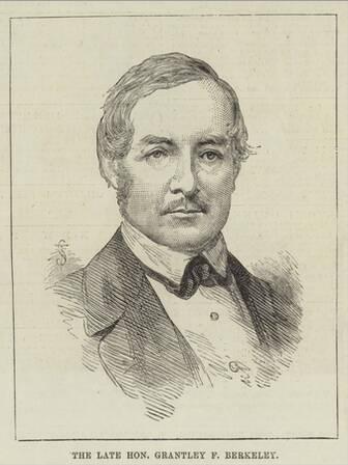
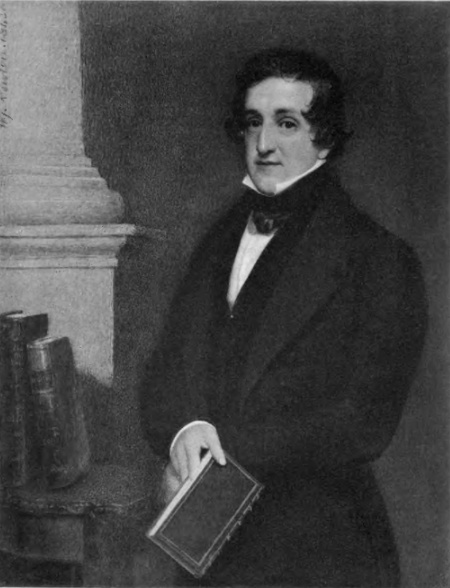

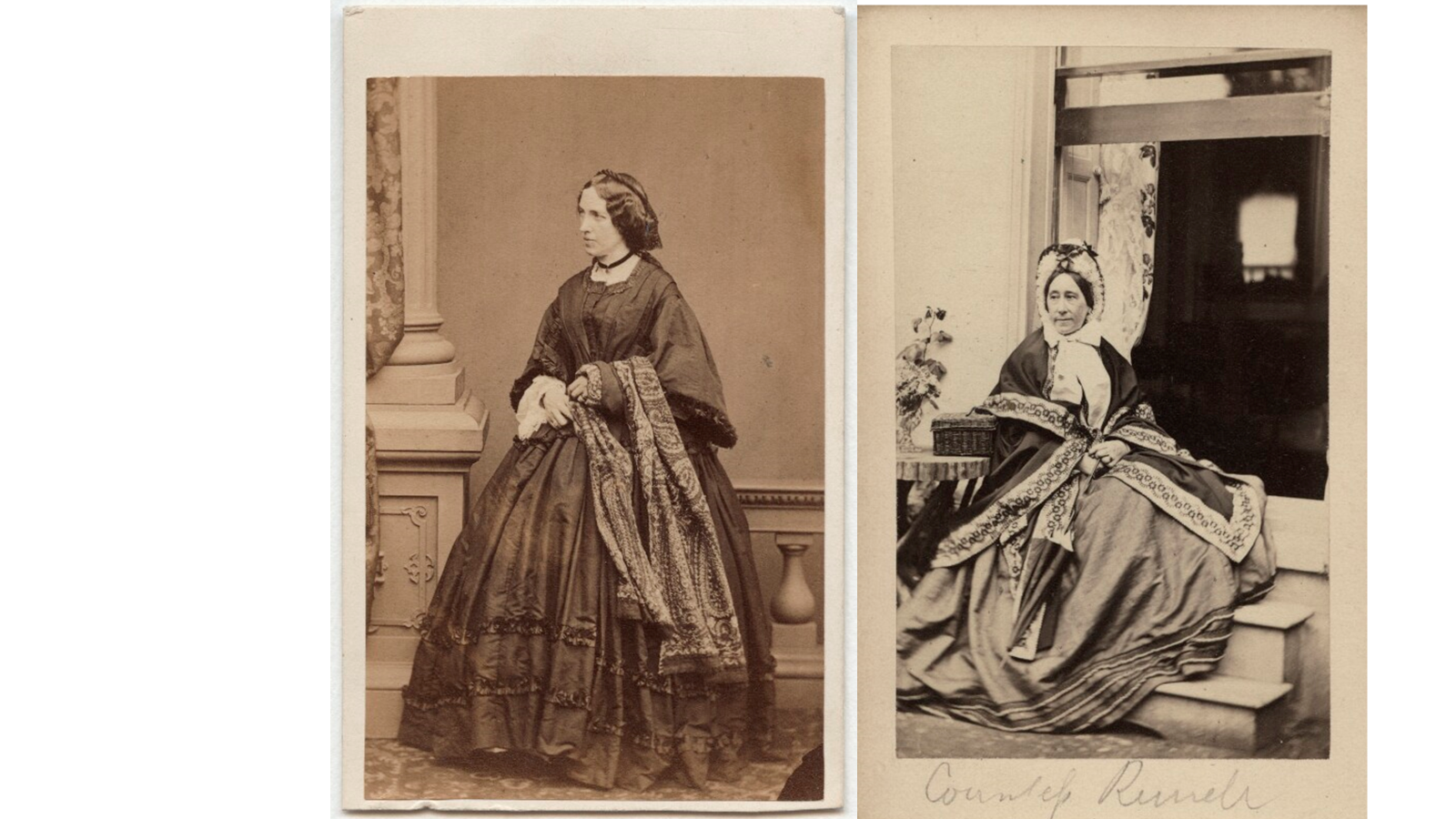
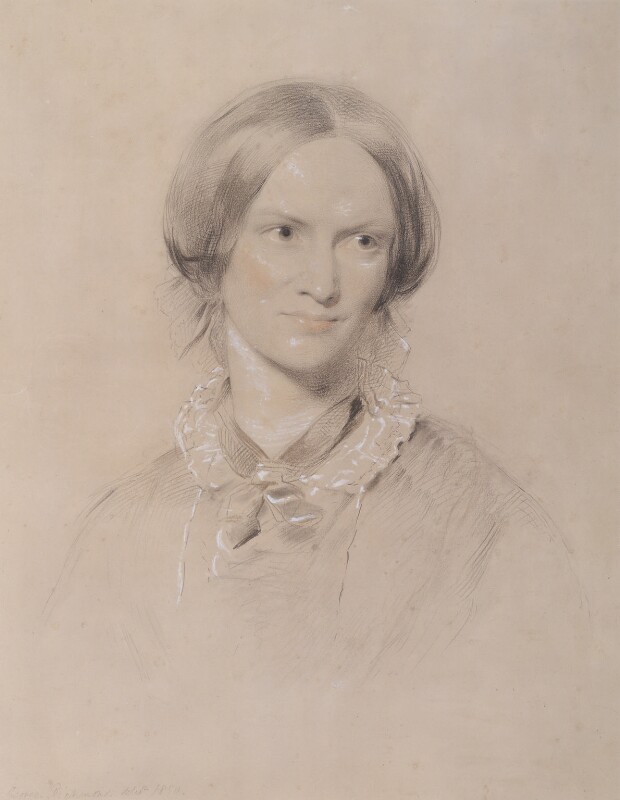
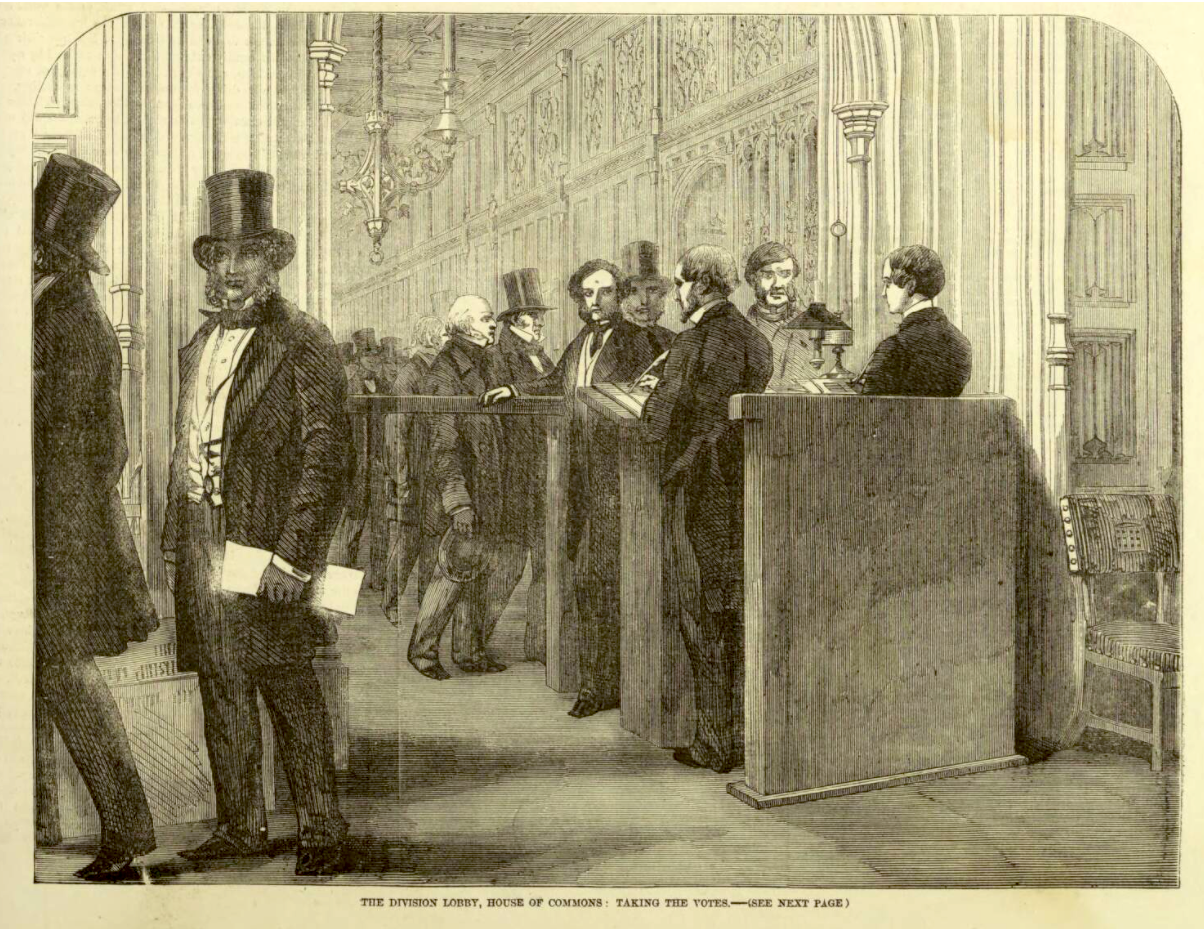
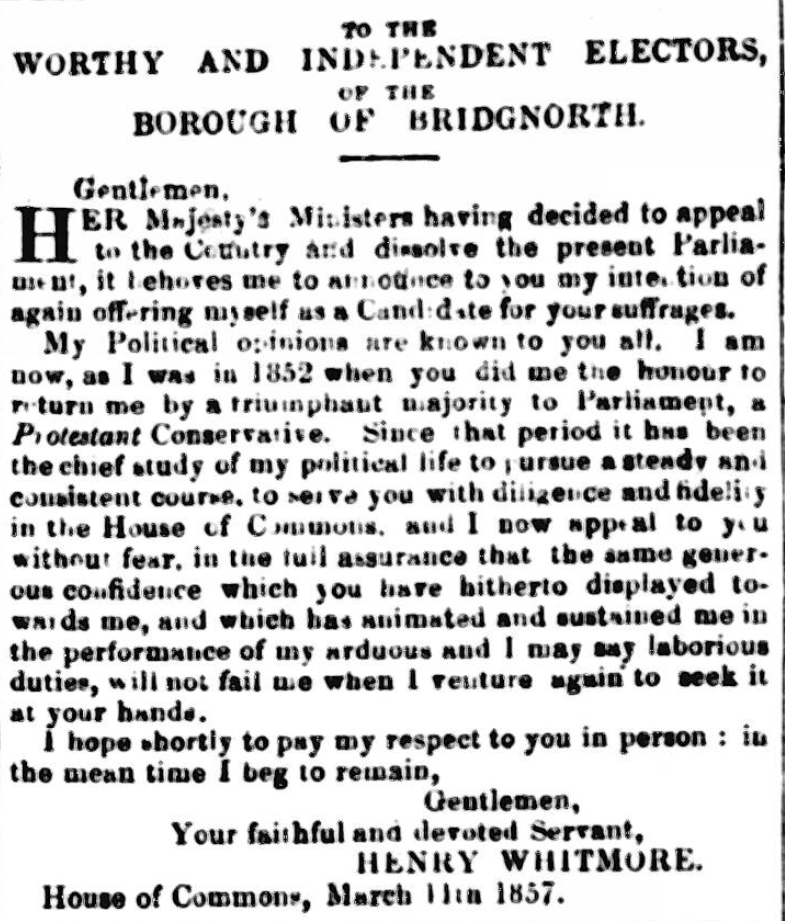
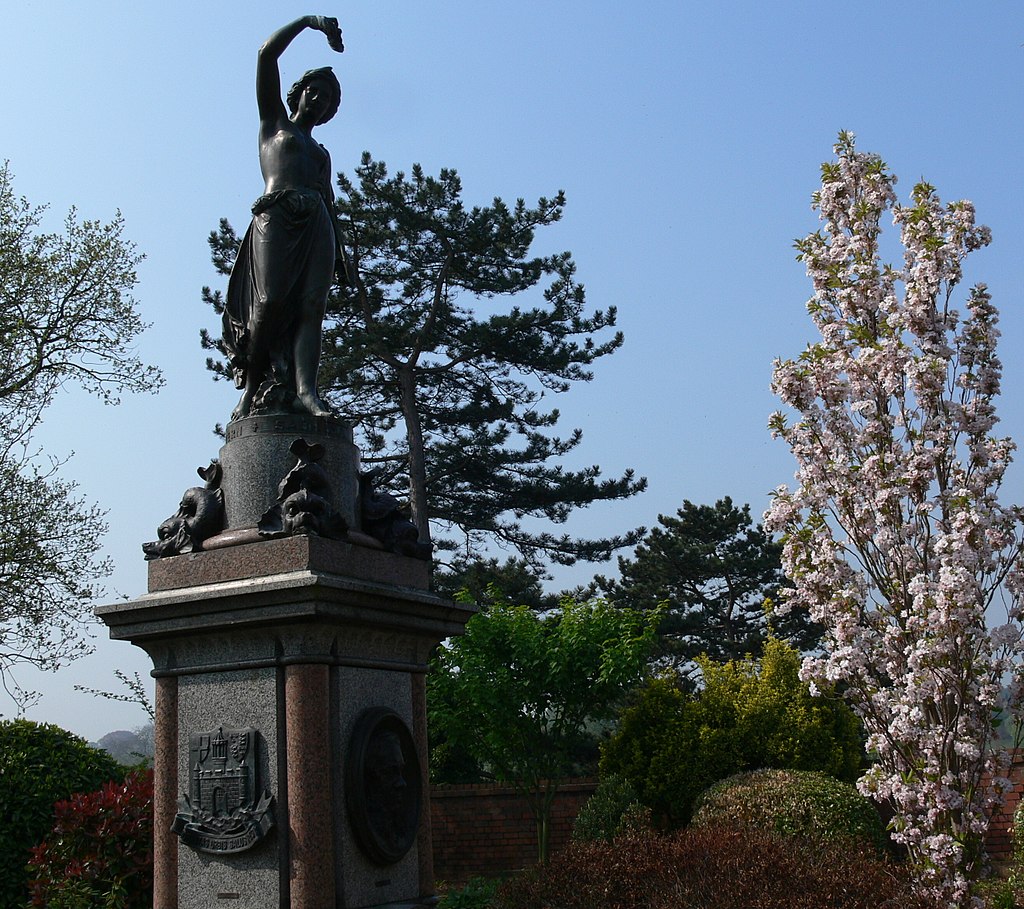
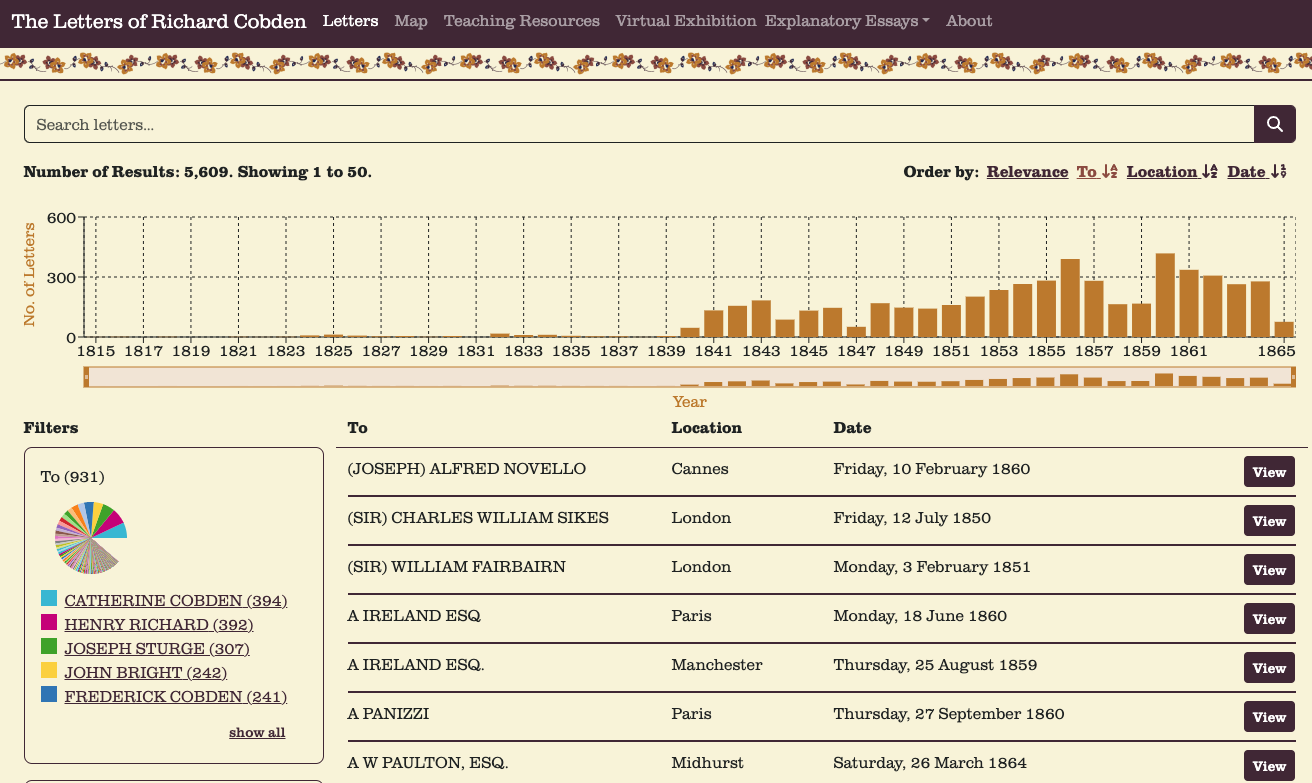
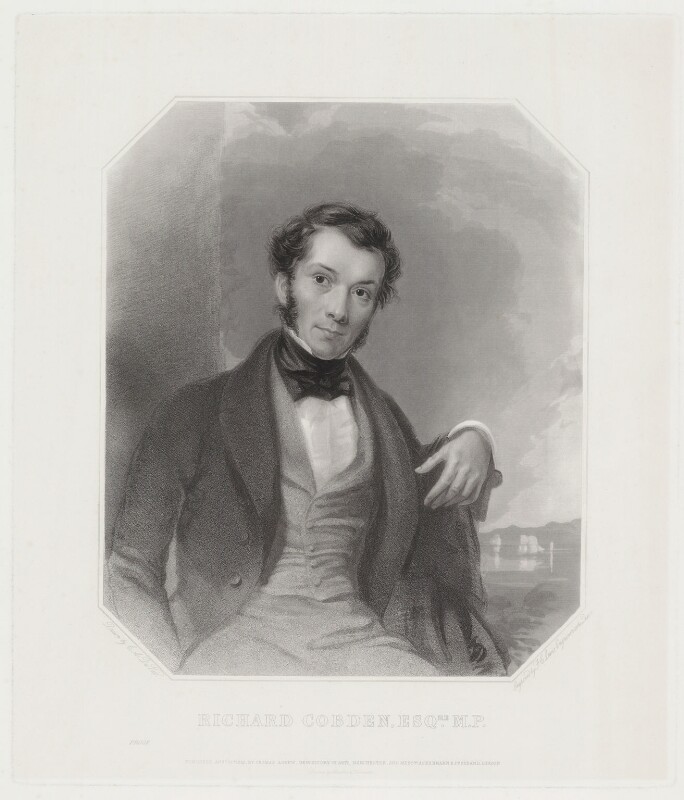
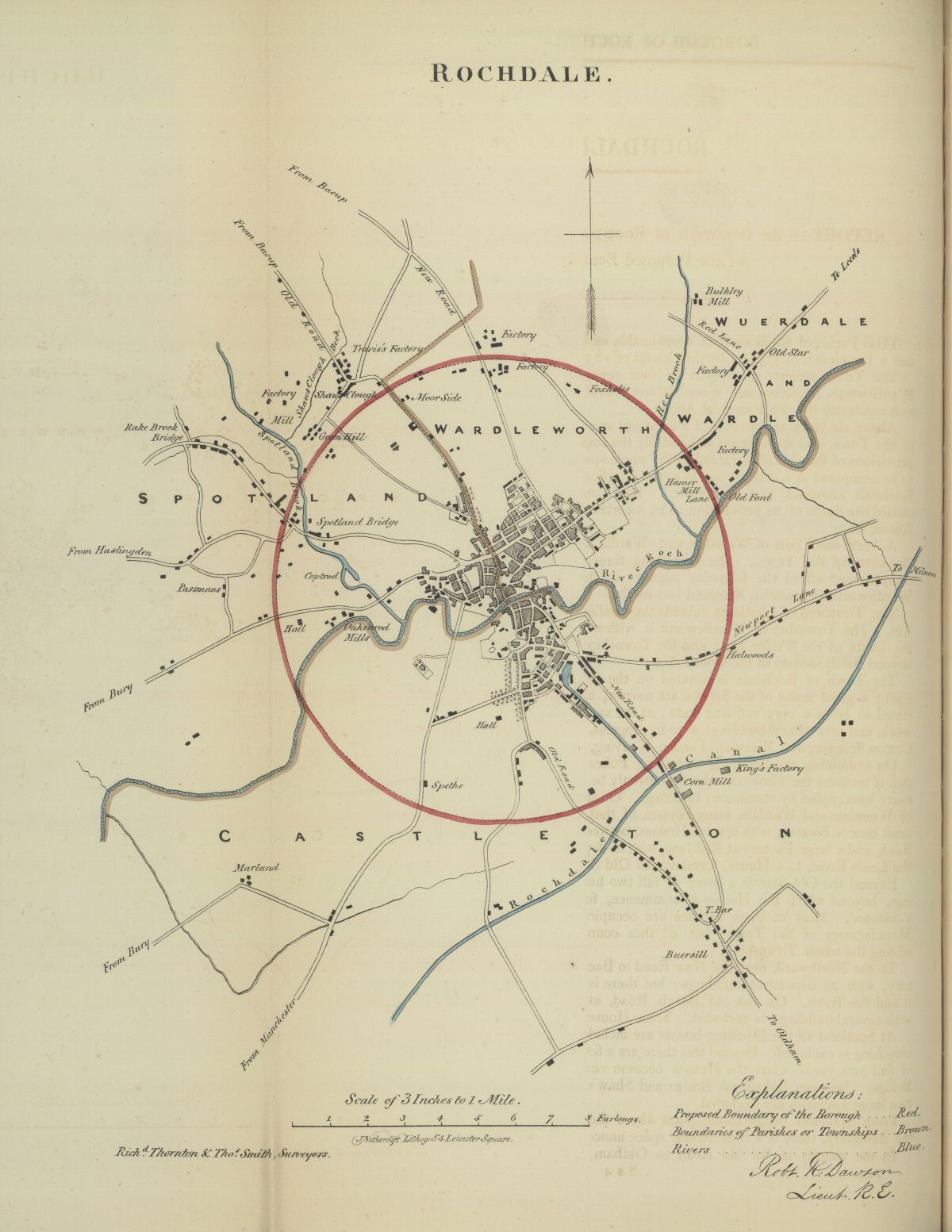
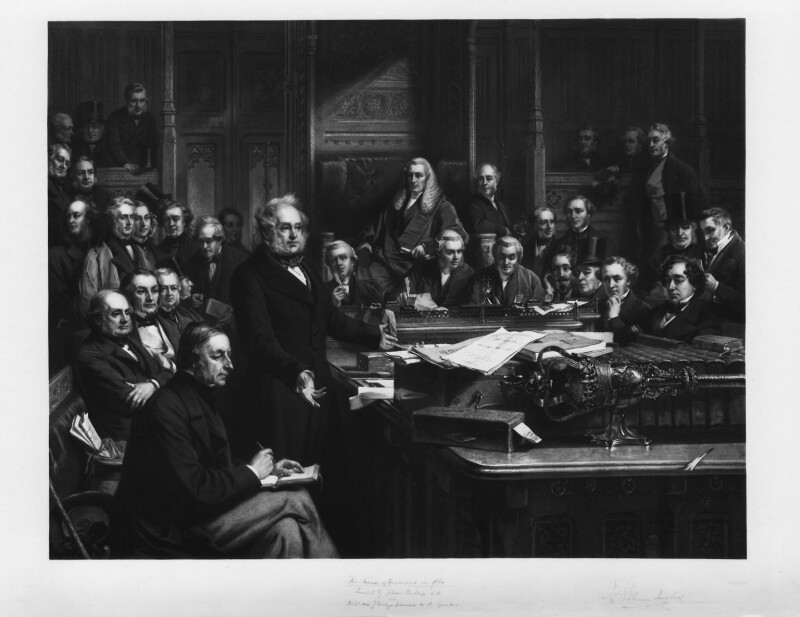
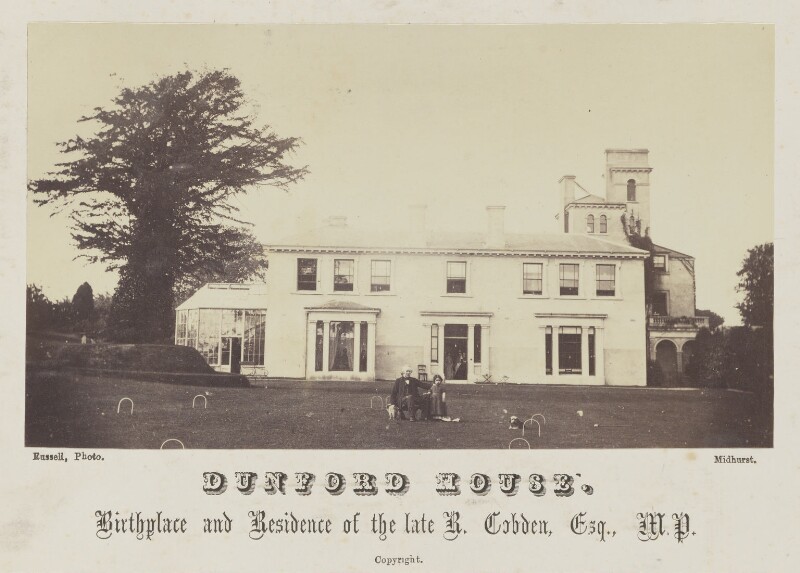
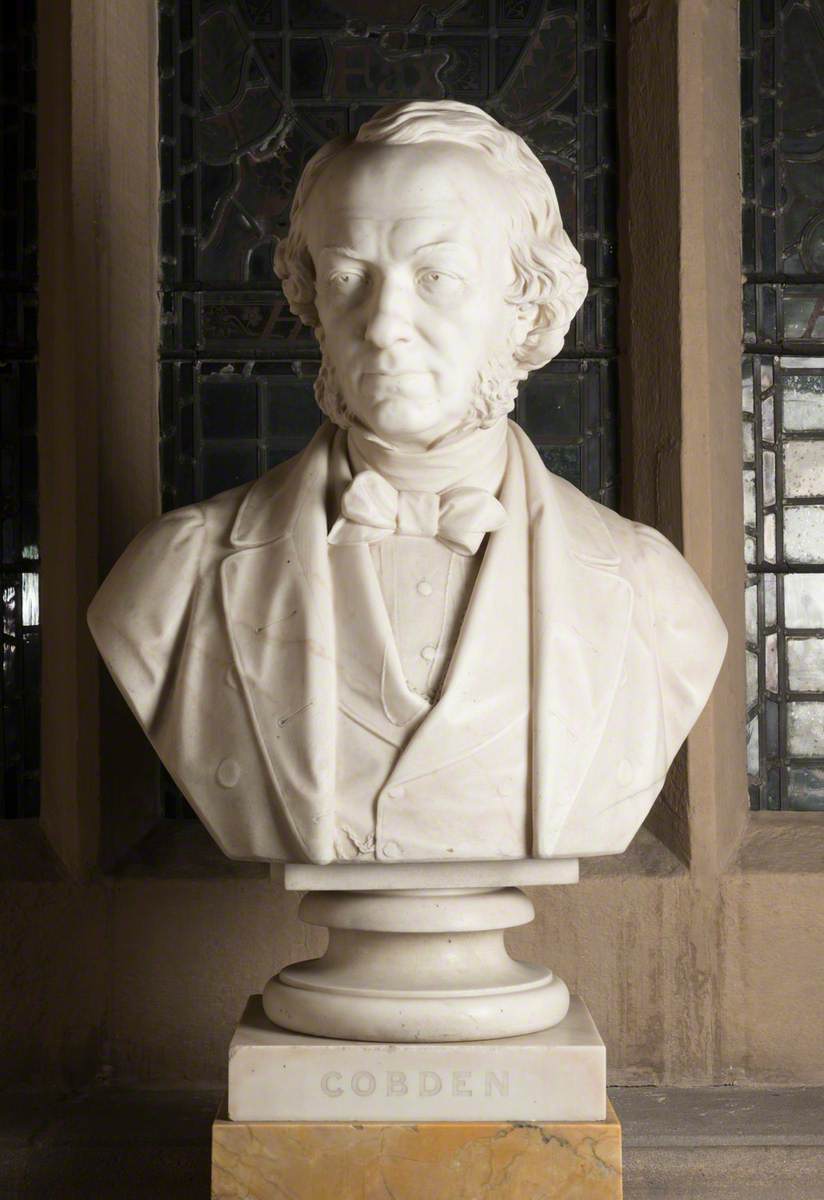
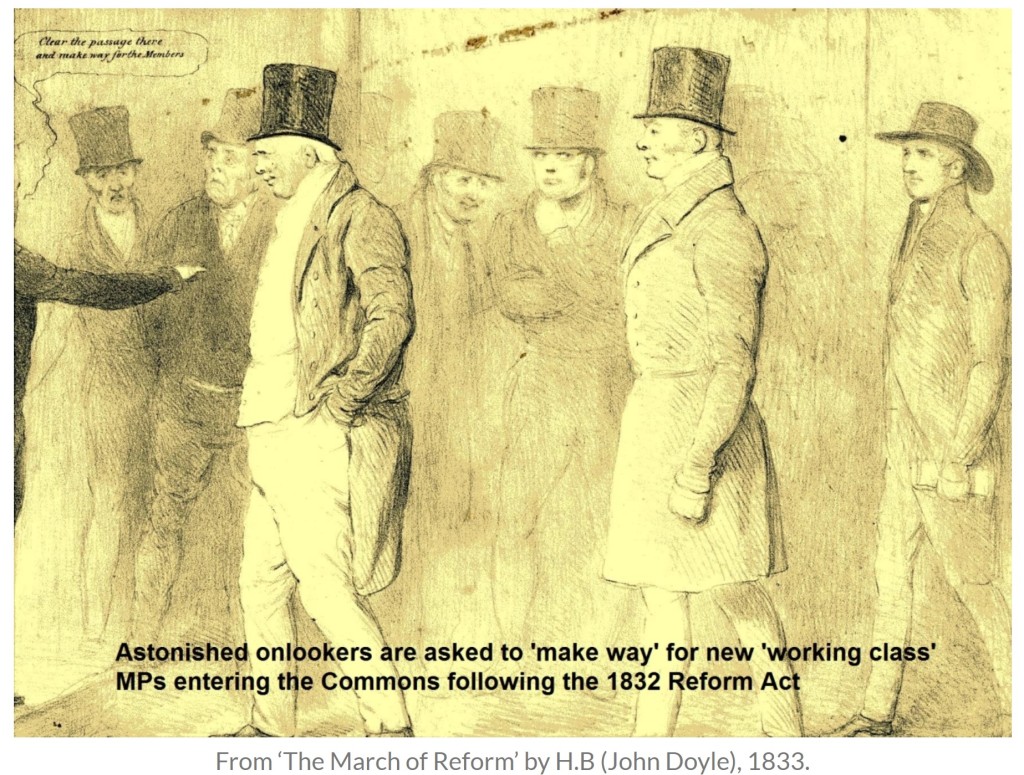
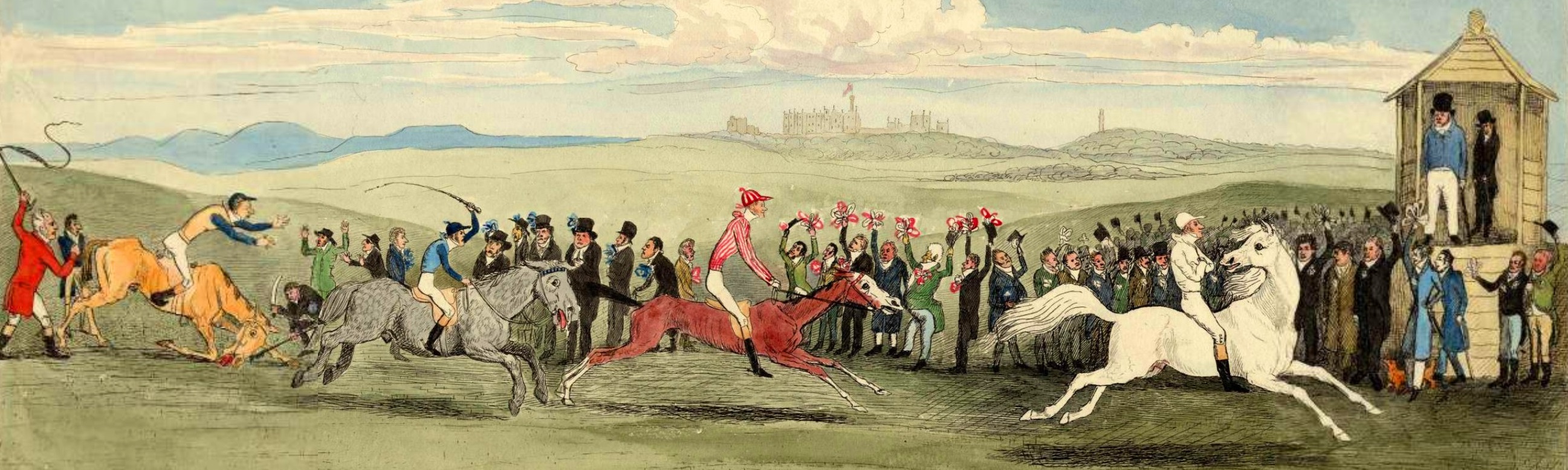
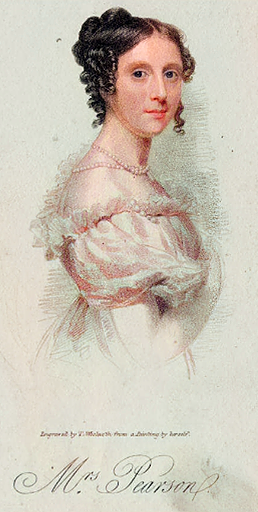
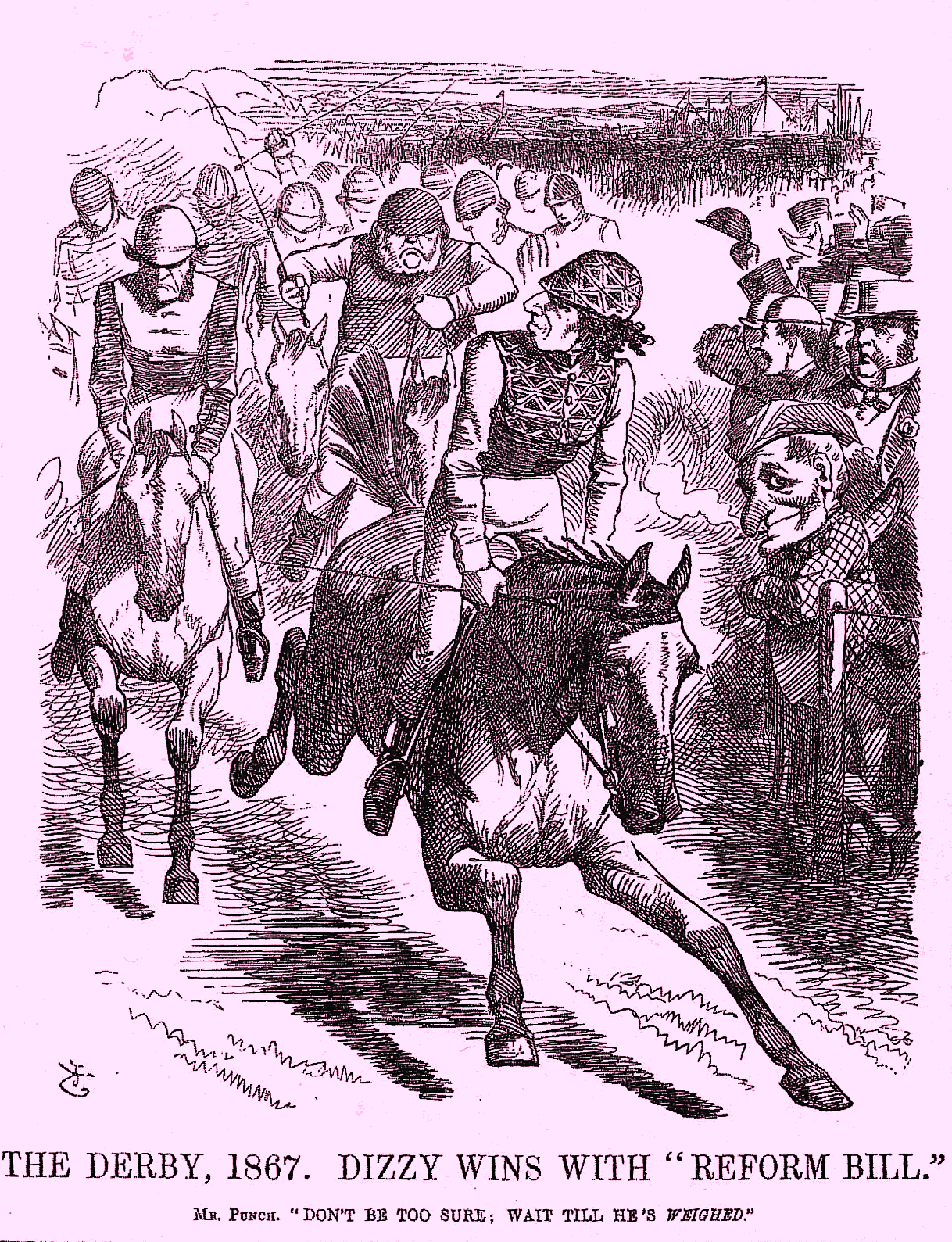
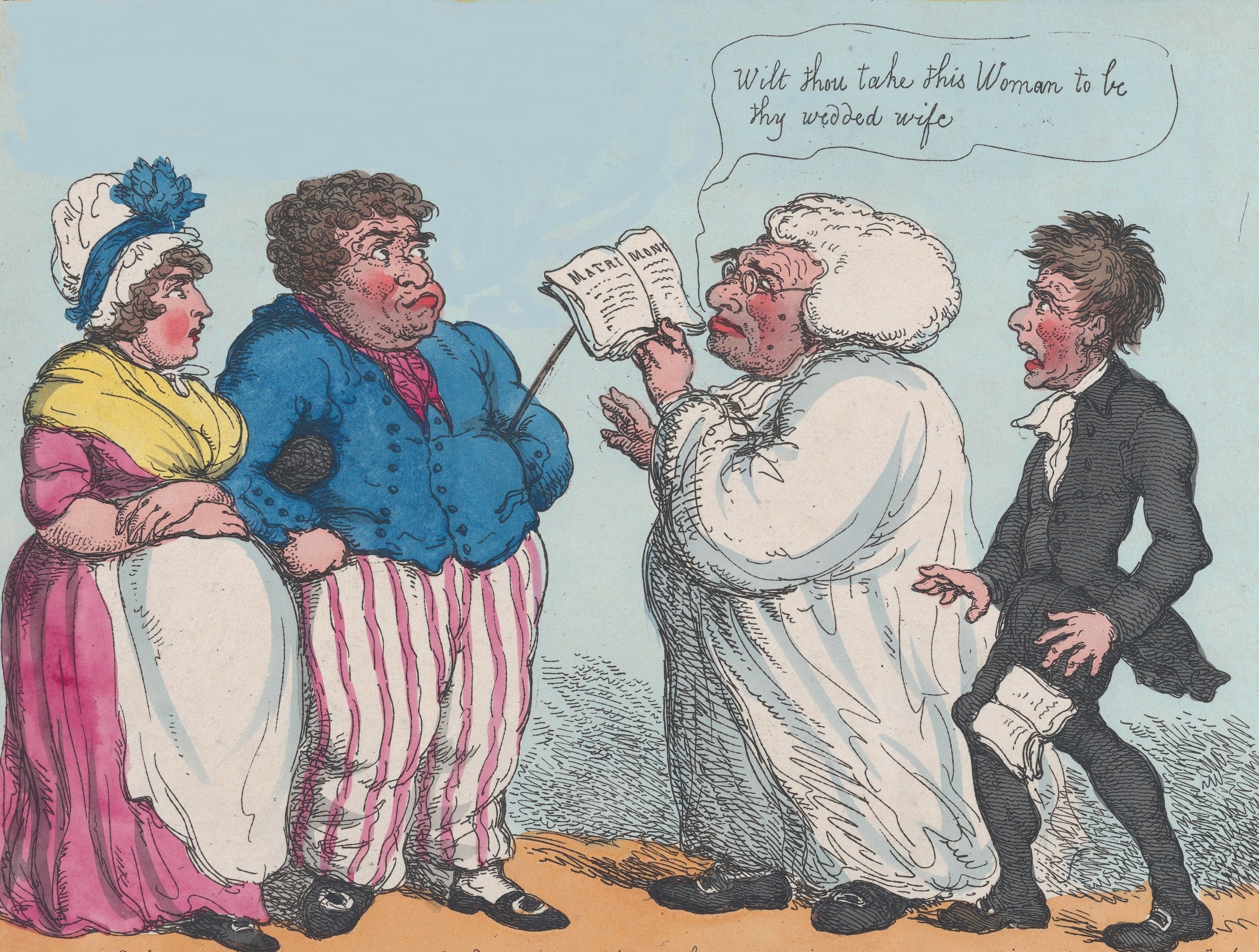

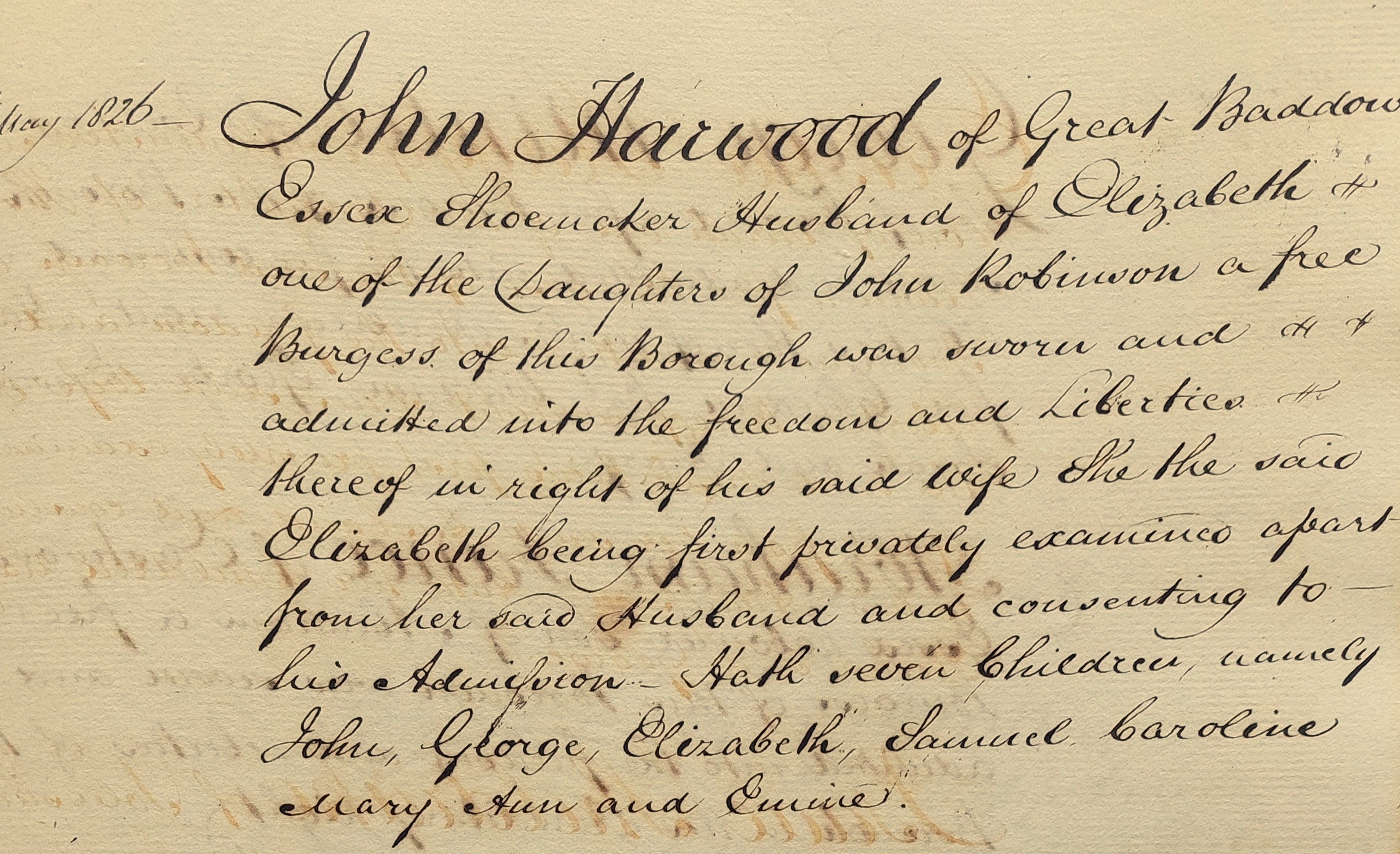
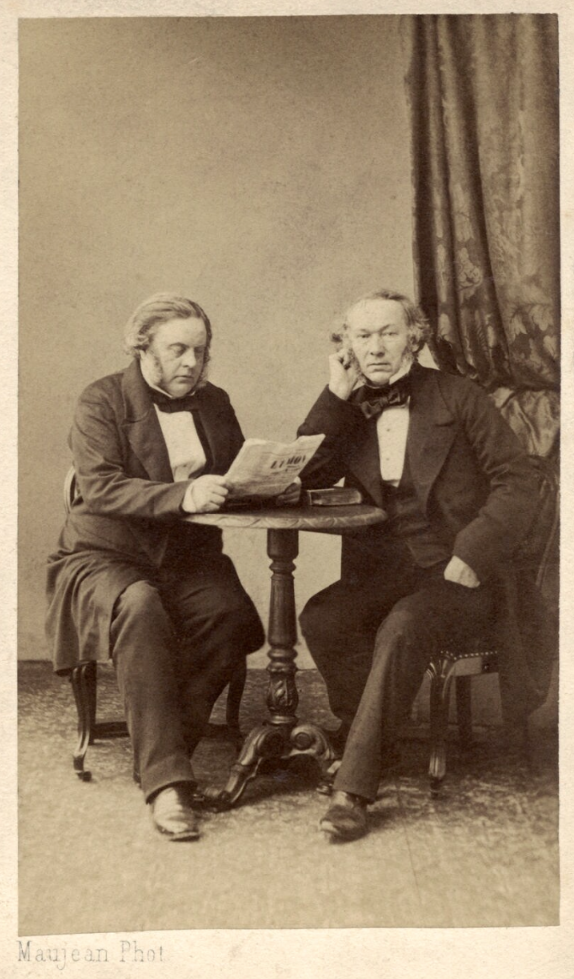
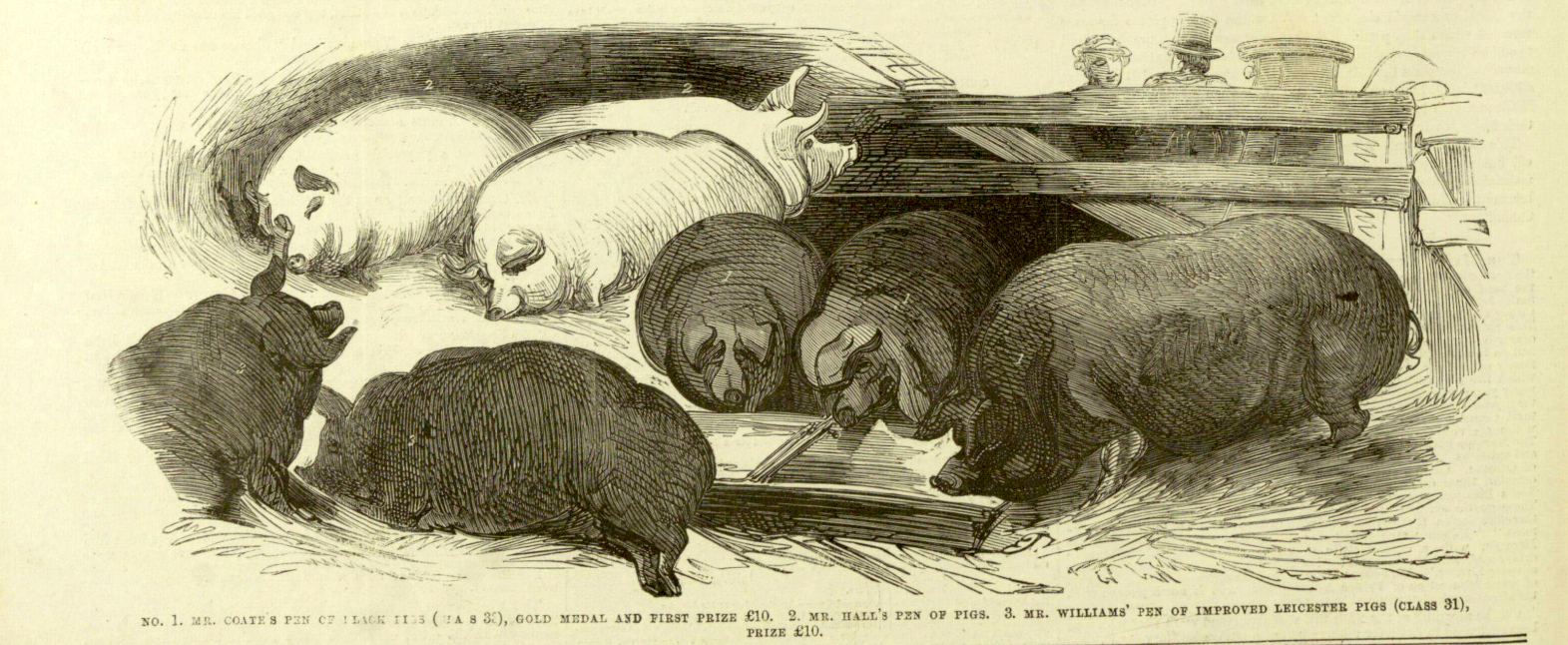
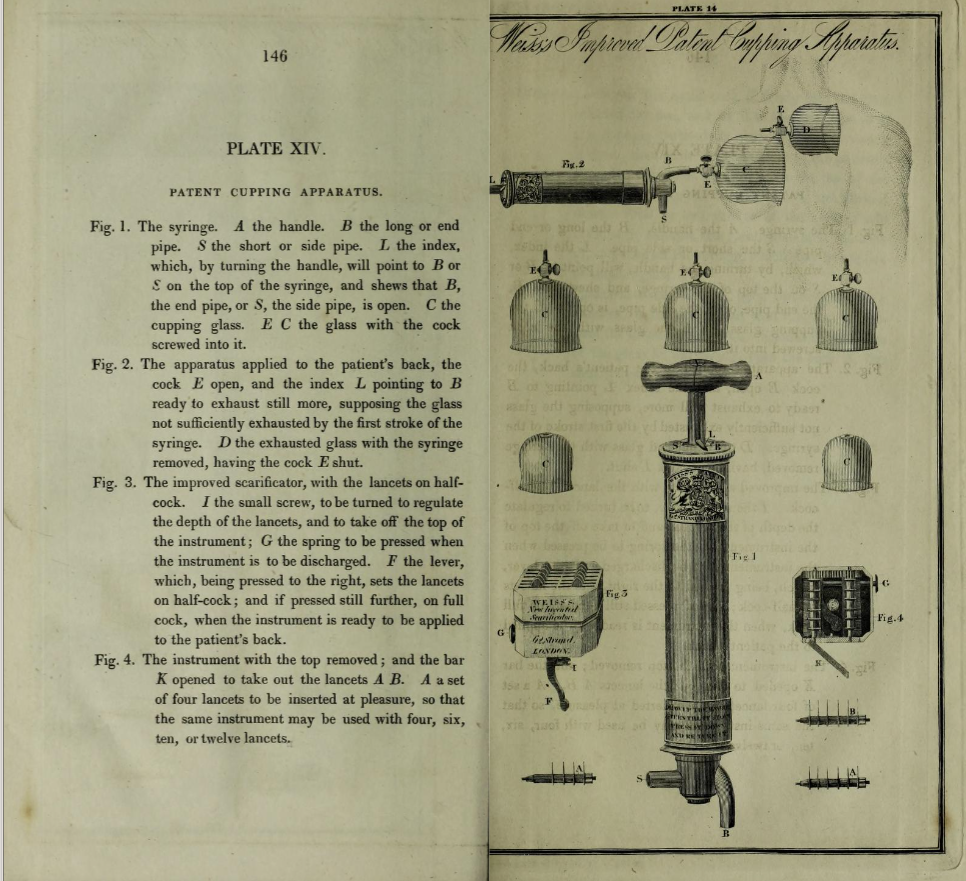


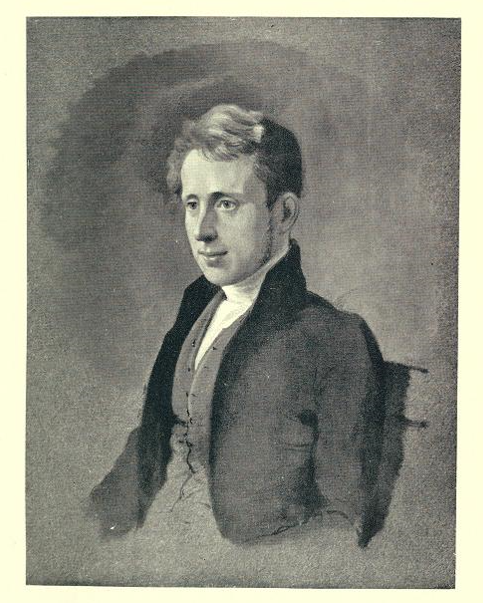


![Mounted men, all fat, wearing yeomanry uniform, with the over-sleeves and steels of butchers, ride savagely over men, women, and children, slashing at them with blood-stained axes. Smoke, as from a battle, and bayoneted muskets, form a background, with (left and right) houses in whose windows spectators are indicated. They have a Union flag with 'G R' and crown, and a fringed banner inscribed 'Loyal Man[chester] Yeomanry—"Be Bloody, bold & Resolute" ["Macbeth", IV. i]— "Spur your proud Horses & Ride hard in blood" ["Richard III", v. iii].' On the saddle-cloths are the letters 'L M Y' above a skull and cross-bones surmounted by a crown. One man kicks a young woman who kneels beseechingly, clasping an infant, raising his axe to smite. The man behind him, his arm extended, shouts: "Down with 'em! Chop em down! my brave boys! give them no quarter, they wan't to take our Beef & Pudding from us!—& remember the more you Kill the less poor rates you'll have to pay so go it Lads show your Courage & your Loyalty!"](https://thehistoryofparliament.files.wordpress.com/2023/10/download-1.png)


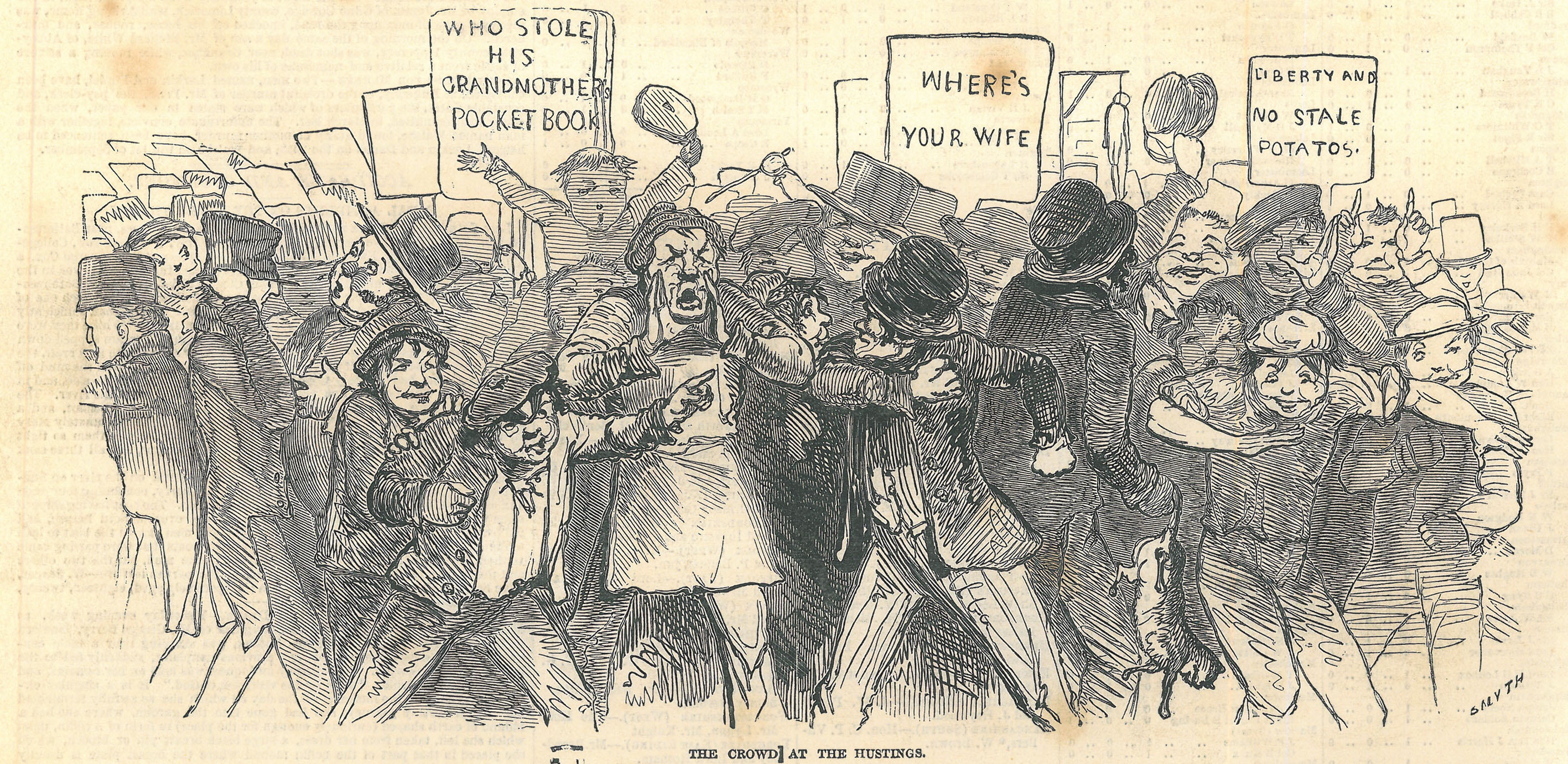

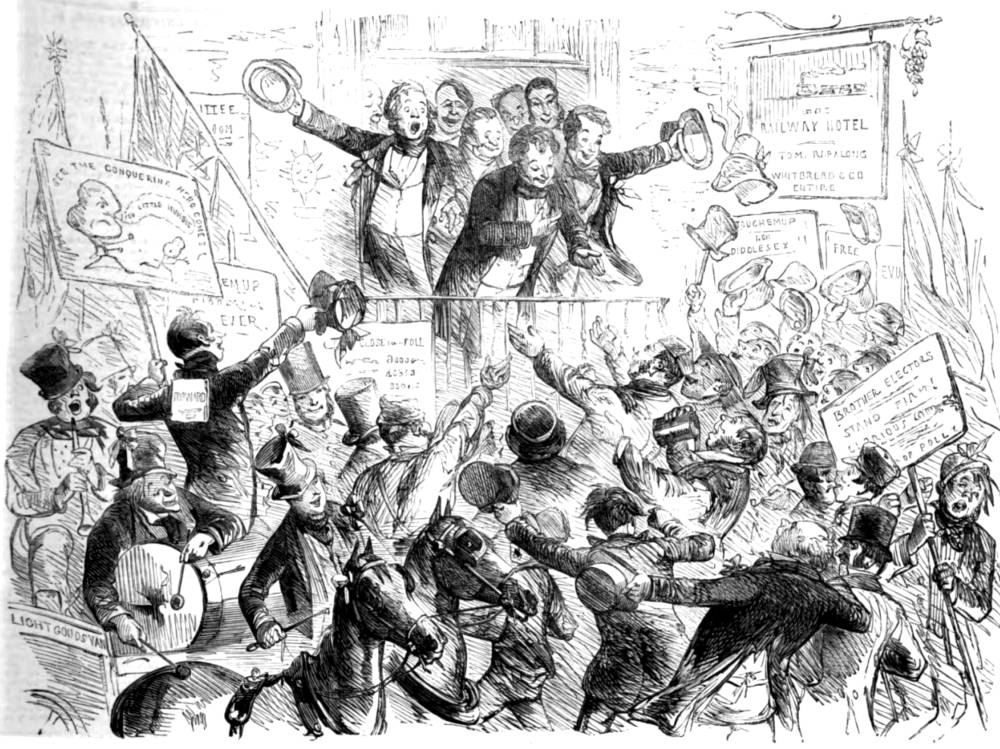

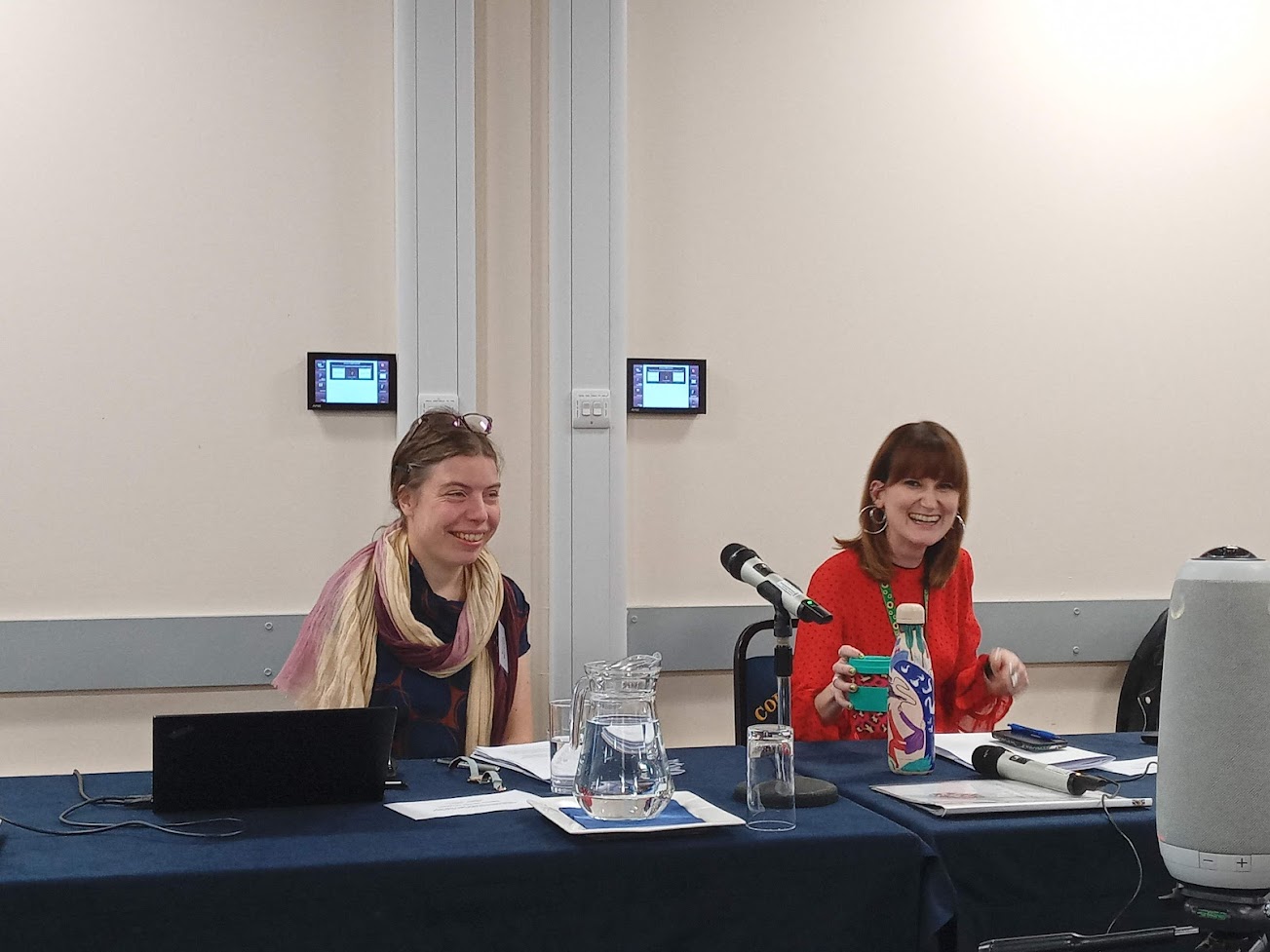
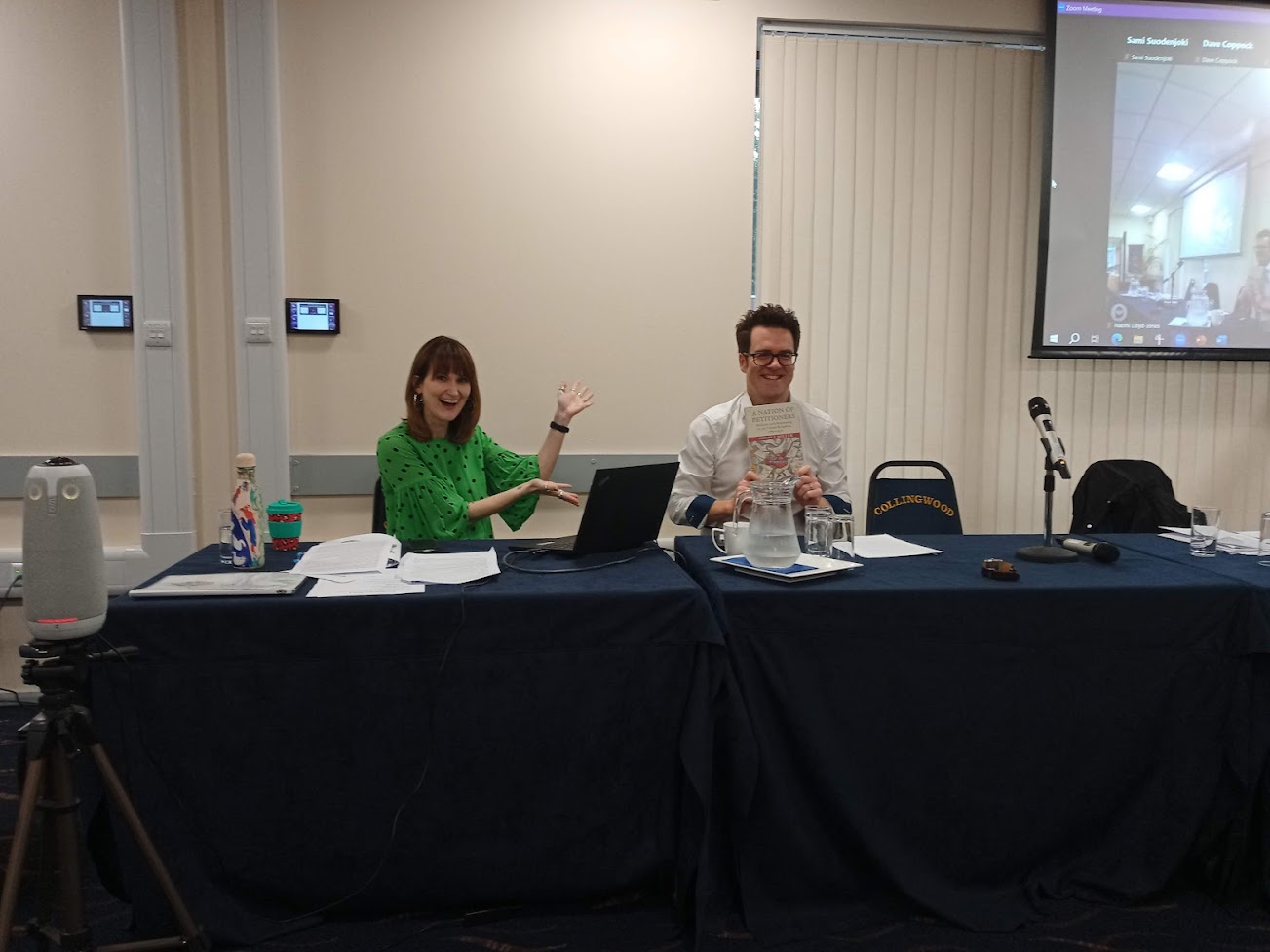
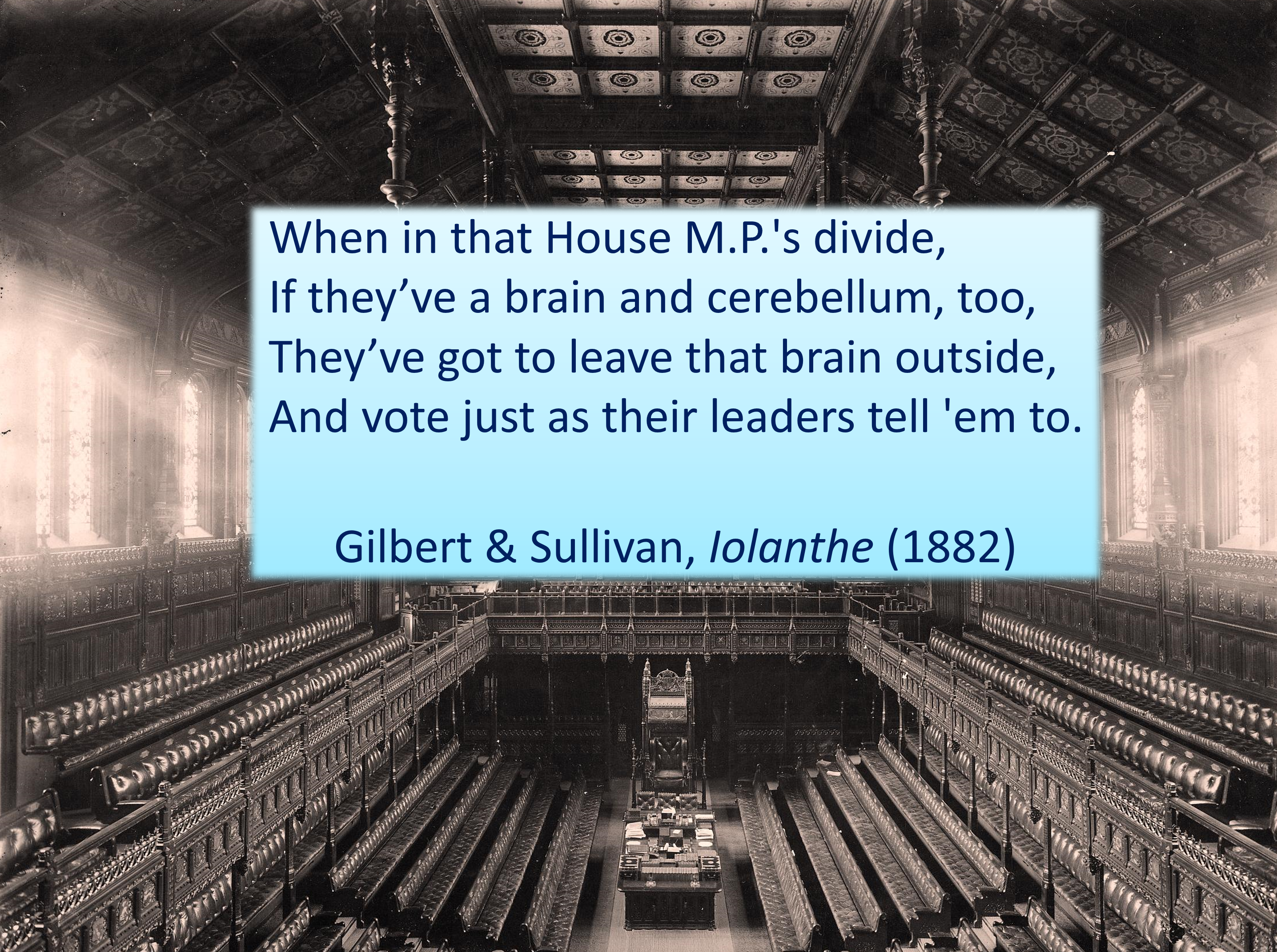

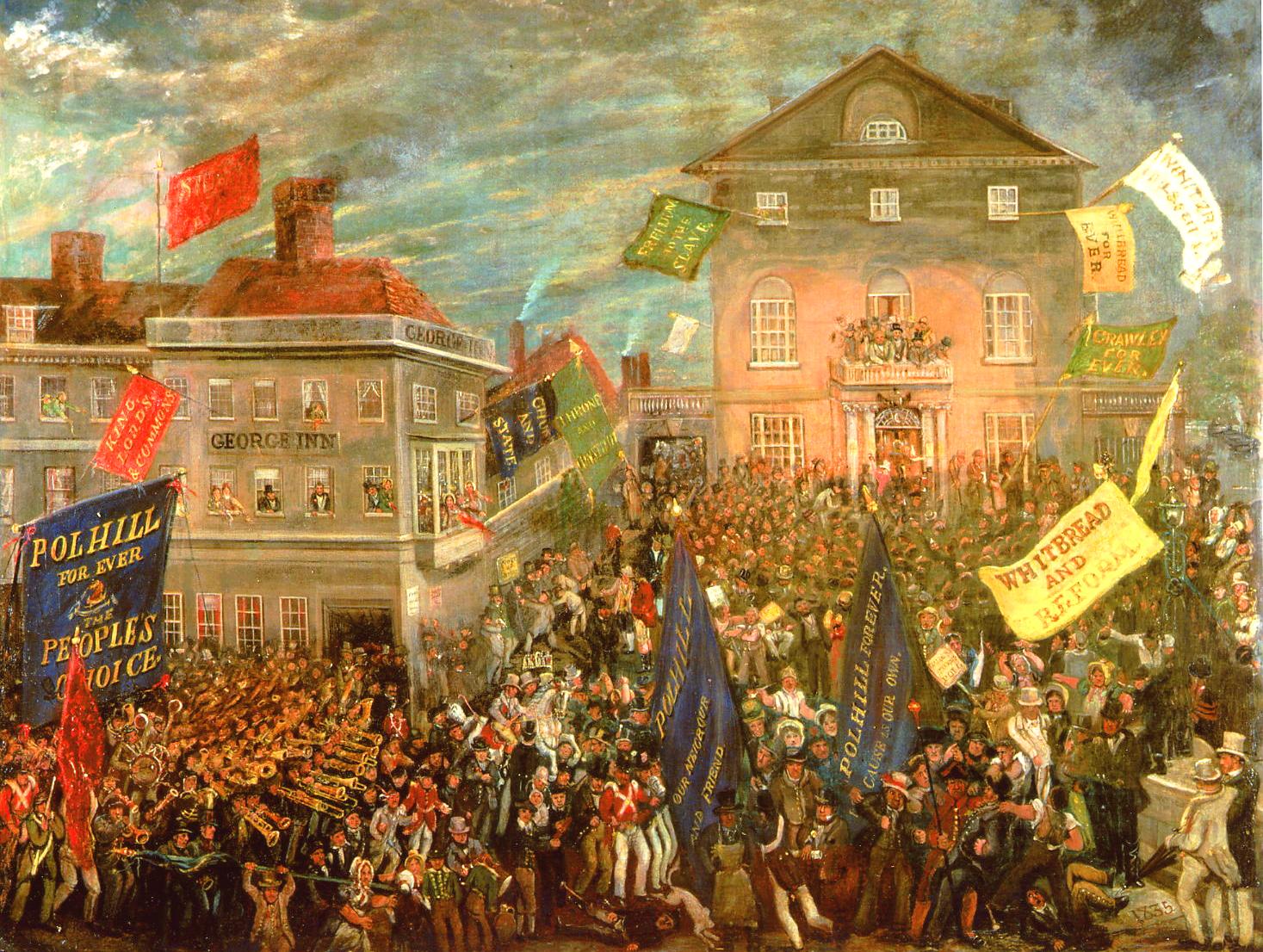
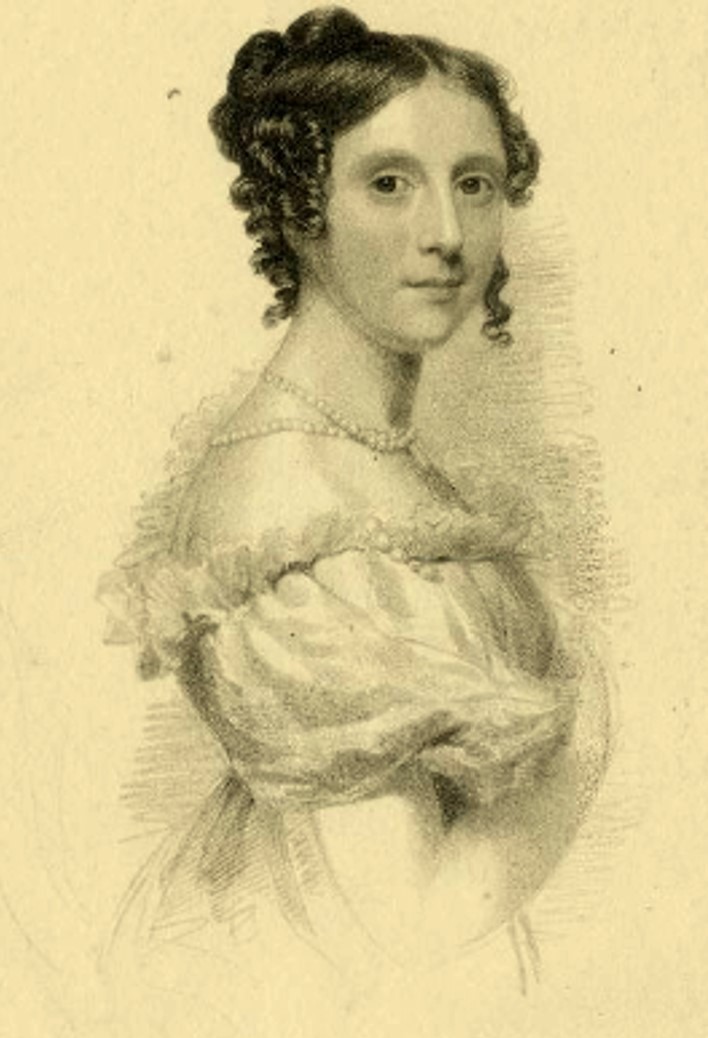
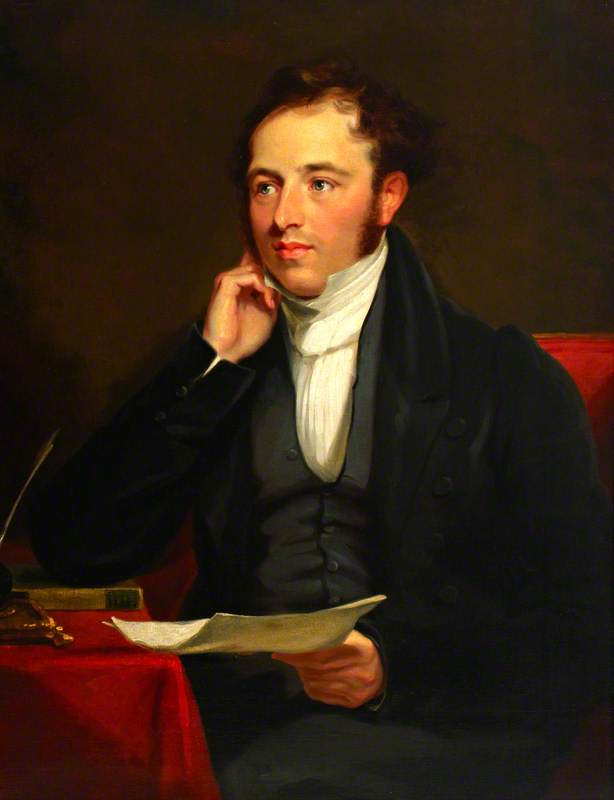



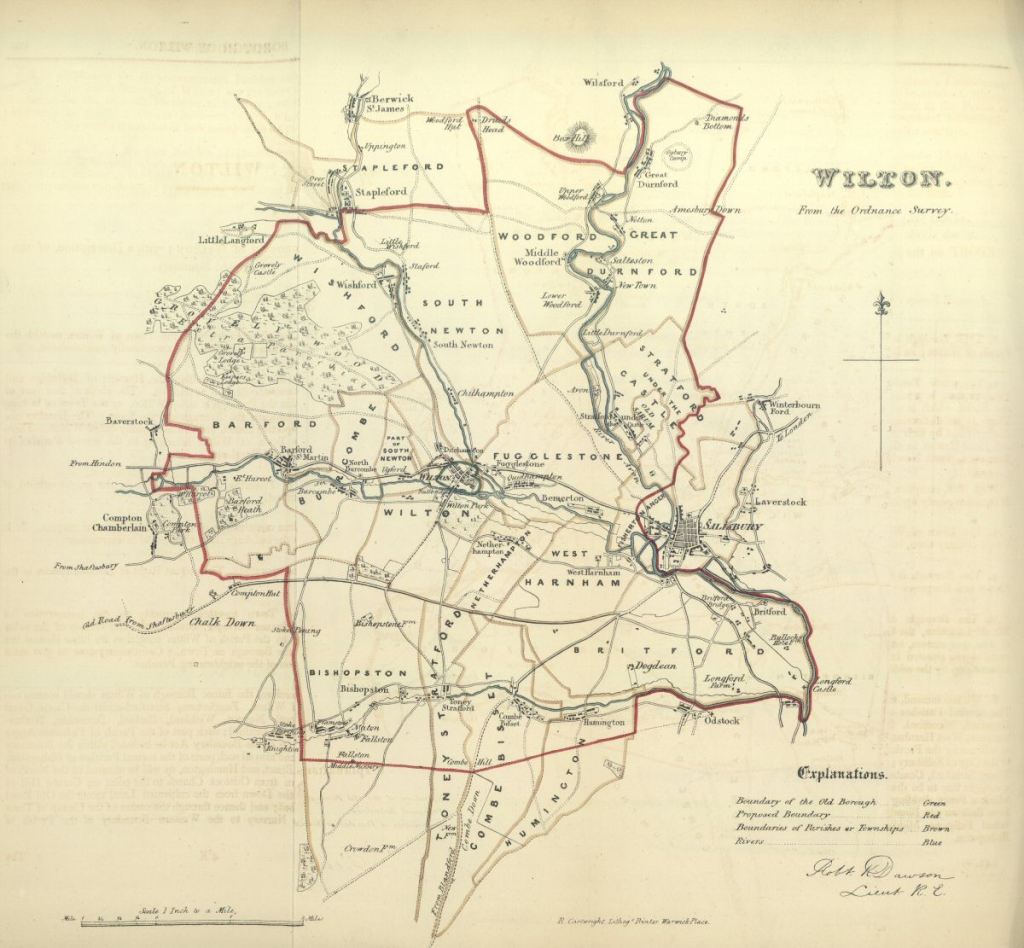


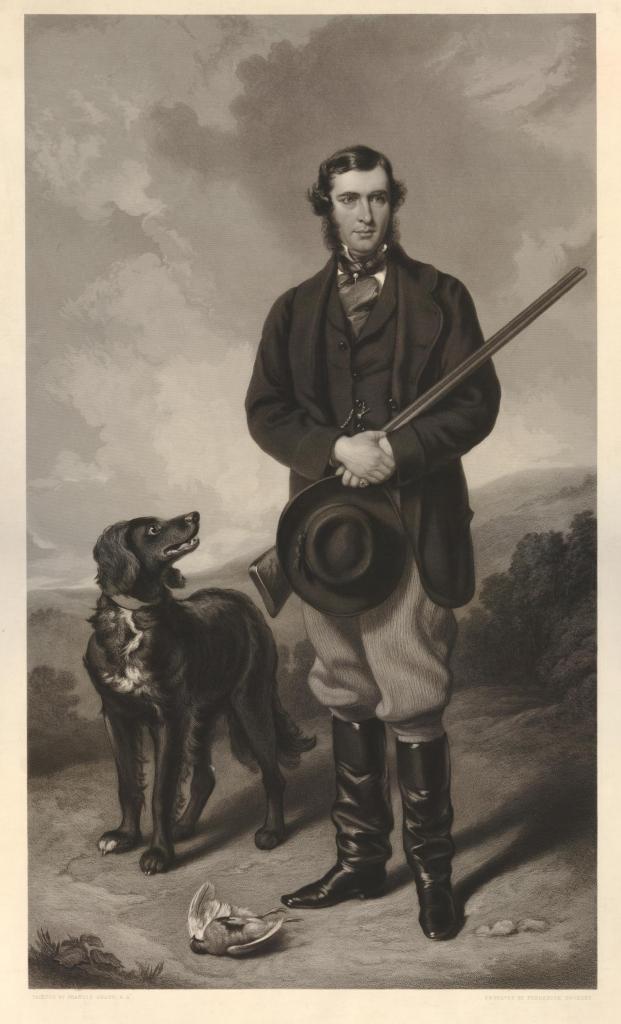

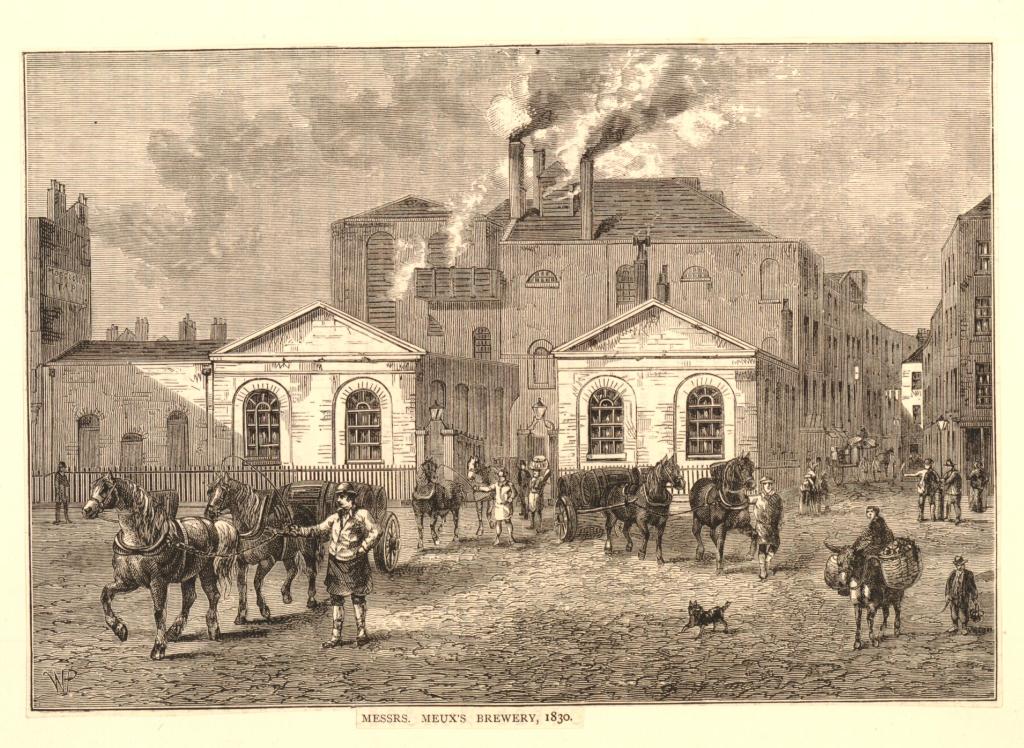


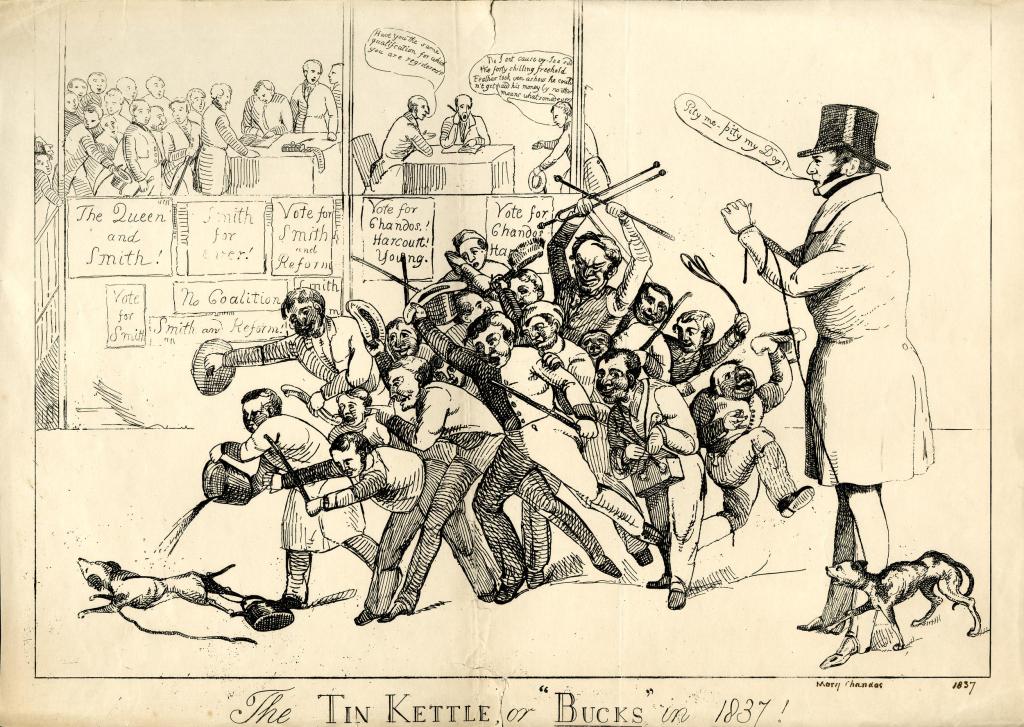
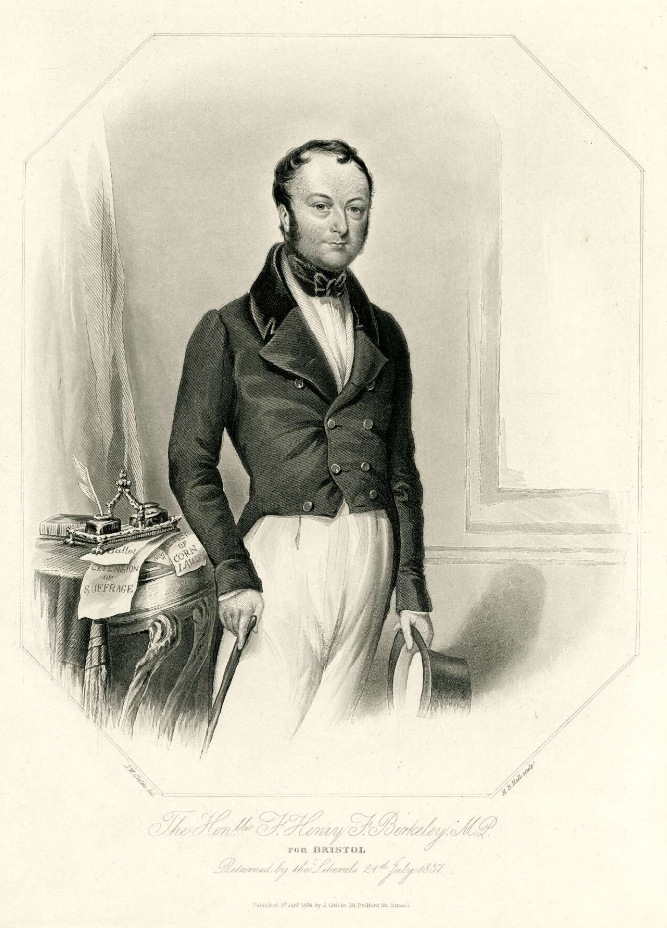


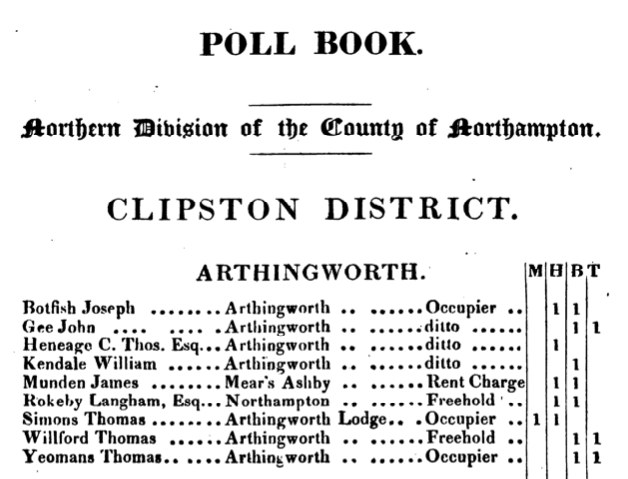
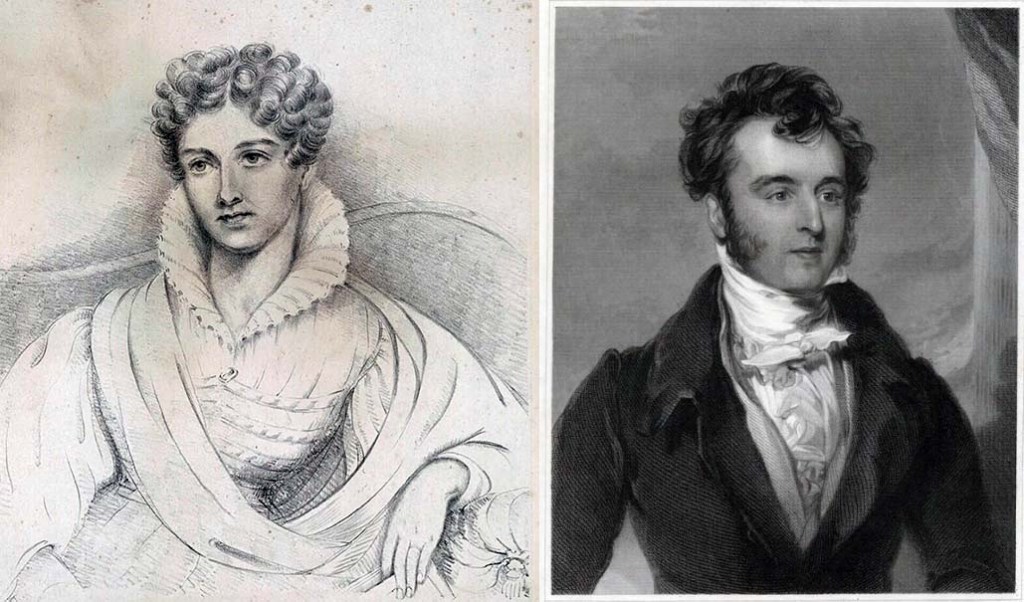


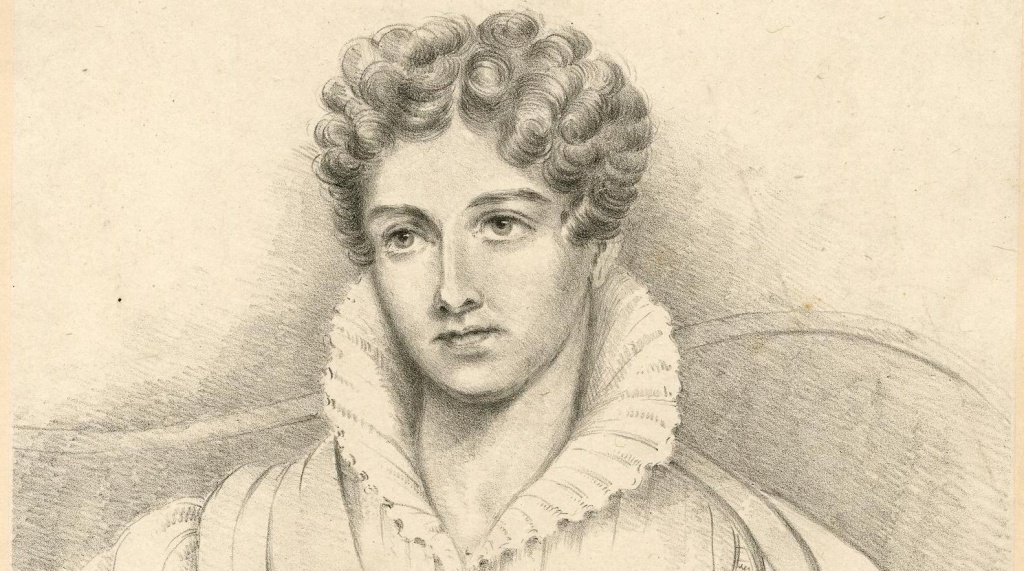

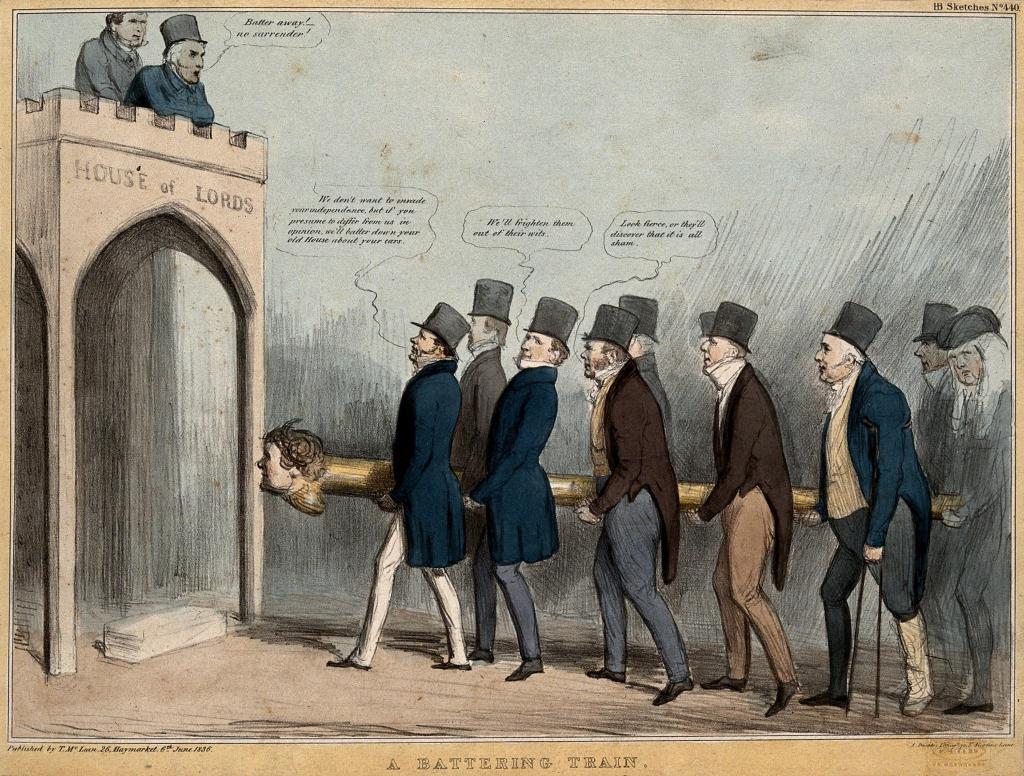


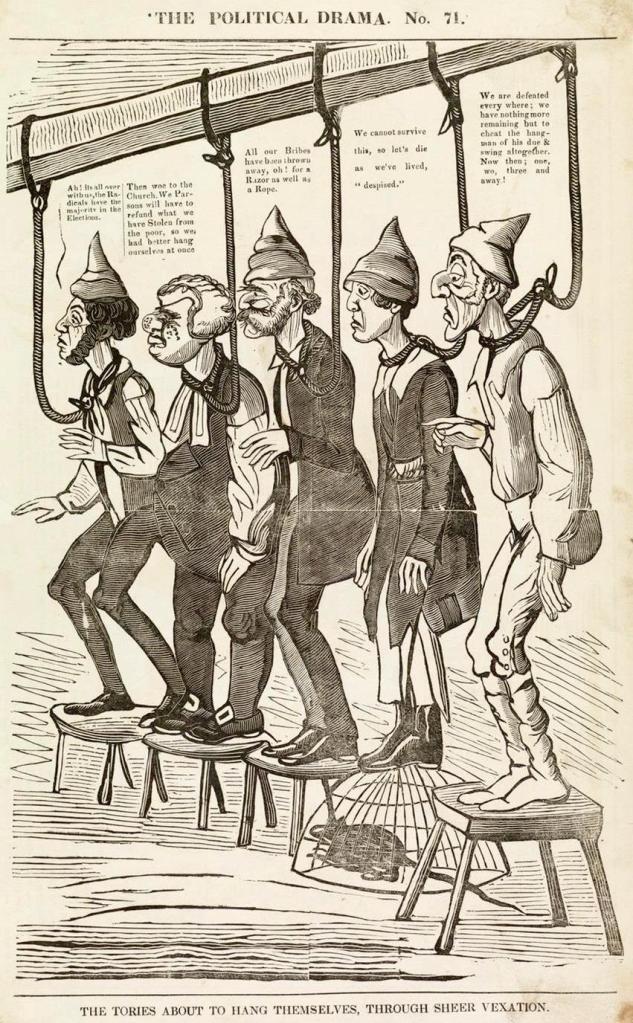
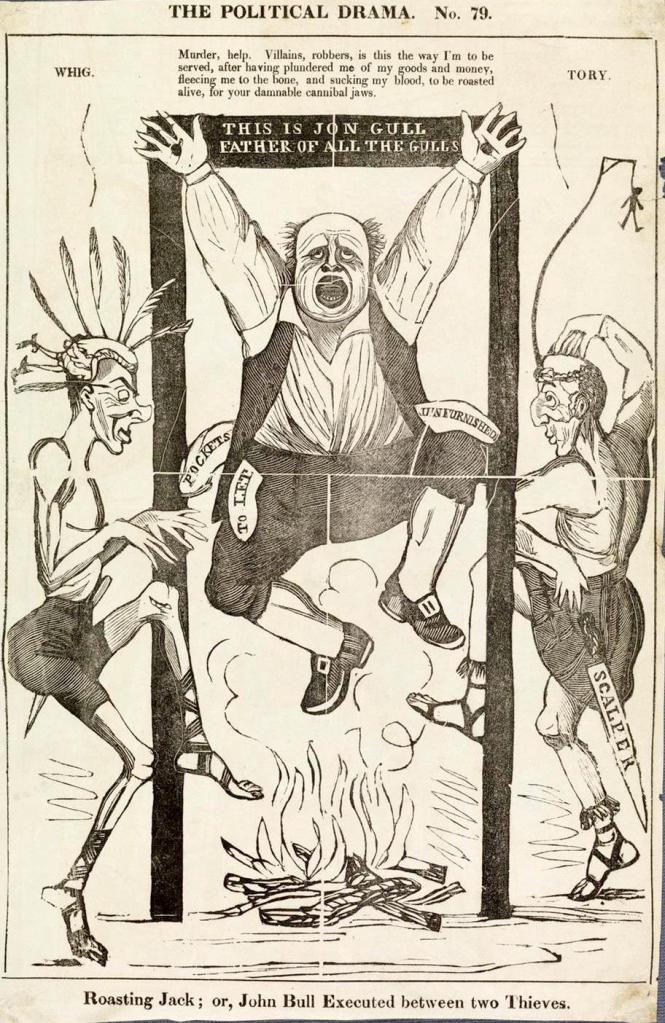
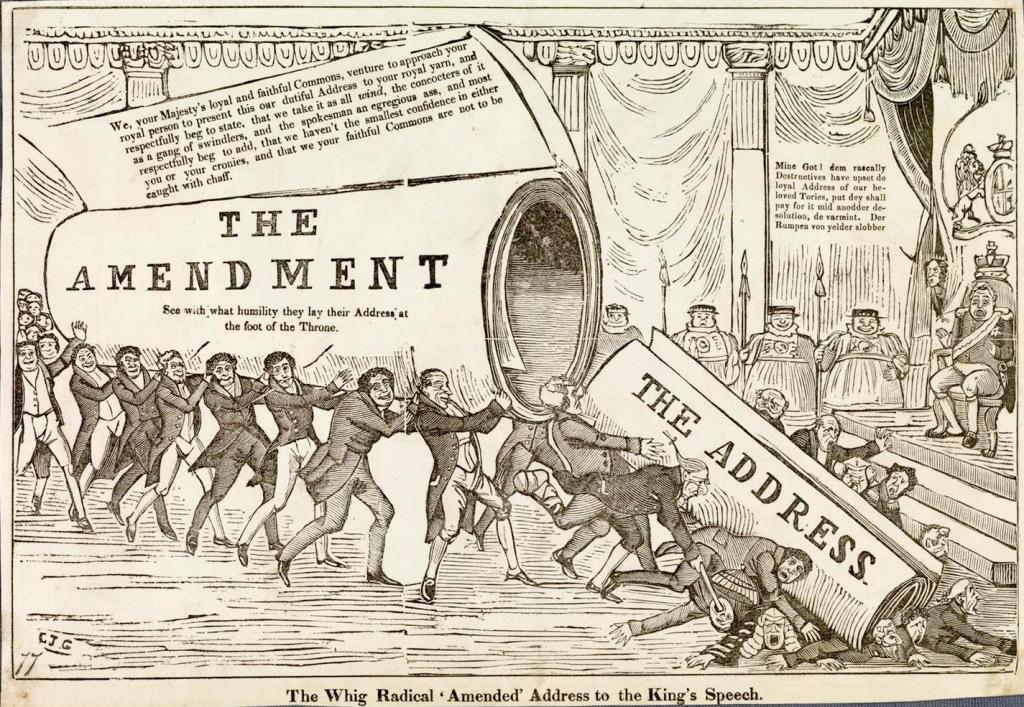
 The Victorian Commons
#/media/File:Northern_Star_front_page.jpg)